

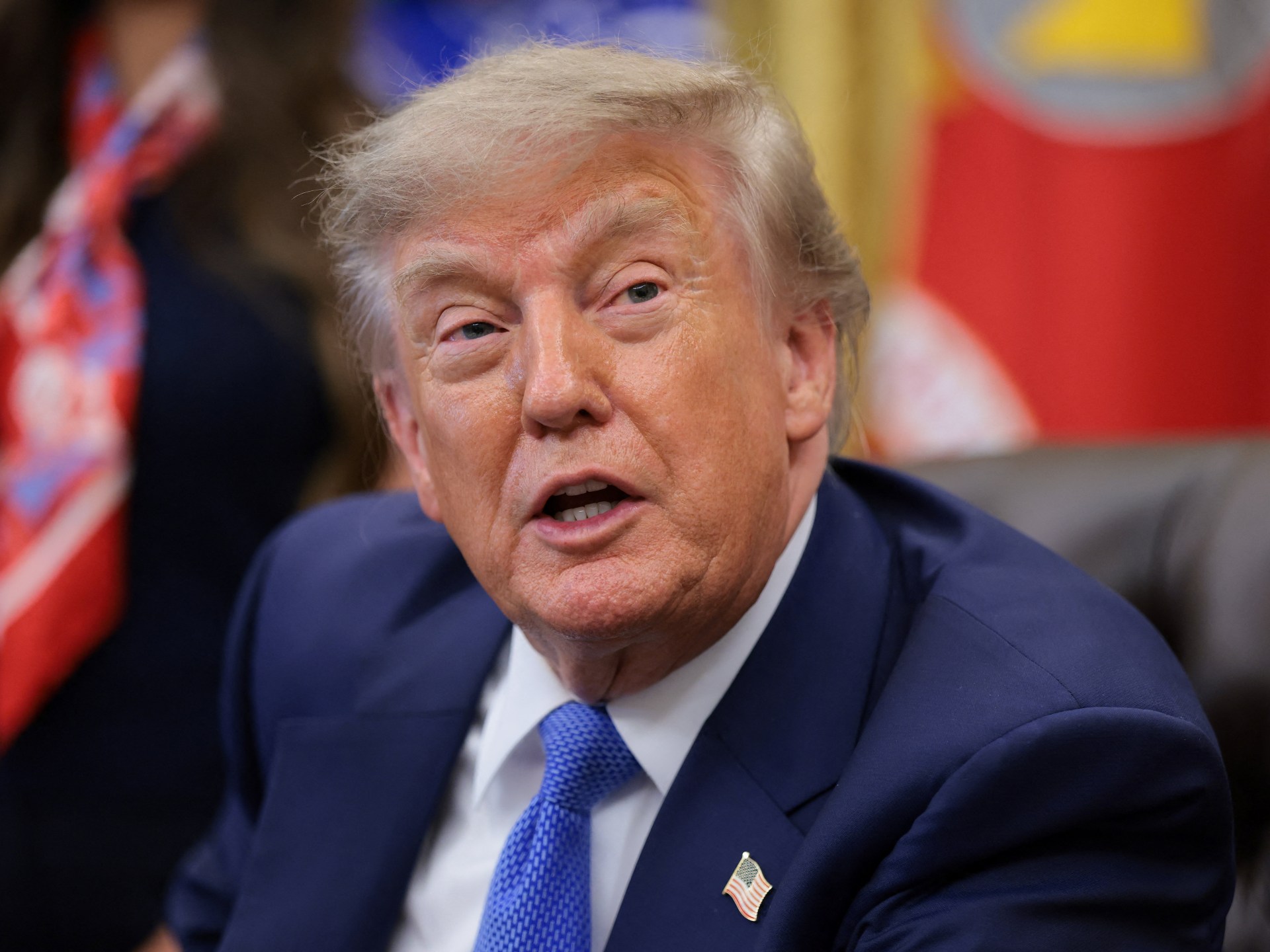
Kathmandu— United States President Donald Trump has demanded financial reparations from Iran, claiming “50 years” of damages caused by Tehran, following Iranian stipulations that reopening the Strait of Hormuz is contingent upon receiving war reparations from Washington. The demand came during a press briefing Monday and complicates ongoing negotiations between Iran and Oman to restore passage through the strategically important waterway, which has been largely blocked since the start of hostilities on February 28th. Trump framed the request as a response to Tehran’s own demands for compensation, while also citing deaths of US forces in the region and civilian protesters within Iran.
Iranian Conditions and US Response
Tehran has insisted that Washington end sanctions and provide war reparations before it will allow unimpeded passage through the Strait of Hormuz – a critical chokepoint for global oil and liquefied natural gas supplies. This demand stems from an interim peace agreement signed in June, which subsequently faltered over disagreements regarding control of the strait. Trump stated he initially viewed Iran’s request for reparations as “a good idea,” prompting his administration to seek payment for alleged damages caused by Iran over the past half-century.
Claims of Damages and Casualties
Trump asserted that the payments should cover deaths among US forces in the region, as well as civilian protesters within Iran. He claimed 52,000 people have been killed in Iran over the last four months, a figure significantly higher than Tehran’s reported death toll of 3,117 from antigovernment protests in January. The US-based Human Rights Activists News Agency (HRANA) previously reported approximately 7,000 deaths, including 6,500 protesters, in February. Trump also called for Iran to compensate families of the 17 US sailors killed in the 2000 attack on the USS Cole in Yemen, despite al-Qaeda being blamed for the incident.
Negotiations and Blockade
Talks between Iran and Oman regarding a new shipping lane through the Strait of Hormuz are ongoing, but Trump’s demand for compensation introduces further complexity. The strait has been effectively blocked since the conflict began, leading to increased oil prices and inflation. Iranian Foreign Ministry spokesman Esmaeil Baghaei stated that discussions with Oman were “progressing smoothly,” with an agreement reached on a shipping route map, though some technical issues remain unresolved. Meanwhile, the US maintains a naval blockade of Iranian ports, which it describes as a “steel wall”, redirecting commercial vessels and claiming to have disabled at least two.
Expert Analysis and Shifting Approaches
Charles Kupchan, a former special assistant to ex-US President Barack Obama, characterized Trump’s remarks as “banter,” suggesting that both sides are not genuinely serious in their positions. He noted Iran's dependence on oil exports and the US administration’s concern about high gas prices leading into midterm elections, along with reports of low US munitions stockpiles, as key factors influencing negotiations. Trump has recently shifted between threats of escalation and suggestions of an imminent peace deal, indicating a willingness to rely on economic pressure rather than further military action.
Traffic through the Strait of Hormuz remains significantly reduced despite Trump’s claim that the waterway is open and cleared of mines, with shipping data showing a sharp decline in crossings over the weekend. The outcome of negotiations between Iran and Oman, as well as the US response to Iranian demands, will determine whether the vital maritime passage can be reopened.
(With inputs from Al Jazeera)
Originally published on abcnews.com.np.





प्रतिक्रिया दिनुहोस्