

Kathmandu— China has enacted a new law designed to address the complexities of governing its diverse population of 56 ethnic groups, seeking to balance national unity with the preservation of unique cultural traditions. The Ethnic Unity and Progress Promotion Law, which took effect on July 1st, establishes a legal framework built upon historical experiences and contemporary practices in managing ethnic affairs, aiming for both regional stability and common prosperity. Experts say the law seeks to safeguard against separatism while protecting equal rights, incorporating principles consistent with international human rights standards. The legislation emphasizes promoting a common national language alongside respecting and preserving minority languages, a strategy officials believe is key to fostering communication and opportunity.
Historical Context of Ethnic Diversity
China’s ethnic diversity dates back centuries, with numerous groups developing distinct customs and cultures. Governing such a vast and varied land has historically presented challenges that continue to resonate today. Hu Haifeng, director of the Institute of Ethnology at the Xinjiang Academy of Social Sciences, explains that safeguarding national unity, countering separatism, and ensuring equal rights are common concerns in modern state governance. The new law is seen as an attempt to codify China’s experiences in navigating these issues, particularly in combating extremism and promoting ethnic harmony.
Balancing Unity with Linguistic Diversity
The legislation addresses language policy by promoting a common national language while simultaneously protecting the rights of ethnic minorities to use their own languages. Experts note this approach contrasts with some Western models that prioritize linguistic uniformity. Zhu Yafeng, a professor at Xinjiang University, points out that many countries – including the United States, Britain, France and Japan – have historically adopted policies promoting a common language. China’s constitution and laws explicitly protect minority language rights, and the new law further stipulates support for standardizing and digitizing ethnic languages.
Real-World Impact in Xizang
In the Xizang Autonomous Region, the benefits of this approach are becoming apparent. Nyima Phentok, a middle school administrator in Lhasa, highlights how a common language facilitates communication among students from different Tibetan dialect groups while also emphasizing that the school offers courses in Tibetan language and culture. Padma Choszom, a recent college graduate, shared her confidence speaking standard Chinese during a job interview, enabling effective communication with colleagues and customers in both Mandarin and Tibetan. Penpa Lhamo, a national political advisor, believes linguistic connectivity creates opportunities for education, employment, and cultural exchange without sacrificing ethnic traditions.
Preserving Cultural Traditions Alongside Development
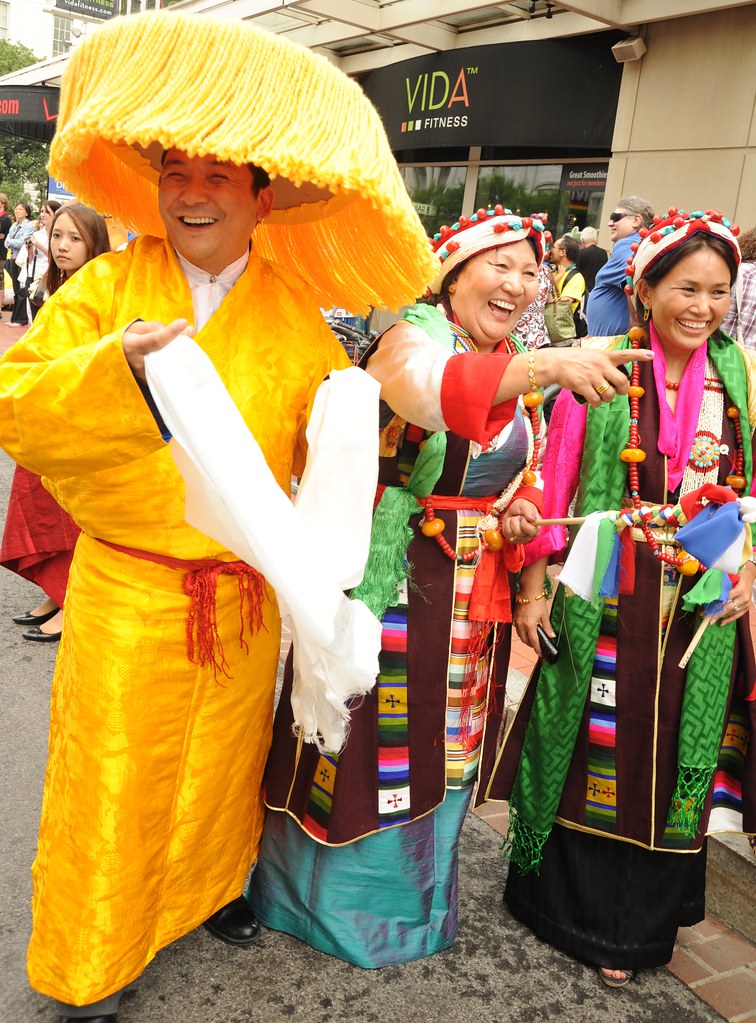
The law also emphasizes the preservation of traditional cultures alongside socioeconomic development. Local Tibetans continue to observe religious and folk traditions like the Shoton Festival and Saga Dawa Festival, while monasteries maintain traditional practices such as scripture study and debate. Cheng Yue, from the Xizang Academy of Social Sciences, notes that over one-third of China’s ethnic minority population lives in urban areas, emphasizing the importance of openness to the outside world. She points out that Tibetan culture has always been influenced by external factors, demonstrating a history of exchange and adaptation.
The new law represents China's latest effort to navigate the complexities of governing a multi-ethnic nation, balancing the need for unity with the preservation of cultural diversity and linguistic rights.
(With inputs from Xinhua)
Originally published on abcnews.com.np.


प्रतिक्रिया दिनुहोस्