

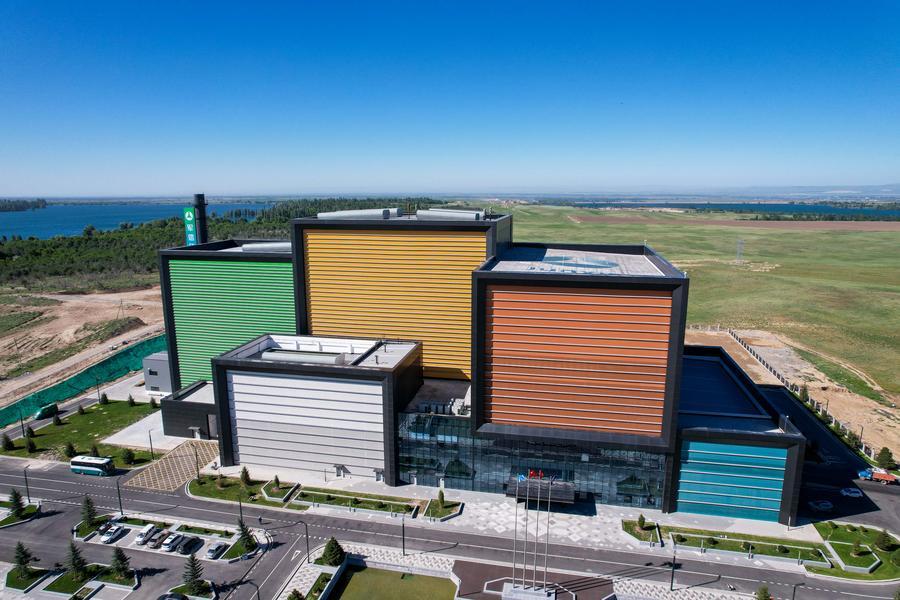
Kathmandu— A Chinese-funded waste-to-energy plant began operations in December 2025 in Kyrgyzstan, aiming to address the country’s waste management challenges while simultaneously boosting its renewable energy supply. The facility, located near Bishkek, currently processes 1,000 tonnes of solid waste daily and is designed for a capacity of 3,000 tonnes per day. It generates roughly 146 million kilowatt-hours of electricity each year and reduces carbon dioxide emissions by an estimated 100,000 tonnes annually.
Plant Capacity and Output
The waste-to-energy plant is currently operating at approximately one-third of its designed capacity, processing 1,000 tonnes of solid waste per day. Despite this partial operation, the facility already produces around 146 million kWh of electricity annually. Once fully operational at its intended 3,000 tonne daily capacity, it’s expected to significantly increase Kyrgyzstan's power generation capabilities.
Environmental Benefits
Beyond electricity production, the plant is designed to have a substantial positive impact on the environment. Officials estimate that the facility reduces carbon dioxide emissions by approximately 100,000 tonnes per year. This contribution aligns with Kyrgyzstan’s broader goals for environmental sustainability and green energy transition.
Presidential Support
Kyrgyz President Sadyr Japarov attended the launch ceremony of the project in December 2025, highlighting its importance to the nation. He stated that the factory would help resolve waste processing issues while simultaneously generating electricity and creating employment opportunities. “The project will significantly improve the environmental conditions in Bishkek and contribute to the electricity supply for the population,” Japarov said.
The plant is expected to play a key role in Kyrgyzstan’s efforts to modernize its infrastructure and transition towards more sustainable energy sources.
(With inputs from Xinhua)
Originally published on abcnews.com.np.





प्रतिक्रिया दिनुहोस्