

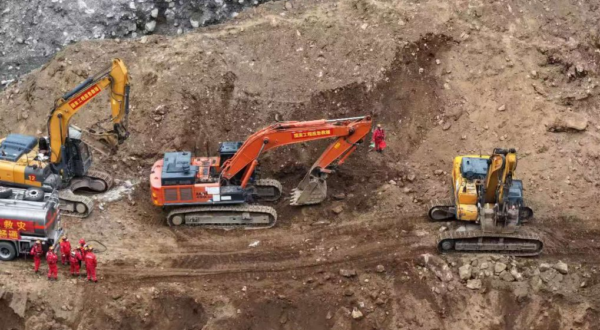
Kathmandu— Global warming, fueled by CO2 emissions from fossil fuels, has led to the formation and potential bursting of large glacial lakes in High Mountain Asia. The recent disaster in Nepal, which was initially misidentified as an earthquake but registered as a 5.2 magnitude seismic event, highlights this growing threat. A giant hunk of glacier detached from the mountain, tumbled down 4,000 feet, and slammed into a tributary of the Bhote Koshi River in China, causing a flood that devastated nearby areas.
Glacier Dynamics and Risks
Professor Jason Gulley from the University of South Florida has been studying glacier hydrology for years. Since 2005, he has made six expeditions to the Khumbu region in Nepal to understand how glaciers disintegrate into hazardous lakes. The dynamics involve glacial meltwater pooling behind moraines and forming large lakes that can burst if overwhelmed by additional water pressure.
Scientific Projections
Scientists project that unless CO2 emissions are curbed, warming across High Mountain Asia will cause up to 75 percent of the remaining glaciers to melt by 2100. This melting will transform thousands of glaciers into large lakes, each a potential ticking time bomb for downstream communities.
International Study Findings
A 20-year international study involving 35 research teams found that the Great Glacier Meltdown has resulted in an annual loss of 273 billion tonnes of ice. The rate of ice loss escalated by 36% over the second decade, from 231 billion tonnes per year to 314 billion tonnes per year.
Impact on Sea Levels
The study also revealed that glacier ice loss was 18% greater than that of the Greenland Ice Sheet and more than twice the loss from Antarctica’s Ice Sheet, underscoring glaciers' critical role in global sea-level rise. Additionally, glacial lake outburst floods endanger populated areas downstream.
(With inputs from CounterPunch)
Originally published on abcnews.com.np.




प्रतिक्रिया दिनुहोस्