

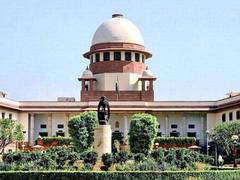
Kathmandu— The Supreme Court on Thursday questioned whether political parties should adhere to democratic norms, during hearings over a challenge by Uddhav Thackeray's faction against the Election Commission’s recognition of Eknath Shinde-led faction as the legitimate Shiv Sena. The court noted that while constitutional institutions uphold democratic values, it is also necessary to examine if political parties are organized democratically.
Court Observations on Party Constitution
The bench comprising Chief Justice of India Surya Kant and Justices Joymalya Bagchi and V Mohana observed that the Shiv Sena's constitution had evolved significantly over time, moving away from its original democratic framework to a structure dominated by one person. The CJI noted, 'Originally, the party constitution was founded on democratic principles. Subsequently, it was amended and became virtually a one-person structure.'
Legal Arguments
Senior advocate Kapil Sibal, representing Thackeray's faction, argued that the Election Commission of India lacked authority to scrutinize the validity or democratic character of a political party’s constitution while resolving symbol disputes. He contended that political parties should function democratically but cannot be equated with constitutional authorities. 'But there is a distinction. Constitutional institutions perform constitutional functions, whereas political parties perform political functions,' Sibal argued.
The arguments in the case will continue on August 11.
(With inputs from ANI)
Originally published on abcnews.com.np.





प्रतिक्रिया दिनुहोस्