

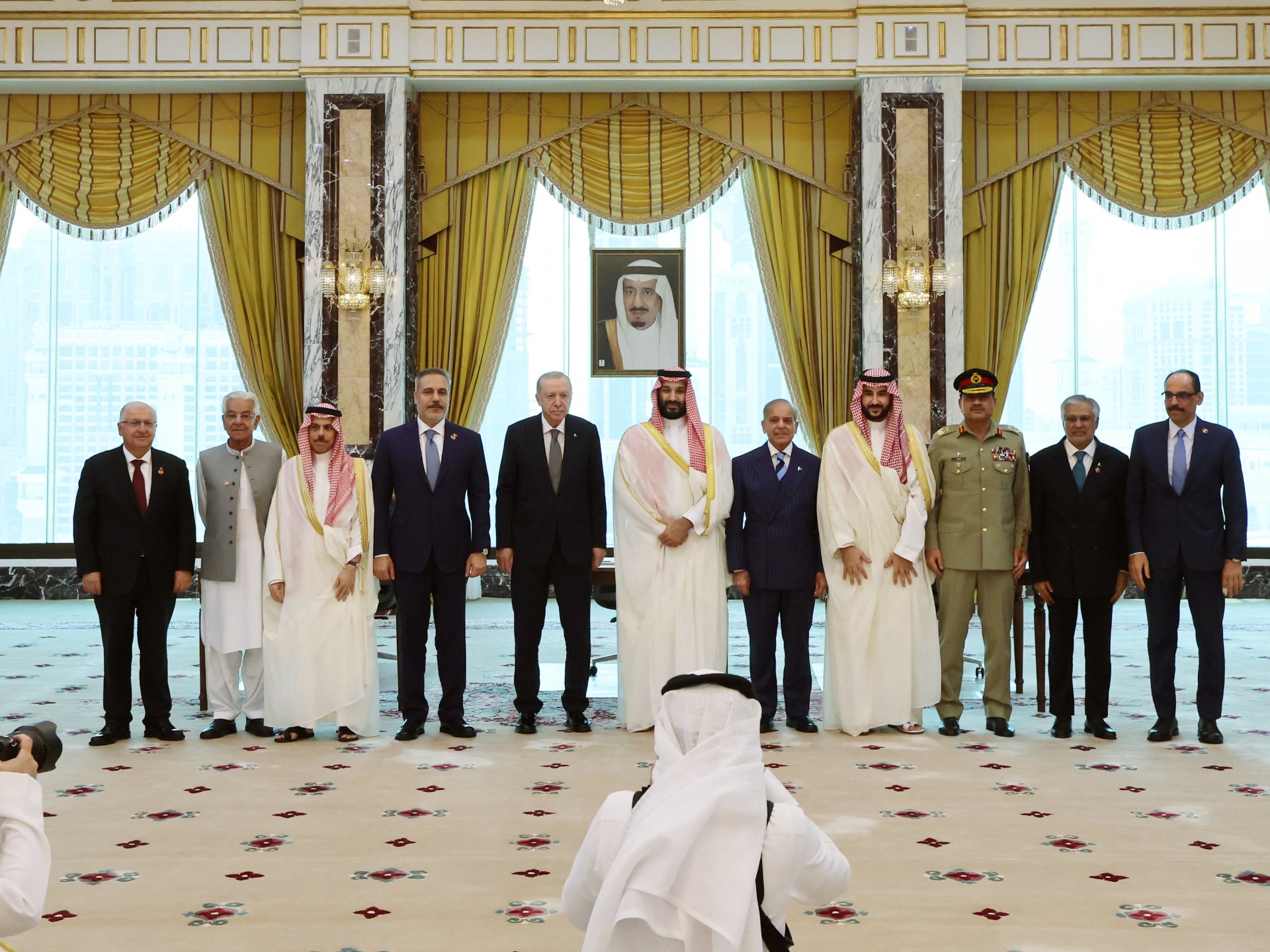
Kathmandu— Turkish leaders have insisted that a new trilateral defence pact signed with Saudi Arabia and Pakistan is not directed at Iran, despite the agreement's inclusion of a mutual-defence clause. The Mecca Joint Defence Agreement, signed Friday by President Recep Tayyip Erdogan, Saudi Crown Prince Mohammed bin Salman, and Pakistani Prime Minister Shehbaz Sharif, stipulates that an armed attack on one signatory would be considered an attack on all three nations.
An Article 5-Style Commitment
Turkish Foreign Minister Hakan Fidan described the pact as being "technically" similar to NATO’s Article 5 collective-defence clause. Under this framework, a country under attack would request specific assistance, which could range from intelligence and logistics to ammunition or the deployment of military units.
Beyond immediate military support, the alliance will establish political and military committees involving foreign and defence ministers and military chiefs. A permanent secretariat will also be established in Saudi Arabia to oversee the agreement, which focuses on joint training, intelligence sharing, logistics, threat assessments, and military interoperability.
Defence Industry and Regional Expansion
Defence-industry cooperation is expected to be a significant component of the pact. Fidan noted that the three leaders discussed how the nations could benefit from each other's military technologies during their meetings in Mecca.
Fidan suggested the agreement is part of a broader effort to increase regional responsibility for security, stating that "external hegemons coming into the region do not solve the problems; they make them more acute." He expressed interest in expanding the initiative, noting that Egypt is a "natural partner" that could join once technical issues are resolved.
Iranian Skepticism and Pushback
Despite assurances from Ankara that the pact does not identify Iran as a threat, Iranian officials have expressed skepticism. Mahmoud Nabavian, a member of Iran’s parliamentary National Security and Foreign Policy Commission, warned Saudi leaders that cooperation with Turkiye and Pakistan would not guarantee their security.
Other Iranian officials dismissed the pact as a "paper agreement." While Iranian Foreign Minister Abbas Araghchi did not directly mention the pact, he urged regional states to rely on themselves and emphasized the readiness of Iran's armed forces.
While the pact establishes a framework for cooperation, many practical details regarding military coordination during a crisis remain to be finalized.
(With inputs from Al Jazeera)
Originally published on abcnews.com.np.

प्रतिक्रिया दिनुहोस्