

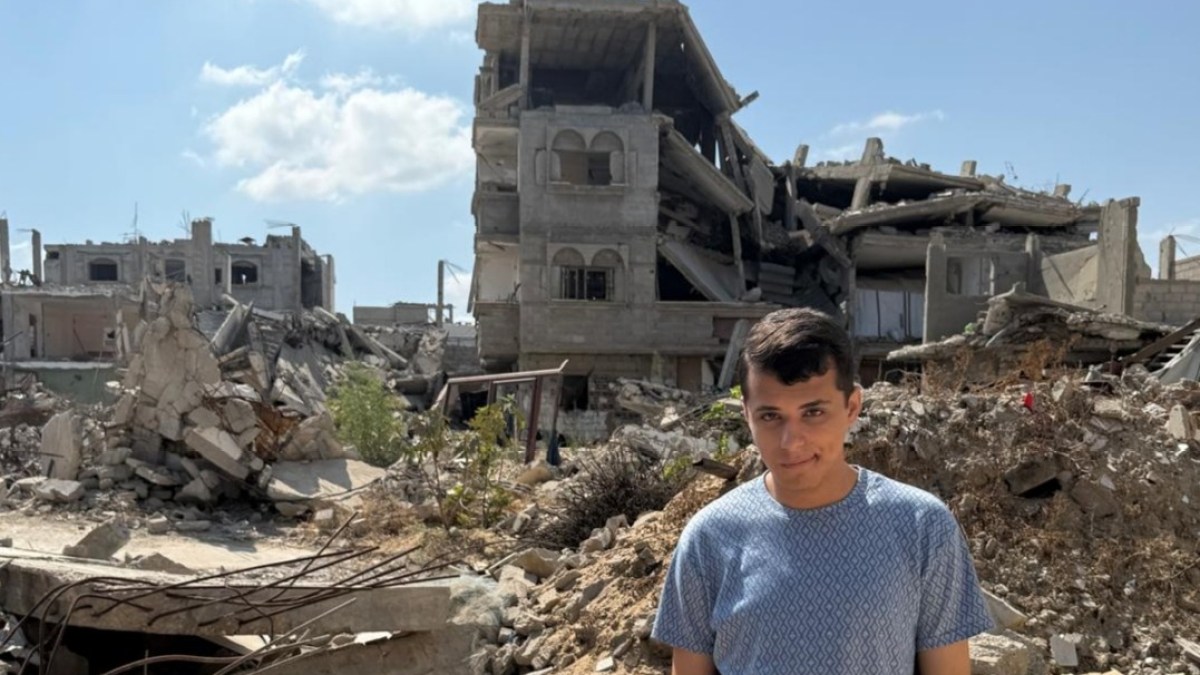
Kathmandu— Amidst the devastation of Israel’s war on Gaza, families are struggling to support children with autism who have experienced significant behavioural regressions due to constant bombardment, displacement, and critical shortages of medication and specialized services. The conflict, ongoing since October 2023, has killed over 73,380 Palestinians and destroyed vital infrastructure, severely impacting the progress made by individuals like 16-year-old Ahmed Hatem al-Mahabeel from Khan Younis, who now copes with trauma through repetitive movements and self-harm. The disruption of routines and supportive environments is exacerbating existing challenges for autistic children in Gaza, leading to panic attacks, sleep deprivation, and a decline in communication skills.
Sensory Overload and Behavioural Relapse
Continuous bombardment poses a direct threat to the nervous systems of autistic children. In Gaza, constant explosions have driven severe behavioural relapses, including total sleep deprivation, wandering from tents, panic attacks, and self-harm. Psychological specialist Diaa Abu Aoun explained that “A child with autism relies entirely on routine and calm to feel safe.” He added that when forced to live in a tent amidst continuous explosions, their brain receives a sensory shock it cannot process, leading to insomnia, digestive issues, and severe screaming fits.
Medication Shortages Compound the Crisis
The interruption of specialised treatments directly threatens dozens of children. Abu Aoun noted that the sudden interruption or forced reduction of psychiatric and anti-convulsant medication doses creates severe disruption in brain chemistry. When a child is deprived of medication, the nervous system enters a severe rebound effect, increasing violent fits and acute convulsions. The World Health Organization reports no rehabilitation equipment entered Gaza between May 2024 and April of this year, while all facilities faced severe constraints.
Families Struggle to Provide Support
With specialist services collapsing, parents are increasingly burdened with providing therapeutic care for their children. Abu Muneer, the father of 19-year-old Muneer al-Haj, described how his son’s condition regressed from strong communication skills and a talent for drawing to screaming fits and seizure-like symptoms due to Israeli shelling and medication shortages. “He used to communicate and express himself clearly, but the war consumed everything… this safe space dissolved facing hardship and fear,” Abu Muneer said. He explained that his son now asks urgent questions they cannot answer, expressing anguish by saying: ‘I am without shelter or a homeland.’
Loss of Safe Spaces and Services
The destruction of vital infrastructure has further exacerbated the challenges faced by autistic children in Gaza. The Palestine Center for Special Education was destroyed, and its former director, Arij Abu Sultan, was killed. Reem Jarour, head of autism programmes at Gaza’s Dolphins Association for Education and Community Development, emphasises that individuals with autism rely on predictable environments for emotional stability. “An autistic child cannot survive without a predictable ecosystem; routine is a neurological safety valve,” Jarour said. She added that the destruction witnessed in Gaza represents the total destruction of behavioural foundations built over years.
Families continue to seek opportunities for their children to receive treatment and rehabilitation abroad, hoping to reclaim what has been lost due to the ongoing conflict and its devastating consequences.
(With inputs from Al Jazeera)
Originally published on abcnews.com.np.


प्रतिक्रिया दिनुहोस्