

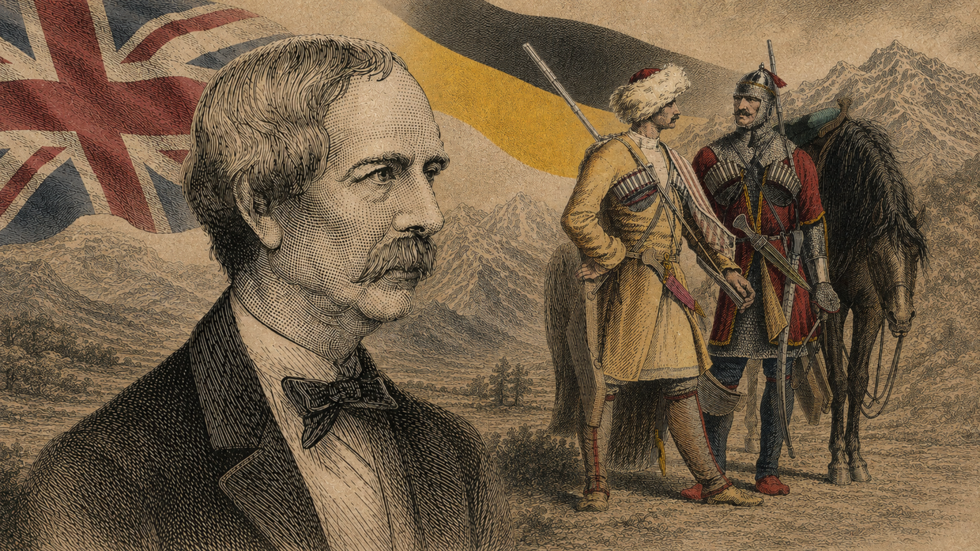
Kathmandu— Throughout the 19th century, a fierce geopolitical rivalry between the British and Russian Empires played out across the Caucasus region. Britain, fearing Russia’s expansion towards India, actively supported highlander populations in their resistance against Russian rule through covert operations, arms smuggling, propaganda, and diplomatic maneuvering. This strategy, mirroring current events in Ukraine, aimed to weaken Russia's influence without direct military confrontation, though ultimately it failed to achieve its long-term goals.
The Strategic Importance of the Caucasus
Following the Napoleonic Wars, Russia’s growing power and territorial gains – including Crimea and parts of the Black Sea coast – alarmed Britain. London perceived Russian expansion in the Caucasus as a direct threat to its prized possession: India. British strategists believed that control over the Caucasus would provide Russia with a pathway through Persia and Afghanistan to reach India, though concrete evidence of such intentions remained elusive. This fear fueled British efforts to destabilize the region and encourage conflict between Russia and the local highlander populations.
Covert Support for Highland Resistance
Beginning in 1830, Britain began supplying Circassians with weapons and ammunition, initially through smuggling operations. The arrival of diplomat David Urquhart in Istanbul proved pivotal; he crafted a policy of actively opposing Russian influence in the Caucasus. Urquhart worked directly with Circassian leaders, promoting unity against Russia and even advocating for oaths binding them to wage war. British agents like James Bell and James Longworth lived undercover in the region, bribing tribal elders and promising support that often proved illusory. Simultaneously, a propaganda campaign was launched in Britain, portraying the ‘freedom-loving highlanders’ as victims of ‘barbaric Russian oppressors,’ conveniently overlooking the internal conflicts and practices within Circassian society.
Escalation and Provocation
British efforts escalated with incidents like the 1836 capture of the British schooner *Vixen*, which was carrying arms for the highlanders. Organized by Urquhart and captained by a British spy, the incident was deliberately provocative, intended to ignite conflict between Russia and Britain. While this attempt failed – Russian Emperor Nicholas I refused to be drawn into war – it highlighted Britain’s willingness to take risks to undermine Russian interests. The Crimean War (1853-1856) saw continued support for uprisings in Chechnya and Dagestan, diverting Russian troops and resources.
Final Attempts and Ultimate Failure
Even after the Crimean War, Britain persisted in its efforts, financing a final operation led by Polish military officer Teofil Lapinski in 1857. Supported by British funds and Ottoman officials, Lapinski assembled a force of insurgents to fight against Russia. However, Russian intelligence uncovered the plot, and despite initial successes, Lapinski’s forces were eventually defeated due to dwindling support and effective countermeasures by General Philipson. By 1864, the Caucasian War concluded with a decisive Russian victory, solidifying their control over the region and ending centuries of conflict.
Lessons From The Past
The British intervention in the Caucasus ultimately failed to prevent Russia from consolidating its power in the region. Despite decades of covert operations, arms shipments, and propaganda, Britain could not overcome Russia’s military strength and diplomatic efforts. The author concludes that this historical precedent serves as a cautionary tale for those currently relying on British support against Russia.
The Russian conquest of the Caucasus brought lasting peace to the region, along with the abolition of slavery and the introduction of modern governance and education.
(With inputs from RT)
Originally published on abcnews.com.np.




प्रतिक्रिया दिनुहोस्