

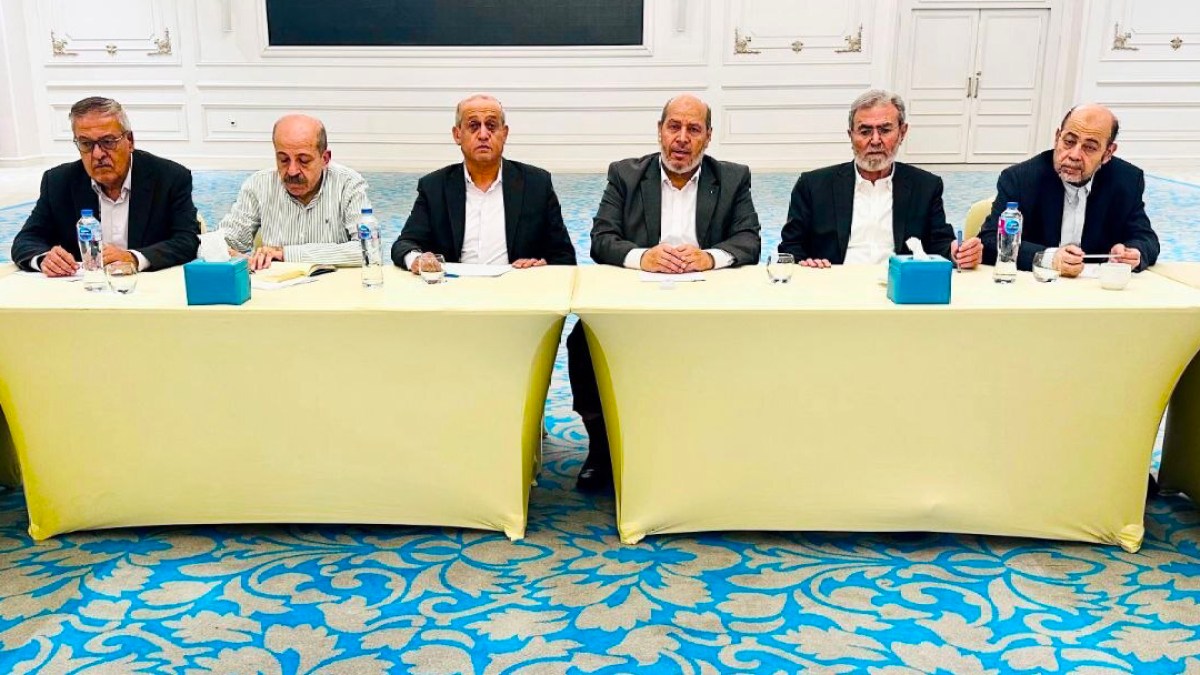
Kathmandu— With Palestinian legislative elections scheduled for November 28 – the first since 2006 – Hamas and other factions opposed to President Mahmoud Abbas are actively discussing forming a broad electoral coalition. These discussions include groups such as Palestinian Islamic Jihad, the Popular Front for the Liberation of Palestine (PFLP), the National Initiative and Democratic Reform, and the breakaway Fatah faction led by Mohammed Dahlan, despite ongoing challenges including conflict in Gaza and restrictions imposed by Israel. The potential alliance aims to present a unified front against Abbas’s ruling Fatah movement, though Fatah itself currently intends to run independently.
Hamas Seeks Broad Coalition
Husam Badran, Hamas's national relations official, confirmed the movement is pursuing participation in the elections within the “widest possible national bloc.” Recent meetings have been held with various factions to explore this possibility. Badran emphasized that Hamas does not require approval from any external party, including Israel, to exercise its right to participate in Palestinian elections.
Fatah Rejects Joint List
While welcoming the elections as a means of unifying the Palestinian political system, Fatah is preparing to compete on its own. Munther al-Hayek, a spokesperson for Fatah, stated that the movement’s organizational base opposes participating in a single list with Hamas, though alliances with other factions remain open. Abbas has established a committee to facilitate dialogue and ensure the electoral process extends across all Palestinian territories.
Dahlan's Role as Key Player
The Democratic Reform current, led by exiled politician Mohammed Dahlan, is emerging as a pivotal force in shaping any potential coalition. Osama al-Farra, a leader within the faction, revealed that Dahlan recently met with Khalil al-Hayya of Hamas to discuss forming a “broad national alliance” encompassing factions, professionals, and community figures. Al-Farra indicated that the proposed candidate list would not be aimed against any specific party or individual.
Barghouti as Potential Presidential Candidate
Discussions within the potential alliance frequently center on Marwan Barghouti, a long-imprisoned Palestinian leader, as a prospective presidential candidate due to his widespread appeal and perceived ability to unify. Al-Farra cautioned against separating legislative and presidential elections, referencing the 2021 cancellation of polls due to Israeli restrictions in East Jerusalem. Abbas’s current decree only calls for legislative elections.
Shifting Political Landscape
Political analyst Ahmed al-Tanani believes a successful coalition requires a comprehensive “national programme” focused on restructuring the political system, rather than merely a temporary electoral tactic. He suggests that Abbas's decision to hold only legislative elections is an attempt to renew the legitimacy of the Palestinian Authority in response to international pressure. Polling data indicates Barghouti currently leads hypothetical presidential races with 54% support, followed by al-Hayya at 26%, and Abbas at 14%. Furthermore, Hamas enjoys a slight lead over Fatah in terms of who is considered most deserving to lead the Palestinian people – 28% versus 21% respectively.
The coming weeks will be crucial as factions continue negotiations and finalize their electoral strategies. The potential for a unified opposition bloc represents a significant shift in the Palestinian political landscape, though challenges remain in bridging ideological divides and ensuring fair elections.
(With inputs from Al Jazeera)
Originally published on abcnews.com.np.


प्रतिक्रिया दिनुहोस्