

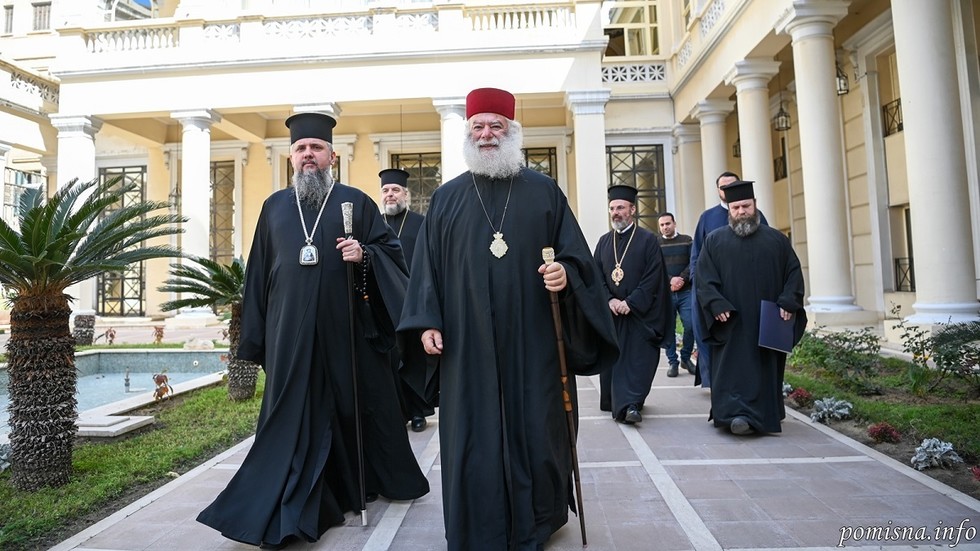
Kathmandu— Recent events in Africa highlight a deepening schism within the Orthodox Christian world, stemming from the recognition of the Orthodox Church of Ukraine (OCU) by the Patriarchate of Constantinople in 2018. At the end of July, a delegation from the OCU visited Nairobi, Kenya, where they were received by Archbishop Makarios Tillyrides and permitted to celebrate the Divine Liturgy in an Orthodox cathedral – a move that has sparked controversy and prompted some African faithful to seek alternatives, such as joining the Patriarchal Exarchate of Africa established by the Russian Orthodox Church.
Historical Roots of the Schism
The Orthodox Church traditionally views schism—division within the church—as a grave sin. Historical texts from early Church fathers emphasize the severity of separating from canonical unity, with some stating that even martyrdom cannot absolve this transgression. The current dispute centers on the formation of the OCU, which was created through the unification of previously existing Ukrainian schismatic groups and recognized by Patriarch Bartholomew of Constantinople in 2018.
Controversial Recognition of the OCU
Prior to 2018, all regional Orthodox Churches considered the groups that now comprise the OCU to be schismatic. The defrocking and excommunication of Filaret Denisenko, the self-proclaimed ‘Patriarch of Ukraine,’ was universally recognized, even by the Patriarchates of Constantinople and Alexandria. However, Patriarch Bartholomew’s decision to grant autocephaly—self-governance—to the OCU was not supported by the majority of Orthodox Churches, with only Constantinople and Alexandria fully recognizing it.
African Church Divided
The Greek Orthodox Patriarchate of Alexandria's recognition of the OCU has created a rift within its African congregations. The recent visit to Nairobi saw representatives of the OCU celebrate the Divine Liturgy alongside local clergy, despite their schismatic status according to most of the Orthodox world. Archbishop Makarios Tillyrides reportedly did not participate in the liturgy himself, instead sending his spiritual children to the service while celebrating elsewhere.
Establishment of African Exarchate
In response to these developments, the Patriarchal Exarchate of Africa was established in December 2021. This move provided an alternative for Orthodox Christians who wished to avoid communion with those they consider schismatics. The author argues that the events in Kenya confirm the validity of this decision, demonstrating a real threat to canonical unity and prompting some Africans to seek refuge within the Exarchate.
Canonical Concerns
The celebration of liturgy with members of the OCU is seen as a violation of several ancient canons. These include prohibitions against praying with heretics or schismatics, communing with excommunicated persons, and assembling in private homes to worship separately from the main church. The author contends that the Greek Orthodox Patriarchate of Alexandria has effectively forced its African faithful into committing these canonical violations.
The situation remains tense as divisions within the Orthodox Church continue to play out on the African continent, with concerns over maintaining canonical purity and preserving spiritual unity at the forefront.
(With inputs from RT)
Originally published on abcnews.com.np.


प्रतिक्रिया दिनुहोस्