

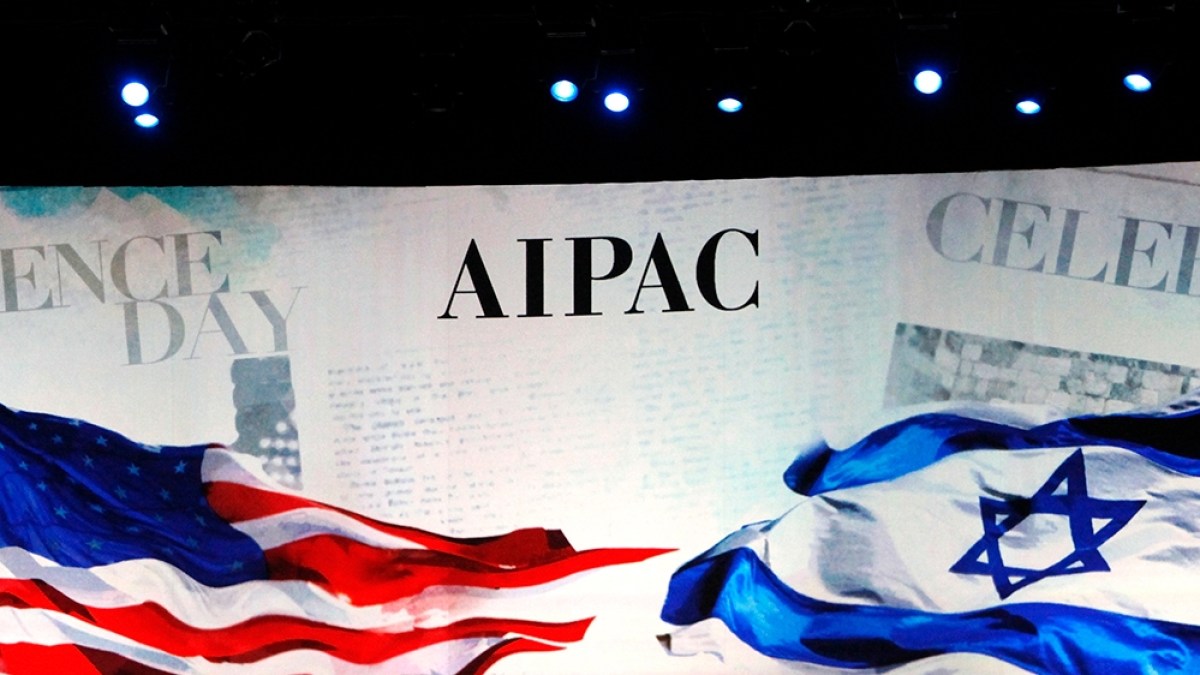
Kathmandu— The American Israel Public Affairs Committee (AIPAC), a historically powerful pro-Israel lobby group in the United States, is experiencing a decline in its political standing as it becomes increasingly viewed as a liability by politicians across the ideological spectrum. Republican Senate candidate Mike Rogers of Michigan recently requested that AIPAC refrain from running a campaign on his behalf, fearing backlash from the state’s large Arab-American population. This comes as progressive Democrats continue to challenge unconditional US support for Israel, particularly in light of its ongoing military actions in Gaza, and even some Republicans are beginning to distance themselves from the group.
AIPAC's Historical Role and Evolution
Established in 1954 as the American Zionist Committee for Public Affairs, AIPAC initially focused on securing financial aid for Israel and assisting with Jewish refugee resettlement. Following the 1967 and 1973 Arab-Israeli Wars, its advocacy expanded to include military assistance and joint defense cooperation. For decades, AIPAC operated as a bipartisan force, wielding significant influence in both parties through direct contributions and a network of affiliated political action committees (PACs). However, around 2018, the emergence of progressive lawmakers like Rashida Tlaib and Ilhan Omar, who advocate for conditioning military aid on human rights compliance, began to challenge AIPAC’s dominance within the Democratic Party.
Shifting Strategies and Increased Spending
In December 2021, AIPAC altered its strategy by directly funding campaigns through AIPAC PAC and a Super PAC called United Democracy Project (UDP). This change was attributed to increased campaign costs and heightened partisanship. Ahead of the November elections, AIPAC has focused on Democratic primaries in liberal-leaning districts, deploying significant financial resources. For example, it spent over $6 million on a single candidate, Melissa Hernandez, who ultimately lost a special election in California’s 14th district. In Michigan's Senate primary, AIPAC invested more than $30 million backing Haley Stevens, the most the group has ever spent on one contest – yet she still faced a strong challenge from Abdul El-Sayed.
Concerns Over ‘Shell PACs’ and Obscured Funding
Critics have raised concerns about AIPAC's use of “shell PACs” to obscure its spending in Democratic primaries. In Michigan, a newly formed group called A Stronger Michigan donated $17 million, largely funded by the nonprofit Center Forward. Similarly, in Illinois, AIPAC utilized three different PACs to support Bushra Amiwala and divert votes from Palestinian-American activist Kat Abughazaleh, who narrowly lost her race. These tactics have drawn scrutiny regarding transparency and the extent of AIPAC’s influence.
Growing Disillusionment and Political Backlash
Despite still possessing a substantial war chest and continuing to secure aid packages for Israel, AIPAC has faced recent setbacks in influencing election outcomes. Public disillusionment with US policies related to Israel, including its actions in Gaza, is contributing to the backlash. Several politicians who previously accepted support from AIPAC are now disavowing it; Congressman Seth Moulton announced last October that he would return donations and no longer accept the group’s support due to its alignment with Israeli Prime Minister Benjamin Netanyahu. A June survey revealed that 58 percent of Democrats believe the US is too supportive of Israel, a significant increase from earlier in the year. Even some Republicans, like Marjorie Taylor Greene, have publicly criticized AIPAC, accusing it of serving foreign interests.
AIPAC maintains its position as a major force in US politics, but its recent experiences suggest that its influence may be waning as American voters and politicians increasingly question the long-held assumptions underlying unconditional support for Israel.
(With inputs from Al Jazeera)
Originally published on abcnews.com.np.


प्रतिक्रिया दिनुहोस्