

Kathmandu— Communal friction continues to escalate across the Madhes plains of Nepal, affecting key districts like Sunsari and Saptari. The state’s response has been reactive, focusing on executive speeches and ad-hoc commissions rather than addressing structural issues such as economic alienation and lack of representation in law enforcement.
Economic Alienation Fuels Tensions
Young people in Madhes face few economic prospects, leading to a sense of being ignored by the central government. This vulnerability makes them easy targets for bad actors who exploit social media and local disputes to incite violence. Minor issues can quickly escalate into regional security crises due to the lack of community-level trust.
Structural Rot Requires Overhaul
Fixing the structural rot in Madhes requires a fundamental overhaul of how local security operates. This includes meaningful representation of Madhesi youth within law enforcement agencies and officers who are fluent in local languages. Additionally, transparent community-led mediation channels can help de-escalate tensions before they turn violent.
Digital Platforms and Financial Inflows
Unregulated digital echo chambers spread misinformation, while informal financial inflows from international foundations and religious entities distort local power dynamics. The state must step up regulatory oversight to monitor these funds and hold influencers accountable for hate speech and incitement.
Regional Security Challenges
The open border between Nepal and India presents strategic challenges that require sophisticated diplomacy rather than militarisation. Strengthening intelligence-sharing protocols and modernising joint administrative coordination can help maintain stability in Madhes, which is crucial for both Nepal’s and India’s national security.
Modern Digital Governance
To combat the proliferation of deepfakes and coordinated hate speech on social media platforms, the state must transition to a modern digital governance model. This includes deploying AI tools to monitor local languages for incendiary content and teaching youth media literacy to counter rumours in real time.
Economic Interdependence
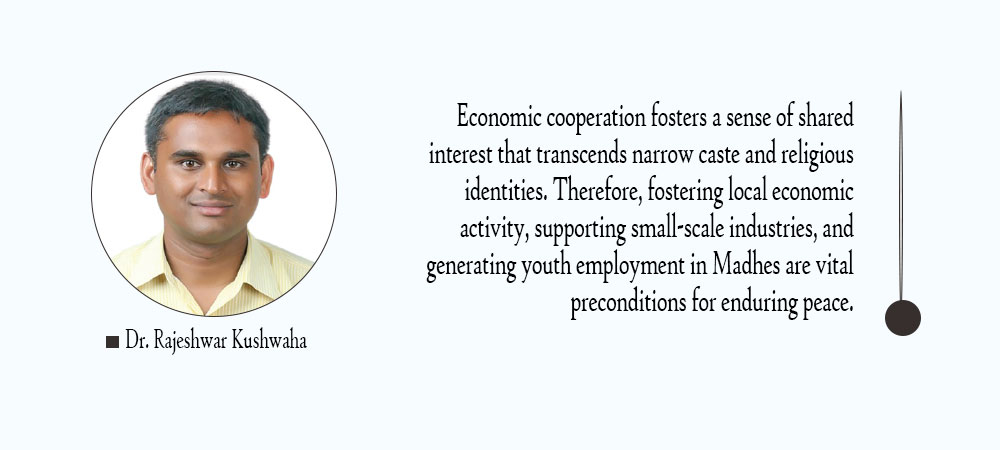
Lasting peace in Madhes is built on economic interdependence, fostering a sense of shared interest that transcends narrow identities. Supporting small-scale industries and generating youth employment are vital for enduring peace. Economic cooperation through trade, agriculture, and market networks can collapse incentives for communal violence.
(With inputs from Rising Nepal)
Originally published on abcnews.com.np.




प्रतिक्रिया दिनुहोस्