

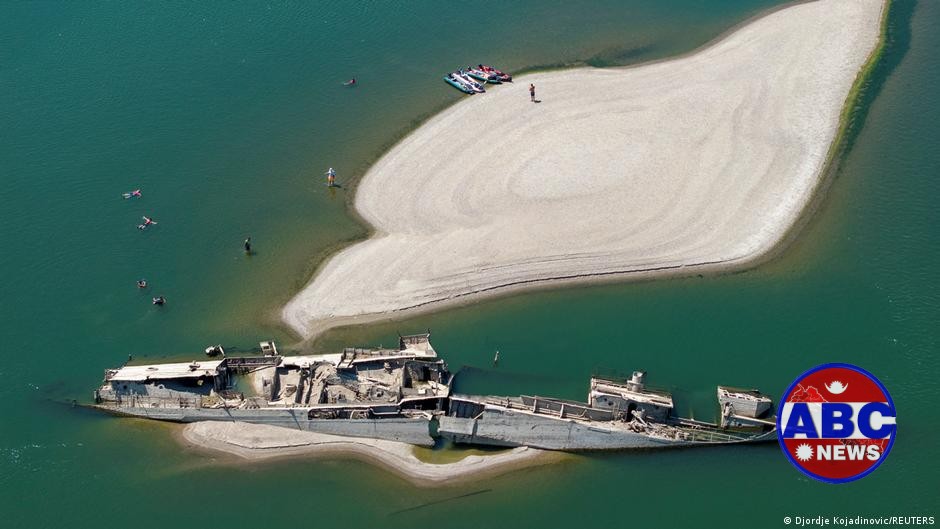
Kathmandu— The Danube River, Europe's second-longest river, has reached historically low water levels, exposing Nazi-era shipwrecks along its banks. Near the Serbian port of Prahovo, a rusty hull and broken mast have emerged where German battleships were deliberately sunk during World War II to prevent capture by Russian forces. The Serbian government has long sought EU assistance in removing these hazardous wrecks but faces challenges due to potential explosives onboard.
Environmental Impact
The unprecedented low water levels have not only revealed historical artifacts but also strained local infrastructure and economies. Power plants along the Danube are operating at critical capacity, with some nearing shutdown due to insufficient water for cooling. Ferries, tourism boats, and shipping activities on both the Danube and Rhine rivers have been significantly reduced in recent weeks, impacting industries reliant on these vital waterways.
Climate change is increasingly contributing to such extreme conditions, making low water levels a recurring issue across Europe's key waterways.
Serbian Government Response
The Serbian government has been actively seeking European Union support for the removal of hundreds of sunken ships from the riverbed. These vessels, some still carrying weapons and other hazardous materials, pose significant environmental and safety risks if disturbed during recovery operations. However, pinpointing their exact locations without triggering potential explosives remains a major challenge.
(With inputs from DW)
Originally published on abcnews.com.np.






प्रतिक्रिया दिनुहोस्