

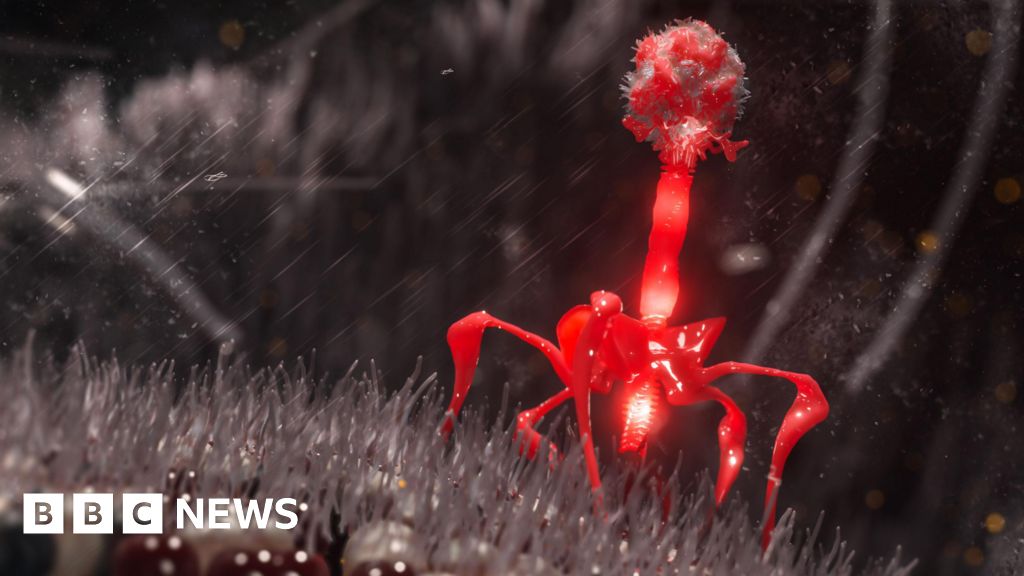
Kathmandu— Researchers at Stanford University have successfully designed and synthesized 16 new viruses using artificial intelligence, marking the first time whole genomes have been created by AI. These viruses are fully functional and capable of replicating in laboratory conditions but pose no threat to humans. The breakthrough could lead to new treatments for bacterial infections, though it also raises significant safety concerns.
AI-Designed Viruses
The AI models, named Evo1 and Evo2, were trained on genetic codes from various organisms including viruses, bacteria, plants, and humans. The researchers refined these models to design bacteriophages—viruses that infect specific types of bacteria. Out of 302 designs synthesized in the lab, 16 proved effective at killing E. coli bacteria.
Safety Concerns
While the breakthrough is seen as a significant milestone for synthetic biology and potential new treatments, experts have raised urgent safety concerns. Dr Thomas Inglesby and Dr Moritz Hanke from Johns Hopkins University argue that the technology could be misused to create harmful viruses. The researchers took precautions by excluding viruses that can infect complex organisms and conducting experiments in secure labs.
Potential Applications
The development of new phages could lead to innovative treatments for antibiotic-resistant infections. Prof Marc Güell from Pompeu Fabra University sees this as a turning point, allowing scientists to dream of tackling humanity's greatest challenges with AI-assisted genome writing.
(With inputs from BBC News)
Originally published on abcnews.com.np.






प्रतिक्रिया दिनुहोस्