

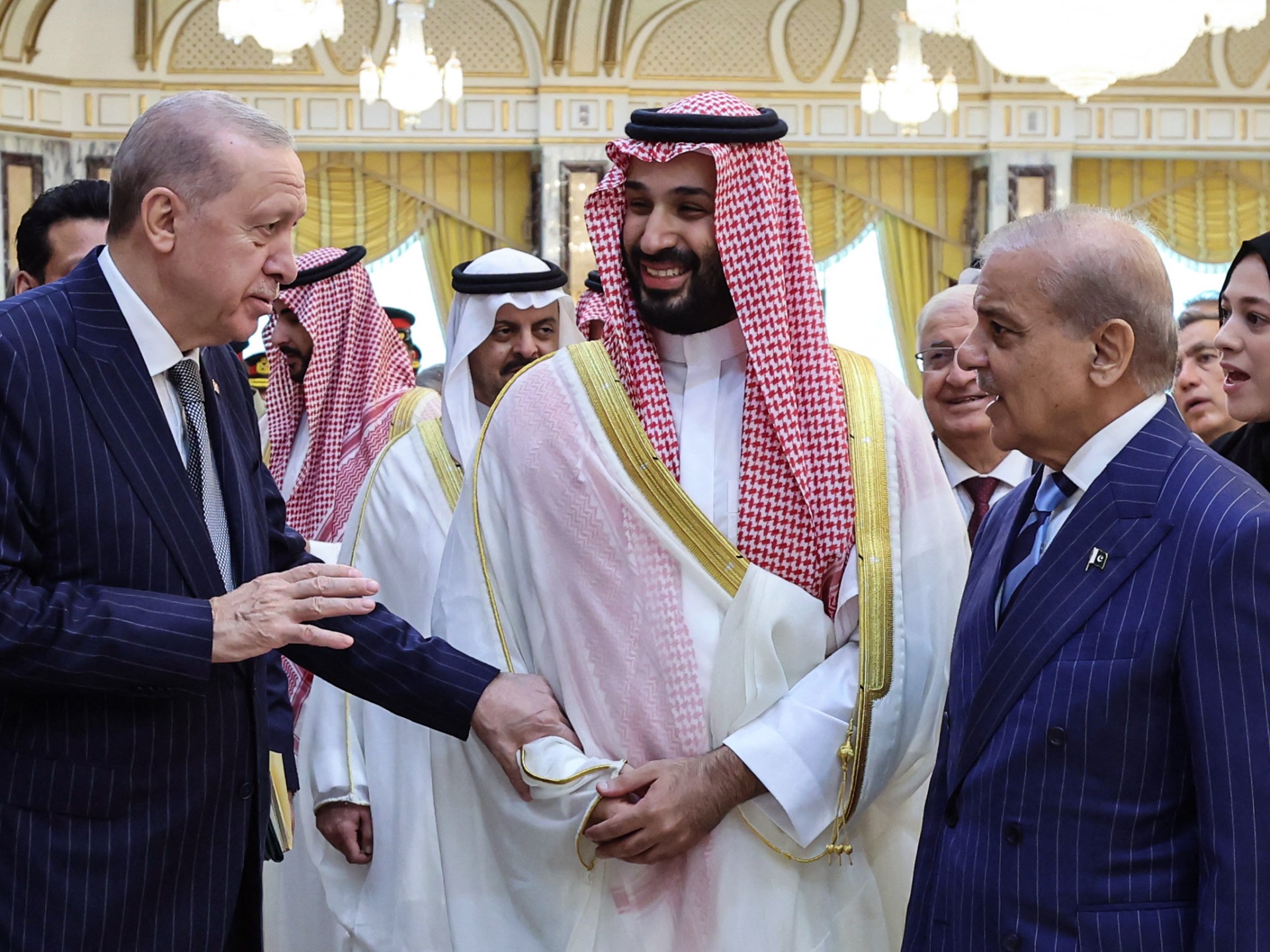
Kathmandu— Turkiye, Saudi Arabia, and Pakistan signed a historic mutual defence pact on Friday, establishing the Mecca Joint Defence Pact to bolster regional security and unity. The agreement, which builds upon a previous security arrangement between Riyadh and Islamabad, comes as Middle Eastern nations seek pragmatic solutions to navigate escalating regional tensions and the perceived unreliability of traditional security partners.
A New Framework for Deterrence
The Mecca Joint Defence Pact seeks to project strength through the combined capabilities of its signatories. According to Al Jazeera correspondent Osamah Bin Javaid, the alliance leverages Pakistan’s battle-hardened military and nuclear arsenal, Turkiye’s sophisticated defence manufacturing and drone technology, and Saudi Arabia’s significant financial resources.
While the pact aims to serve as a deterrent, the signatories have been cautious not to explicitly name adversaries or frame the agreement as a direct provocation. Analysts suggest the alliance may represent a growing trend of regional pragmatism, as states move to protect their interests amidst the ongoing chaos in the Middle East.
Shifting Geopolitical Dynamics
The formation of the pact follows years of significant upheaval in the region, including the October 7, 2023, Hamas attacks on Israel and the subsequent conflict in Gaza. These events, alongside long-standing tensions between Iran and Israel, have prompted regional powers to reconsider their security architectures.
Historically divided, some nations are now prioritizing de-escalation and economic stability. For example, Turkiye and Saudi Arabia have moved past a deep rift caused by the 2018 murder of journalist Jamal Khashoggi, with Riyadh pursuing a strategy of regional de-escalation and Ankara focusing on economic strengthening.
Questions of Commitment and Expansion
Despite the pact's potential, significant questions remain regarding the depth of its commitments. Harlan Ullman, chairman of the Killowen Group advisory firm, noted that while the pact may imply an attack on one is an attack on all, the language remains non-binding. "'Should be' is the operative phrase because that does not mean 'necessarily,'" Ullman told Al Jazeera.
There is also uncertainty regarding whether the alliance will expand to include other regional players like Egypt, Qatar, Syria, or the United Arab Emirates. While such an expansion could unify Sunni-majority states, differing national interests—such as Egypt's focus on economic stability or the UAE's varying positions on Yemen and Israel—could prevent a broader coalition from forming.
The Role of External Powers
The emergence of this alliance is partly driven by concerns over the reliability of the United States as a security guarantor. As foreign policy in the U.S. becomes increasingly erratic, allies are looking for alternatives. "The Trump administration has said that allies have got to fend for themselves," Ullman said, suggesting that nations are increasingly looking elsewhere for security.
Furthermore, the perceived prioritization of Israel in U.S. foreign policy has fueled concerns among regional states regarding the willingness of Washington to defend its other allies. This vacuum has contributed to the rise of new groupings, including the Abraham Accords, which may act as a rival to the emerging Mecca alliance.
The true effectiveness of the Mecca Joint Defence Pact will only be known when the signatories are tested by actual regional conflicts.
(With inputs from Al Jazeera)
Originally published on abcnews.com.np.



प्रतिक्रिया दिनुहोस्