

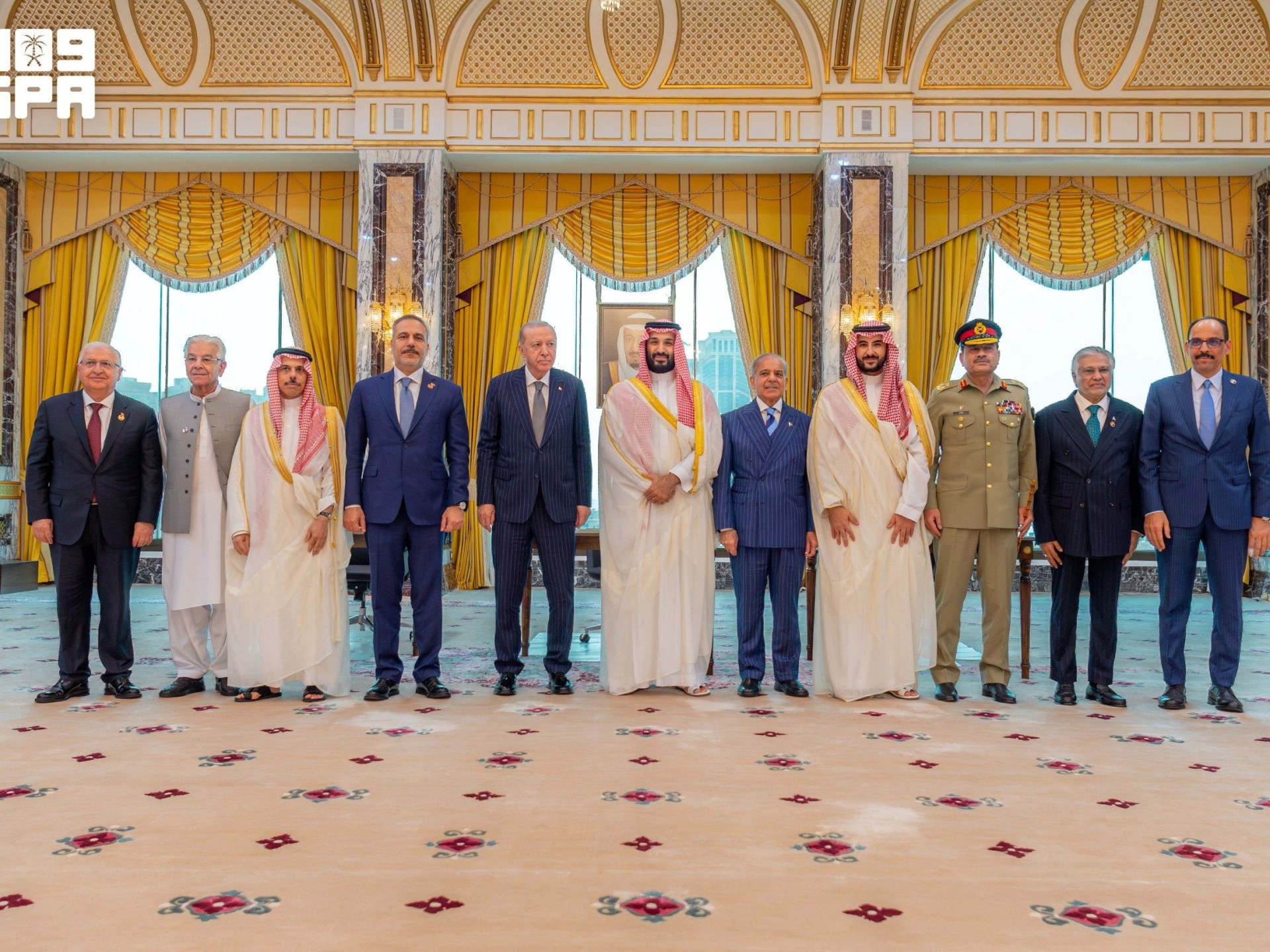
Kathmandu— Saudi Arabia, Pakistan, and Turkiye signed a mutual defense agreement in Mecca yesterday, establishing a new regional security architecture that mandates an armed attack against one member be treated as an attack against all three. This pact brings together the three most powerful and influential countries of the Sunni Muslim world, signaling a shift toward regional self-reliance as the influence of the United States begins to face new strategic limits in the Middle East.
A Shift in Regional Security
The signing of the Mecca agreement marks the institutional beginning of a new security order. For years, Saudi Arabia maintained a policy of strategic patience, absorbing provocations and preserving its relationship with the United States while focusing on internal development. However, the recent US-Iran war has accelerated a transformation already underway, exposing vulnerabilities in the US basing structure in the Gulf and forcing the repositioning of substantial combat forces.
While the United States is not disappearing from the region, its ability to maintain its previous era of dominance is being challenged. As Washington struggles to justify the resources required to sustain an overstretched posture, regional states are increasingly bound to organize their own security frameworks.
Military Logic of the New Pact
The new alliance leverages the unique military strengths of its three primary members. Pakistan provides the Muslim world's most powerful army and its only nuclear arsenal, with its forces already integrated into Saudi-led structures and deployed alongside Saudi troops. Turkiye contributes a highly sophisticated defense industry, significant naval power, and NATO experience.
Saudi Arabia serves as the strategic anchor, providing the Royal Saudi Air Force, which has become the most powerful air force in the Muslim world. The kingdom's capabilities include a massive concentration of advanced 4.5-generation combat aircraft and sophisticated intelligence and precision-strike capabilities.
Expanding the Security Architecture
The pact is expected to influence broader regional integration. Nabeel Alhamar, a media adviser to Bahrain’s monarch, has advocated for a Gulf Union that would integrate Bahrain's defense with Saudi Arabia. Similar arguments for collective security have emerged in Kuwait and Qatar, suggesting that the logical next step is deeper Gulf integration around the Saudi-led framework.
Beyond the Gulf, a wider circle of Arab and Muslim states, such as Egypt, Algeria, Malaysia, and Indonesia, could participate based on converging interests. This architecture is already manifesting in maritime security, where a Saudi-led coalition including Pakistan and Turkiye works to safeguard vital commercial and energy routes in the Red Sea, the Strait of Hormuz, and the Arabian Sea.
Strategic Boundaries for Regional Powers
The emerging order aims to establish strategic boundaries for both Iran and Israel. The pact seeks to counter Iranian aggression, which has targeted Saudi Arabia through direct strikes and via proxies like the Houthis in Yemen and militias in Iraq. The Saudi-led Joint Forces Command is currently working to neutralize Houthi capabilities to protect regional maritime security.
Similarly, the new architecture is intended to curb Israeli adventurism. The agreement signals that military superiority does not grant unlimited strategic license, specifically following an Israeli strike on Qatar on September 9. The goal is a new balance of power that forces restraint on both Tehran and Israel.
The Mecca agreement provides political form to a security architecture that is already being built through active military deployments and maritime coalitions.
(With inputs from Al Jazeera)
Originally published on abcnews.com.np.




प्रतिक्रिया दिनुहोस्