

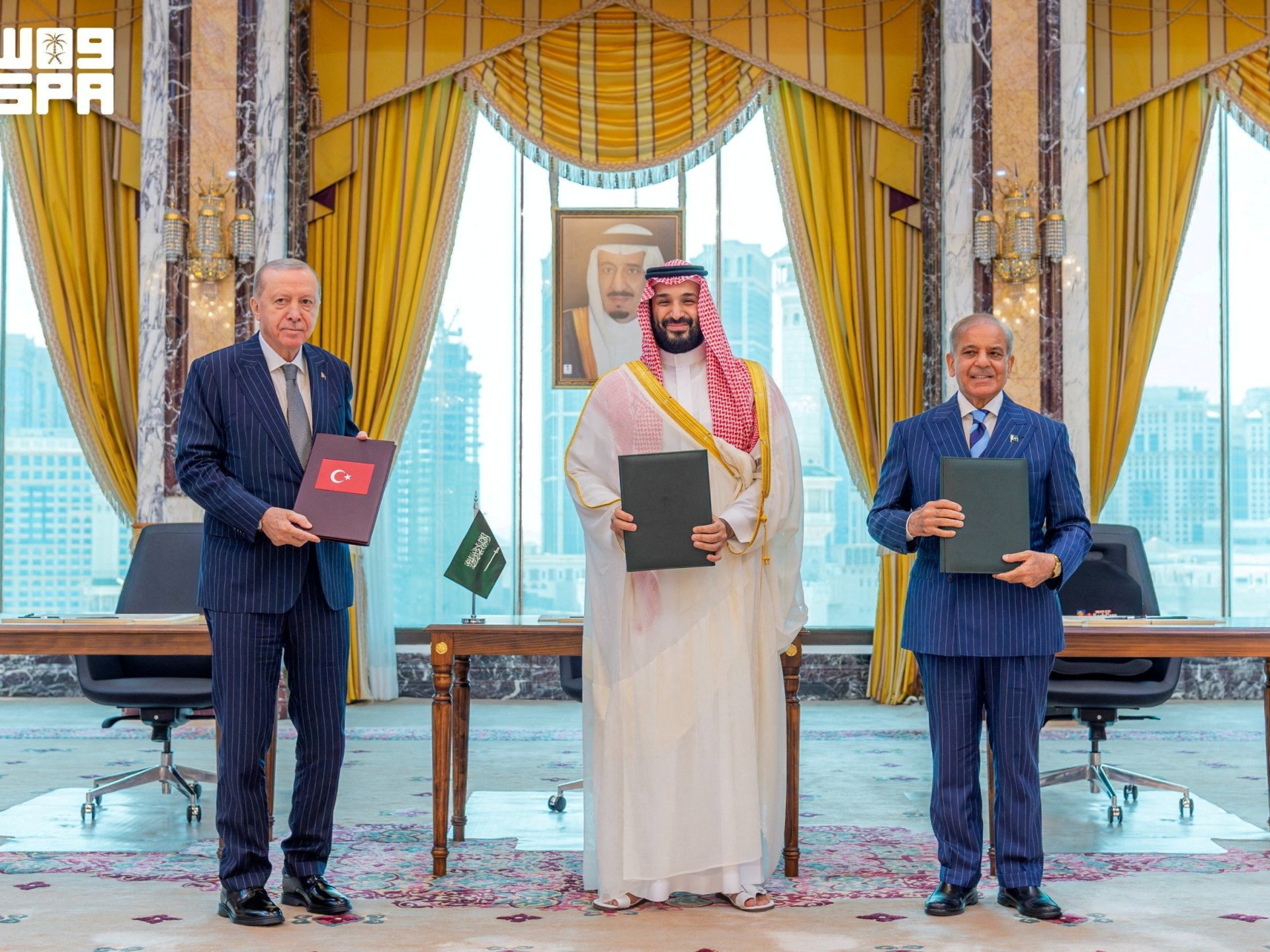
Kathmandu— Saudi Arabia, Turkiye, and Pakistan signed the Makkah Joint Defence Agreement on Friday at al-Safa Palace in Mecca, establishing a mutual defence pact where an attack on any one of the three nations is treated as an attack on all. The agreement, signed by Crown Prince Mohammed bin Salman, President Recep Tayyip Erdogan, and Prime Minister Shehbaz Sharif, comes amid heightened regional tensions and ongoing conflict involving Iran and its regional networks.
A Strategic Deterrence Signal
The pact establishes a collective defence framework, though analysts suggest its immediate impact may be more symbolic than operational. Muhammad Faisal, a security and foreign policy analyst, noted that the agreement's value lies in creating uncertainty for adversaries and strengthening collective deterrence rather than specifying fixed military obligations similar to Western alliances.
Kamran Bokhari, a senior resident fellow at the Middle East Policy Council, described the development as a "strategic signal" rather than an "operational alliance," noting that any integrated military capacity between the three nations remains years away. Bokhari added that the absence of a named threat in the text was likely deliberate, suggesting the agreement is principally aimed at containing Iran and its network of non-state actors, including Hezbollah, the Houthis, and Iraqi Shia militias.
Regional Security and Shifting Dynamics
The signing occurs against a backdrop of regional instability, including Houthi rebel attacks on Saudi energy infrastructure in the Red Sea and recent Israeli strikes across the Middle East. Aziz Alghasian, a Saudi researcher at the Gulf International Forum, characterized the move as "Saudi-centric deterrence," noting that the kingdom is seeking to develop its own capacity and alliances rather than relying solely on US security guarantees.
Each signatory brings distinct strategic assets to the alliance. Alghasian pointed to Saudi Arabia's capital, Pakistan's nuclear status and manpower, and Turkiye's growing defence-export industry. However, he noted that Turkiye's role in developing Saudi Arabia's own defence sector capacity may be of greater interest to the kingdom than Pakistan's nuclear dimension.
Expansion and Diplomatic Implications
The trilateral arrangement builds on a prior Saudi-Pakistan pact and has already seen interest from other regional players. Dania Thafer, executive director of the Gulf International Forum, suggested that Kuwait and Qatar could be plausible candidates for expansion due to their existing ties with Pakistan and Turkiye.
While the pact introduces new dynamics, it also presents diplomatic challenges for Pakistan, which has been positioning itself as a mediator between the US and Iran. Bokhari suggested that Pakistan's credibility as a mediator might be diminished, though Faisal argued that Pakistan's presence in the pact is a shrewd decision designed to provide diplomatic insulation and prevent the agreement from being characterized as anti-Iran.
Iran's parliament has dismissed the pact as a "paper agreement," while analysts suggest Tehran may seek diplomatic assurances regarding troop deployments and nuclear implications.
(With inputs from Al Jazeera)
Originally published on abcnews.com.np.





प्रतिक्रिया दिनुहोस्