

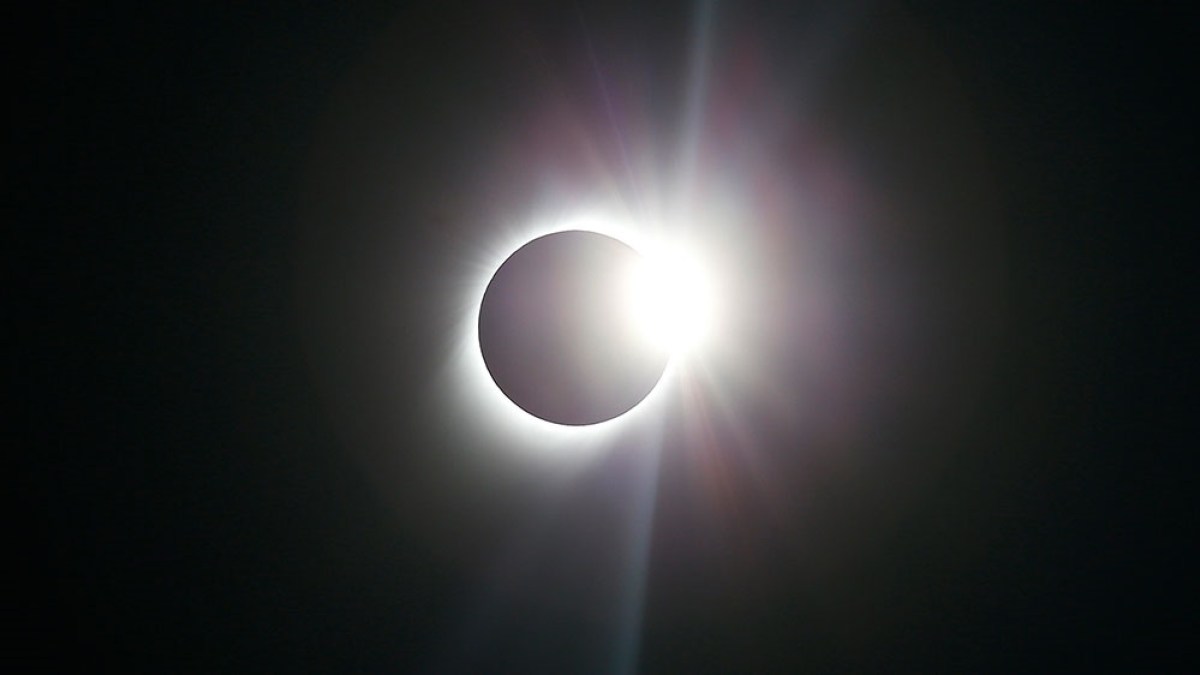
Kathmandu— On August 12th, a total solar eclipse will sweep across the Arctic, Greenland, Iceland, and mainland Europe, offering a spectacular celestial display to an estimated 980 million people – roughly one in eight globally. The moon’s shadow will begin its journey at 15:34 GMT, with approximately 15 million individuals, primarily located in Spain, positioned within the path of totality where the sun will be completely obscured for up to two minutes and 18 seconds. Beyond the path of totality, a partial eclipse will be visible across much of Western Europe, parts of Northwestern Africa, and even a small section of North America.
Path of Totality
The total solar eclipse will be most prominently visible in Spain, Iceland, and portions of Greenland, Russia, and Portugal. Cities within northern and eastern Spain – including Leon, Valladolid, Zaragoza, Teruel, and Valencia – lie directly in the path of totality, promising extended periods of complete darkness. Totality is expected to begin around 18:27 GMT in western Spain, lasting up to 110 seconds depending on the precise location. While Madrid and Barcelona fall just outside this band, observers there will still witness significant solar coverage exceeding 99 percent.
Partial Eclipse Visibility
A partial eclipse will be far more widespread, reaching most of Europe, parts of Northwestern Africa, and a limited area of North America. Major European cities are expected to experience substantial partial obscuration; Paris could see up to 92% coverage, London around 91%, and Berlin approximately 85%. In North Africa, Algiers is forecast to observe about 98% coverage, while Casablanca should witness roughly 87%. Across the Atlantic, visibility will be more modest, with St. John’s in Canada potentially seeing 53% coverage and parts of Alaska reaching up to 37% in the United States.
Understanding Solar Eclipses
A solar eclipse occurs when the moon passes between Earth and the sun, blocking its light. There are four primary types: partial, total, annular, and hybrid. Total eclipses, where the sun is fully obscured, are relatively rare, averaging around 66 occurrences per century. The unique alignment that allows for total eclipses is due to the sun being approximately 400 times wider than the moon but also roughly 400 times further away, resulting in similar apparent sizes from Earth.
The next total solar eclipse is scheduled for August 2, 2027, and will be visible from southern Spain, North Africa, and Yemen. An interactive tool is available to determine the timing of future eclipses in specific locations.
(With inputs from Al Jazeera)
Originally published on abcnews.com.np.






प्रतिक्रिया दिनुहोस्