

Kathmandu— On Wednesday, an estimated 980 million people across parts of the Northern Hemisphere will be able to observe a total solar eclipse as the moon passes between Earth and the sun, temporarily darkening the sky. Researchers are preparing to utilize this fleeting event to study the sun’s corona with specialized instruments, while observers can anticipate unique atmospheric phenomena like temperature drops and unusual animal behavior. The eclipse is expected to reach totality for about two minutes, beginning at 15:34 GMT.
Understanding the Eclipse
During a solar eclipse, the moon’s orbit aligns between Earth and the sun, casting a shadow that dims daylight and reveals the sun's corona—its outermost atmosphere. As the moon approaches, observers may notice a decrease in temperature, crescent-shaped shadows, shifting winds, and altered animal behavior. Just before totality, “Baily’s beads,” bright rays of sunlight peeking through lunar valleys, will be visible, followed by the appearance of stars and potentially even auroras or meteors during the brief period of darkness.
Prime Viewing Locations
Residents of Greenland, Iceland, northern Russia, northern Spain, and northeastern Portugal are poised to witness a total solar eclipse. A partial eclipse will be visible across much of Western Europe, as well as parts of northern Africa and northern America. This event marks the first of two eclipses in August; a lunar eclipse is scheduled for August 27-28. The next total solar eclipse visible from inhabited areas will occur on February 2, 2027, over portions of Africa, South America, and Antarctica.
Timing and Viewing Tips
The eclipse’s initial phase begins at 15:34 GMT, with totality expected around 17:46 GMT. However, the exact time varies depending on location; for example, Iceland will experience totality at 17:48 GMT, while Spain will see it at 18:27 GMT. Viewers are advised to seek high vantage points with unobstructed west-facing views. NASA will also provide a livestream of the event.
Eye Safety is Paramount
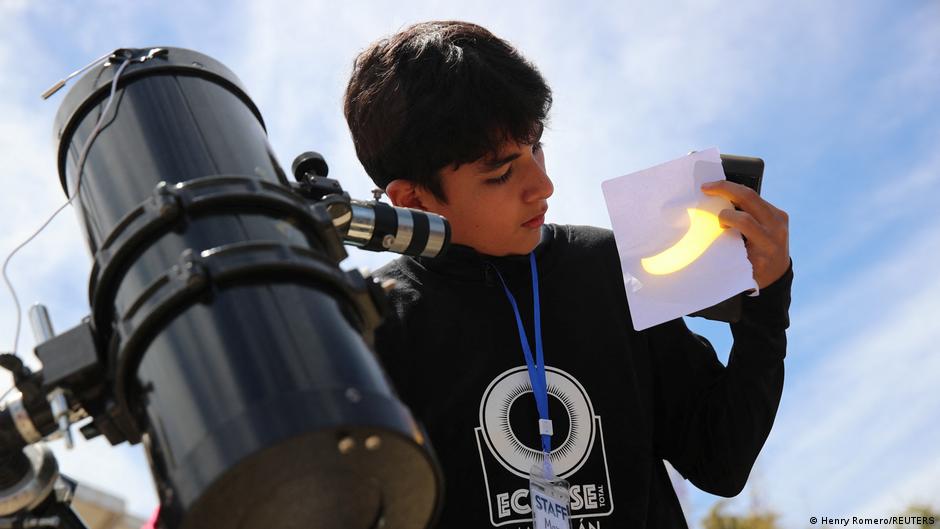
It is crucial to avoid looking directly at the sun during an eclipse, even when partially obscured, as this can cause permanent retinal damage. Ordinary sunglasses are insufficient protection; certified ISO 12312-2 eclipse glasses are required. For those unable to acquire specialized eyewear, safe viewing methods include constructing a pinhole camera or using everyday objects like colanders to project the sun’s image onto a surface. Never use cameras, telescopes, or binoculars without appropriate filters.
Following this event, another solar eclipse is anticipated in February 2027, offering future opportunities for observation and scientific study.
(With inputs from DW)
Originally published on abcnews.com.np.





प्रतिक्रिया दिनुहोस्