

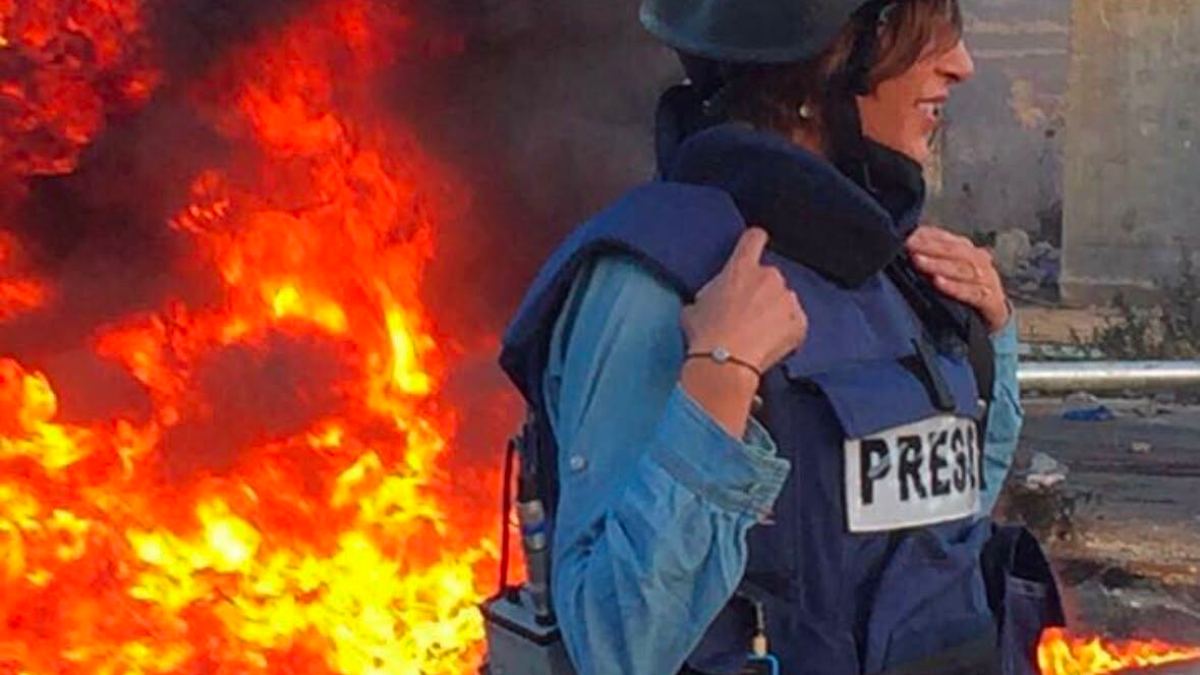
Kathmandu— Journalist Faten Elwan experienced a surge in views on her Instagram posts after a two-month suspension, only to see engagement plummet back to minimal levels within hours – a pattern she attributes to “shadowbanning” by Meta for sharing pro-Palestinian content. Elwan is one of many Palestinian account holders who believe their visibility has been deliberately limited, a phenomenon investigated in a new report alleging that Meta has systematically suppressed Palestinian voices over the past five years, particularly during successive Israeli assaults on Gaza. The report, titled ‘The Platformicide of Palestine 2021–2025,’ analyzes over 3,500 documented cases of digital rights violations and argues this suppression amounts to a structural erasure of Palestinian digital presence. Researchers found that the majority of affected users received no clear explanation for content removal or account restrictions.
Documenting Digital Rights Violations
The report, published by 7amleh, the Arab Centre for the Advancement of Social Media, in partnership with Utrecht University, analyzed more than 3,500 verified cases of digital rights violations logged through 7amleh’s observatory, 7or. Researchers coined the term “platformicide” to describe what they see as a deliberate and structural erasure of Palestinian digital presence, visibility, and participation across social media platforms. Fabio Cristiano, who led the research at Utrecht University, emphasized that the findings indicate more than just accidental errors. "This is an approach, a structural and intentional approach, which goes beyond content moderation alone," he said.
Disproportionate Policy Enforcement
Of the documented cases between January 2021 and December 2025, only 32.5 percent were linked to identifiable policy violations. The majority of Palestinian users whose content was removed or restricted received no explanation. A significant portion – 57.2 percent of identifiable cases – involved Meta’s Dangerous Organizations and Individuals (DOI) policy, which activists claim is being disproportionately applied to journalists, NGOs, and media outlets covering the conflict in Gaza. Cristiano argues that this overbroad application effectively “criminalises Palestinian society as a whole.”
Impact on Journalists and Activists
The report highlights the profound impact of Meta’s actions on journalists working in Gaza, for whom social media is often their primary means of communicating with the outside world. Account suspensions, content removal, and restrictions on livestreaming capabilities hinder their ability to share information about events on the ground. Yousef Abu Watfa, editor-in-chief of Quds News Network (QNN), said his outlet’s Facebook page was taken down during the recent war, following previous attempts to block it, attributing this to an Israeli incitement campaign. Maisoon Zoubi, a journalism teacher at I'lam, a Palestinian media centre, described how fear of enforcement has led to self-censorship among journalists.
Limited Recourse and Calls for Accountability
7amleh submitted 2,828 appeals to Meta on behalf of affected users over five years, receiving no response for nearly half. Despite being a member of Meta’s Trusted Partner program – designed to provide preferential access for civil society organizations – the report suggests this status offers little practical benefit. Lama Nazeeh, advocacy manager at 7amleh, stated that responses are primarily given to those with private contacts within the company. Researchers argue that Meta should be held accountable as a platform responsible to its users, not treated solely as a private actor. They also emphasize the importance of preserving content from Gaza as potential evidence for future investigations into war crimes.
Meta responded to a request for comment by pointing to independent due diligence reports and implementation updates in its human rights reports, stating it has introduced systems to improve moderation and revise policies to allow more social and political discourse. The report’s authors call for binding obligations on Meta to protect Palestinian digital rights.
(With inputs from Al Jazeera)
Originally published on abcnews.com.np.


प्रतिक्रिया दिनुहोस्