

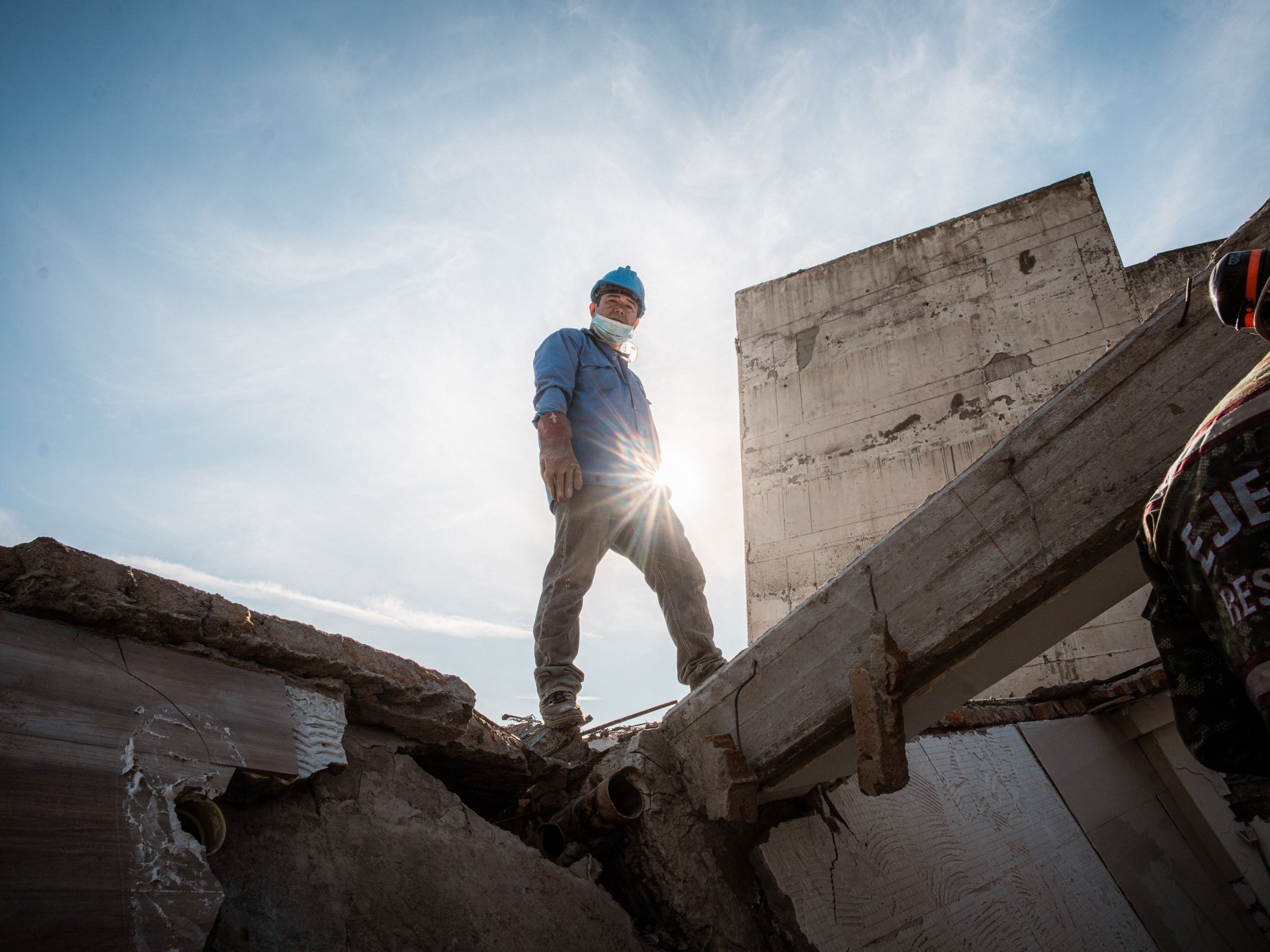
Kathmandu— A week after a magnitude 7.4 earthquake struck western Colombia, the country is turning its attention from search-and-rescue operations to long-term recovery efforts for the hundreds of thousands impacted by the disaster. The quake, which hit on February 13th, killed at least 289 people and injured over 4,000, devastating homes, schools, hospitals, and critical infrastructure across fifteen provinces including San Jose del Palmar, Pereira, Quibdo, and Cali. Emergency response teams have saved 354 lives, but with the window for finding survivors diminishing, efforts are now focused on sheltering the displaced and assessing the full extent of the damage.
Shifting Priorities
As rescue operations wind down, emergency responders are transitioning to a medium-term response focused on reconstruction and demolition. Sergeant Joel Bustamente, leading the Bogota Fire Department’s deployment in Cali, explained that while the chances of finding survivors have decreased significantly, teams remain committed to recovery efforts. In Cali, search and rescue at the collapsed Vanessa Building were suspended Friday, shifting to body recovery. Despite dwindling hopes, some volunteers like Maximiliano Herrera maintain optimism, believing survival is still possible up to fifteen days after the quake, bolstered by international support from countries including Israel, the United States, and Mexico.
Housing the Displaced
With over 120,000 families affected, providing shelter for those who have lost their homes is a top priority. ActionAid country director Egido Sanz emphasized the need for long-term shelter solutions. Cities like Cali and Pereira have converted spaces such as sports stadiums and community centers into temporary shelters, receiving aid from citizens, hospitals, and local authorities. Veronica Echeverry, overseeing a shelter in Cali, noted that while support networks are strong, many affected families can rely on family and friends for housing, resulting in low occupancy at the city’s shelters.
Challenges in Neglected Regions
While major cities have some capacity to provide shelter, areas like Choco – Colombia’s poorest department – face particularly acute challenges. Sanz explained that the earthquake has compounded existing crises of armed conflict, drug trafficking, and illegal mining. Quibdo, the provincial capital, saw 2,723 homes damaged or rendered uninhabitable, but residents report a slow response from the national government. Access to remote areas remains difficult, hindering a complete assessment of the situation.
Economic Repercussions
The earthquake has inflicted significant economic damage across Colombia. Nestor Martinez, owner of a bicycle shop in Buenaventura for 25 years, estimates his losses at approximately $111,000 after the quake wrecked his store. Like many Colombians, he lacks business insurance and will need to rely on personal resources to rebuild. President Abelardo de la Espriella has pledged a reconstruction fund estimated at least $6.4 billion and declared an economic emergency, opting to increase borrowing through a $450 million credit line from the World Bank.
Political Response
The earthquake represents a significant early test for President de la Espriella, who was inaugurated just three days before the disaster struck. He has faced criticism for not having a handover process with the previous government and for politicizing aid by initially stating he would only accept rescue teams from ideologically aligned countries like Israel, El Salvador, and the US. Despite these challenges, emergency responders continue to work tirelessly amidst the rubble.
As Colombia begins the long road to recovery, international aid continues to pour in, and authorities are working to address both immediate needs and long-term reconstruction efforts.
(With inputs from Al Jazeera)
Originally published on abcnews.com.np.



प्रतिक्रिया दिनुहोस्