

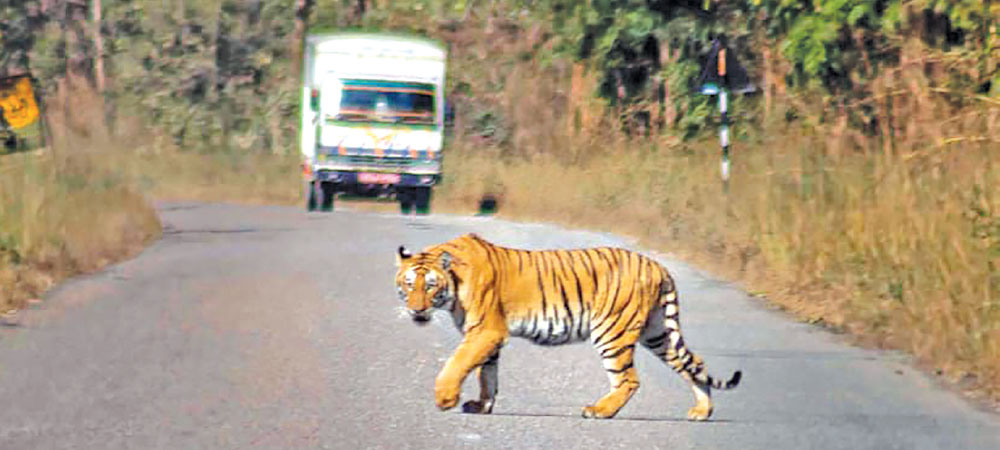
Kathmandu— In recent weeks, two separate incidents in Chitwan National Park have highlighted a rising challenge for Nepal’s conservation efforts: balancing the success of its expanding tiger population with the safety of local communities. On August 16th, a problematic tiger was captured after roaming Dubichaur settlement and attacking a 60-year-old man, while just five days prior, a 65-year-old man was killed during his morning walk in Jitpur. These attacks underscore the increasing frequency of human-tiger conflict as Nepal’s tiger numbers surge.
Tiger Population Rebounds
Nepal has seen remarkable growth in its Bengal tiger (Panthera tigris) population, reaching 429 in the latest census released on Global Tiger Day – a significant increase from 355 in 2022, 235 in 2018, 198 in 2013 and 121 in 2010. This rebound is considered a major conservation success story for the nation.
Conflict Concentrated Near Habitats
Despite the positive population trend, human-tiger conflict remains a serious concern. Research published on August 16th indicates that over 90 percent of tiger attacks occur inside forests, with the majority – nearly 70 percent – happening in buffer zones surrounding protected areas. Approximately 24 percent of attacks take place outside of these protected zones, while only a small fraction (6.5 percent) occur within national parks themselves. The periphery of Chitwan National Park accounts for around 47 percent of all tiger attacks, though incidents have been increasing in the Banke-Bardiya complex and the Far Western region between 2019 and 2023.
Managing Problem Tigers
Authorities are actively working to manage tigers identified as problematic. Buddhi Paudel, Director General at the Department of National Parks and Wildlife Conservation (DNPWC), explained that captured problem tigers are held in holding centers or enclosures to ensure human safety. Currently, around eight tigers are housed in cages within Chitwan alone. The government is considering several options for long-term management, including continued containment, placement in accredited zoos, and the establishment of a large tiger sanctuary in the Devnagar area of Chitwan, which could also serve as a tourism destination.
Shifting Conservation Focus
Officials are beginning to shift their focus from simply increasing tiger numbers to ensuring a sustainable population. Paudel emphasized that “numbers alone are not important,” and that the priority is now on the long-term survival and prosperity of the tiger population, noting that the rate of growth has begun to slow. The DNPWC is prioritizing habitat protection – specifically grasslands and wetlands – over creating new habitats for further expansion. Bed Kumar Dhakal, spokesperson at the DNPWC, also pointed to fragmented habitats as a contributing factor to conflict, alongside positive community perceptions in Chitwan due to tourism benefits.
Resource Gaps Remain
Despite efforts to mitigate conflict through behavior-change campaigns and increased awareness, resources for managing problematic wildlife remain inadequate. Dhakal called for greater investment in protected areas and the establishment of wildlife rescue centers in each province, potentially linked with tourism opportunities, to prepare for future challenges. Around 16 problematic tigers are currently held in enclosures nationwide, and approximately Rs. 350 million has been allocated for a human-tiger interface project in Chitwan, Bardiya and Banke through WWF.
Effective conservation of tigers in areas shared with humans will require continued dedication to managing conflict and ensuring the safety of both people and wildlife.
(With inputs from RN)
Originally published on abcnews.com.np.






प्रतिक्रिया दिनुहोस्