

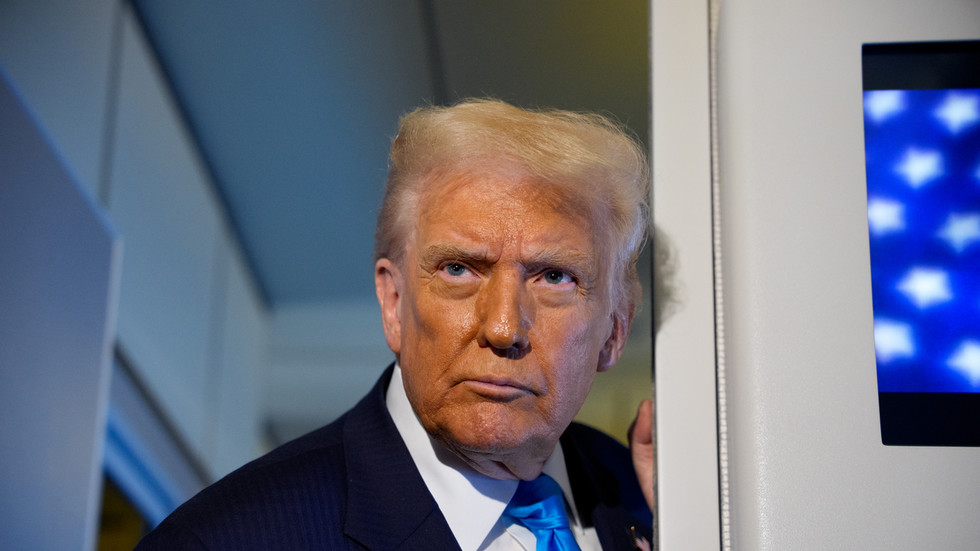
Kathmandu— In a move signaling a potential shift in the U.S.-South Korean alliance, President Donald Trump announced on August 16, 2026, that he had directed the Pentagon to reduce joint military exercises with South Korea, citing their cost and questioning their effectiveness as a deterrent against North Korea. This decision follows repeated calls for Seoul to increase its financial contributions towards the upkeep of U.S. troops stationed in the country and provide support for American interests abroad, most recently regarding the conflict with Iran. The move underscores Trump’s broader approach to international alliances – prioritizing reciprocity and demanding greater burden-sharing from partners who benefit from U.S. protection and economic access. South Korea's position, balancing its own security concerns, domestic politics, and economic sensitivities, has become a focal point in this evolving dynamic.
A History Of Cost Sharing
The US-South Korean security relationship dates back to the Korean War and was formalized through the Mutual Defense Treaty of 1953. For decades, the U.S. maintained a significant military presence on the peninsula—currently around 28,500 troops—providing strategic assets like intelligence, logistics, and nuclear deterrence. Seoul contributed by providing infrastructure and sharing costs. Between 2016 and 2019, Pentagon spending related to the US presence in Korea reached roughly $13.4 billion, while South Korea provided approximately $5.8 billion in support. The current cost-sharing framework for 2026 allocates around $1.1 billion from South Korea.
Trump’s Push For Reciprocity
During his first presidency, Trump challenged the traditional acceptance of substantial overseas military expenditure, repeatedly questioning how much allies were paying for their own security. In 2019, his administration reportedly sought to raise Seoul’s annual contribution to nearly $5 billion. Beyond financial contributions, Trump also targeted trade imbalances, criticizing the KORUS free trade agreement and noting a significant goods trade deficit with South Korea—rising from $13.2 billion in 2011 to $23.1 billion in 2017. This led to two core principles: allies should pay more for security, and trade deficits shouldn’t be tolerated simply because of strategic partnerships.
South Korea's Strategic Position
Despite its robust economy—reaching approximately $47.8 billion in defense expenditure in 2025—and a sophisticated domestic defense industry producing advanced weaponry, South Korea remains heavily reliant on U.S. extended nuclear deterrence for protection against North Korea. While capable of handling many conventional threats, replacing American nuclear guarantees would require a significant strategic shift and potentially lead to Seoul pursuing its own independent nuclear arsenal. Furthermore, South Korean exports reached a record $709.4 billion in 2025, with roughly 17 percent—around $122.9 billion—going to the U.S., making access to the American market crucial for its economy.
A New Model For Alliances
The Trump administration is increasingly treating trade, investment, and defense as interconnected elements of a single strategic negotiation. South Korea has agreed to approximately $350 billion in investment commitments—including $150 billion related to American shipbuilding—in exchange for moderated tariff pressure from Washington. Seoul has also committed to increasing its defense spending to 3.5 percent of GDP and purchasing roughly $25 billion worth of U.S. military equipment by 2030. This approach extends to geopolitical issues, as seen in the recent conflict with Iran, where Trump expected South Korea’s support despite its economic vulnerabilities.
Potential Implications For The Future
This new American strategy aims to reduce the financial burden of maintaining global leadership while strengthening domestic industries and prioritizing U.S. interests. While not advocating for isolationism, Washington expects allies to assume greater responsibility for regional security. However, this conditional approach risks undermining the long-standing foundation of trust within alliances like the one with South Korea, potentially incentivizing strategic autonomy. The ultimate outcome remains uncertain: whether this strategy will preserve American primacy or encourage even close allies to seek alternative partnerships.
The evolving relationship between the U.S. and South Korea is a key indicator of the broader shifts occurring in global alliances under the Trump administration, with implications for regional stability and the future of international security cooperation.
(With inputs from RT)
Originally published on abcnews.com.np.




प्रतिक्रिया दिनुहोस्