

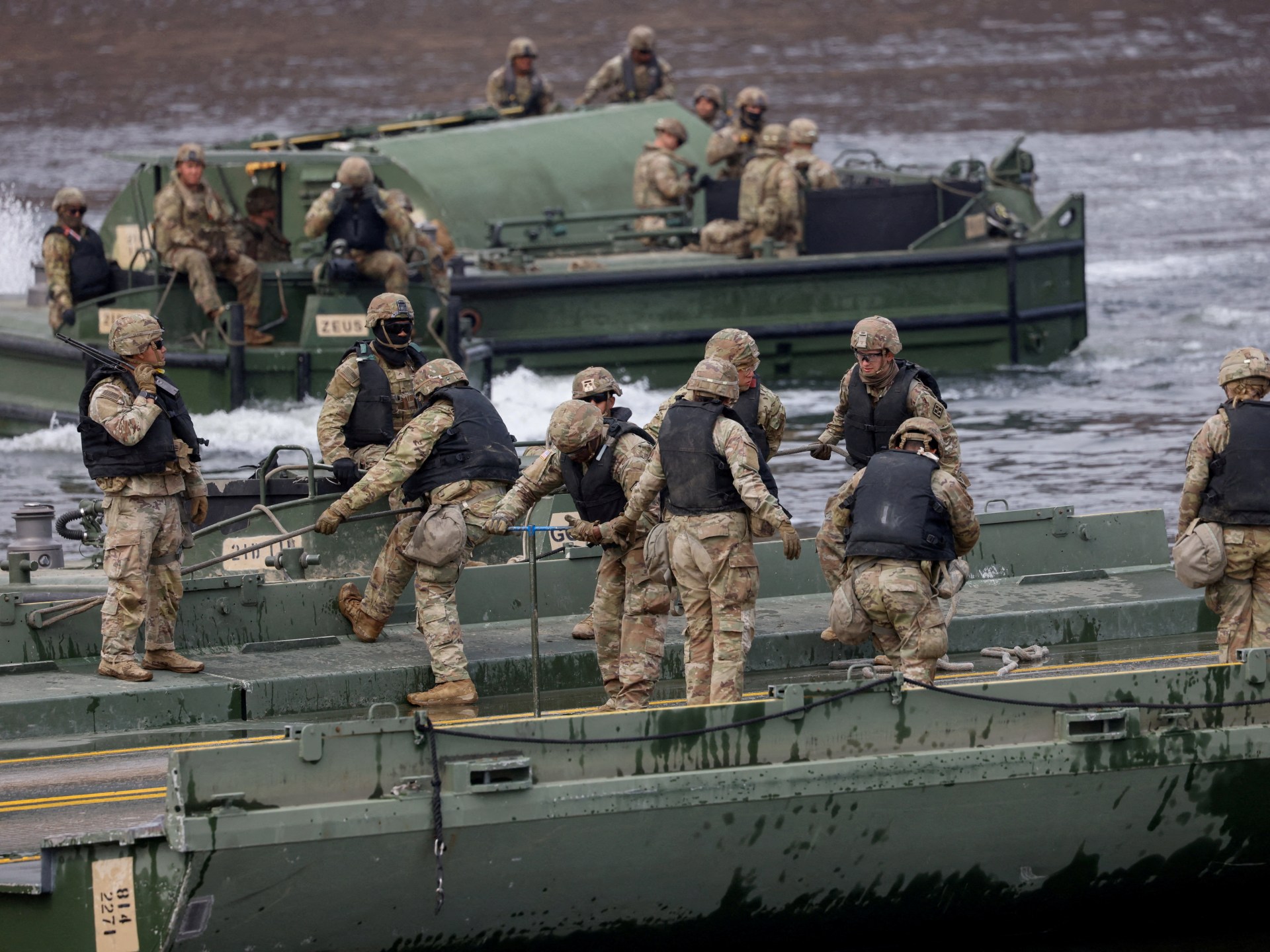
Kathmandu— South Korea and the United States have significantly shortened their annual joint military drills, scaling back field training exercises following an order from US President Donald Trump to reduce the war games’ scope. The Ulchi Freedom Shield exercise, which began on August 17th, will now conclude on August 21st, a reduction from its original eleven-day schedule, according to the South Korean Joint Chiefs of Staff (JCS). This adjustment came at Washington's suggestion and includes scaling back combined field manoeuvre training, raising questions about regional security commitments and diplomatic strategy.
Drill Adjustments and Cancellation of Phase Two
The JCS confirmed that some combined field manoeuvre training would be scaled back alongside the shortened duration. South Korean Defence Minister Ahn Gyu-back indicated that the allies were moving to cancel the second phase of the drills, which had been planned as a counterattack operation following an initial defensive stage. A US Department of Defense official stated that the exercise and associated live-training events had been substantially reduced, with some cancelled or switched to simulations, while maintaining essential readiness and training objectives.
Lack of Prior Notification and Potential Motives
South Korean Foreign Minister Cho Hyun revealed at a parliamentary hearing on Wednesday that neither South Korean nor US officials were informed in advance about Trump’s order. He suggested the decision was linked to multiple issues, including pressure on Seoul to participate in the war on Iran, as well as signaling intentions towards North Korea and attempting to resolve the stalemate surrounding the conflict in Iran. “I think President Trump’s message includes pressure over several pending issues concerning the South Korean government,” Cho said.
North Korea's Response and Regional Concerns
Nuclear-armed North Korea condemned the drills on Wednesday, reiterating its view that they are rehearsals for an invasion and asserting its right to self-defense against perceived military threats from Washington and Seoul. Despite these concerns, Seoul’s presidential office stated on Tuesday that the exercises were not intended as a provocation towards North Korea or to escalate tensions on the Korean peninsula. Meanwhile, Japan's Defence Minister Shinjiro Koizumi emphasized the critical importance of security cooperation with both the US and South Korea given the challenging regional environment.
Trump’s Pursuit of Dialogue and Future Meetings
The changes follow President Trump’s stated desire for improved relations with North Korean leader Kim Jong Un, whom he has described as having responded positively to his outreach. The two leaders met three times during Trump's first term but have not engaged in talks since. The Wall Street Journal reported that Trump is actively seeking another in-person meeting with Kim, potentially during a planned trip to Asia for the APEC summit in Shenzhen, China this November.
The scaled-back drills reflect a complex interplay of diplomatic efforts and security concerns on the Korean peninsula, leaving regional allies assessing the implications for long-term stability and US commitments. Further developments are expected as Trump continues to pursue dialogue with North Korea.
(With inputs from Al Jazeera)
Originally published on abcnews.com.np.
प्रतिक्रिया दिनुहोस्