

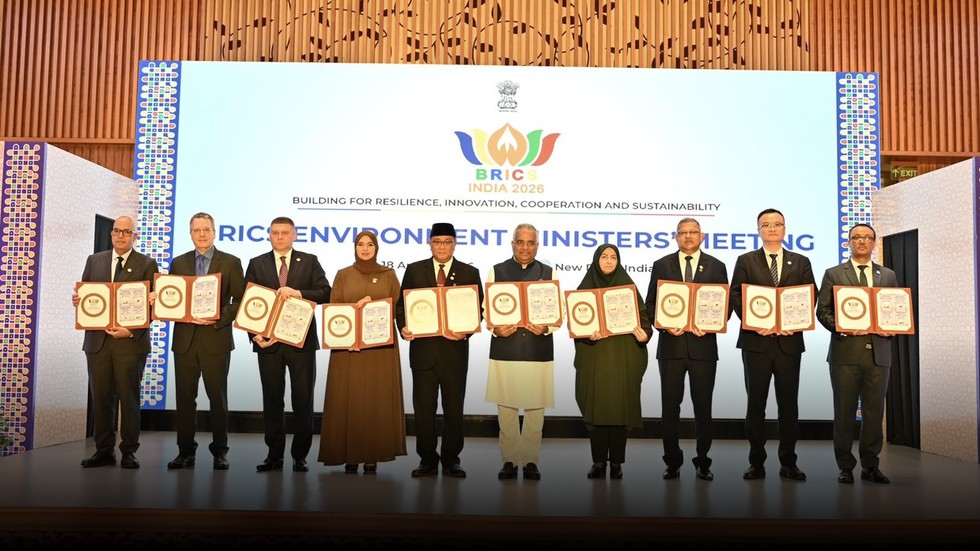
Kathmandu— Representatives from Brazil, Russia, India, China, and South Africa – along with Egypt, Ethiopia, Iran, Saudi Arabia, the UAE, and Indonesia – collectively voiced opposition to the European Union's Carbon Border Adjustment Mechanism (CBAM) during a meeting in New Delhi on Monday. The BRICS nations characterized the CBAM as “unilateral, punitive, discriminatory, and protectionist,” expressing concern that it undermines climate efforts by developing countries and imposes unfair costs on their exports. The EU mechanism, which took effect January 1st, aims to level the playing field by placing a carbon price on emissions-intensive goods entering the bloc through a certificate system.
CBAM Mechanics and Concerns
The EU’s Carbon Border Adjustment Mechanism requires importers of certain goods – including steel, aluminum, cement, fertilizers, and electricity – to purchase certificates corresponding to the weekly carbon price within the EU Emissions Trading System. While deductions are permitted for carbon prices already paid in the exporting country, BRICS nations argue this system disadvantages producers in the Global South. They contend that it forces these producers to incur significant costs tracking factory emissions simply to access the European market and effectively penalizes emerging economies for historical emissions originating from developed Western nations.
Impact on Developing Economies
The CBAM is expected to reduce the price competitiveness of key exports from developing countries, particularly those with carbon-intensive industries. Indian officials have highlighted that sectors like steel, aluminum, and cement will face increased costs when exporting to the EU. In response, New Delhi has been working to establish a domestic carbon trading framework designed to retain the value of carbon savings within India rather than allowing it to be captured by EU taxes.
Trade Deal Context
The BRICS statement also asserted that the CBAM is “not in line with international law.” This opposition comes despite a trade deal signed between India and the EU earlier this year, which European Council President Antonio Costa hailed as reinforcing a “rule-based economic order.” However, India had previously labeled the proposed CBAM as unfair and detrimental to domestic market costs back in 2024.
The BRICS nations have signaled their intent to continue advocating for equitable climate policies that do not disproportionately burden developing economies. Further discussions on this matter are expected at future international forums.
(With inputs from RT)
Originally published on abcnews.com.np.





प्रतिक्रिया दिनुहोस्