

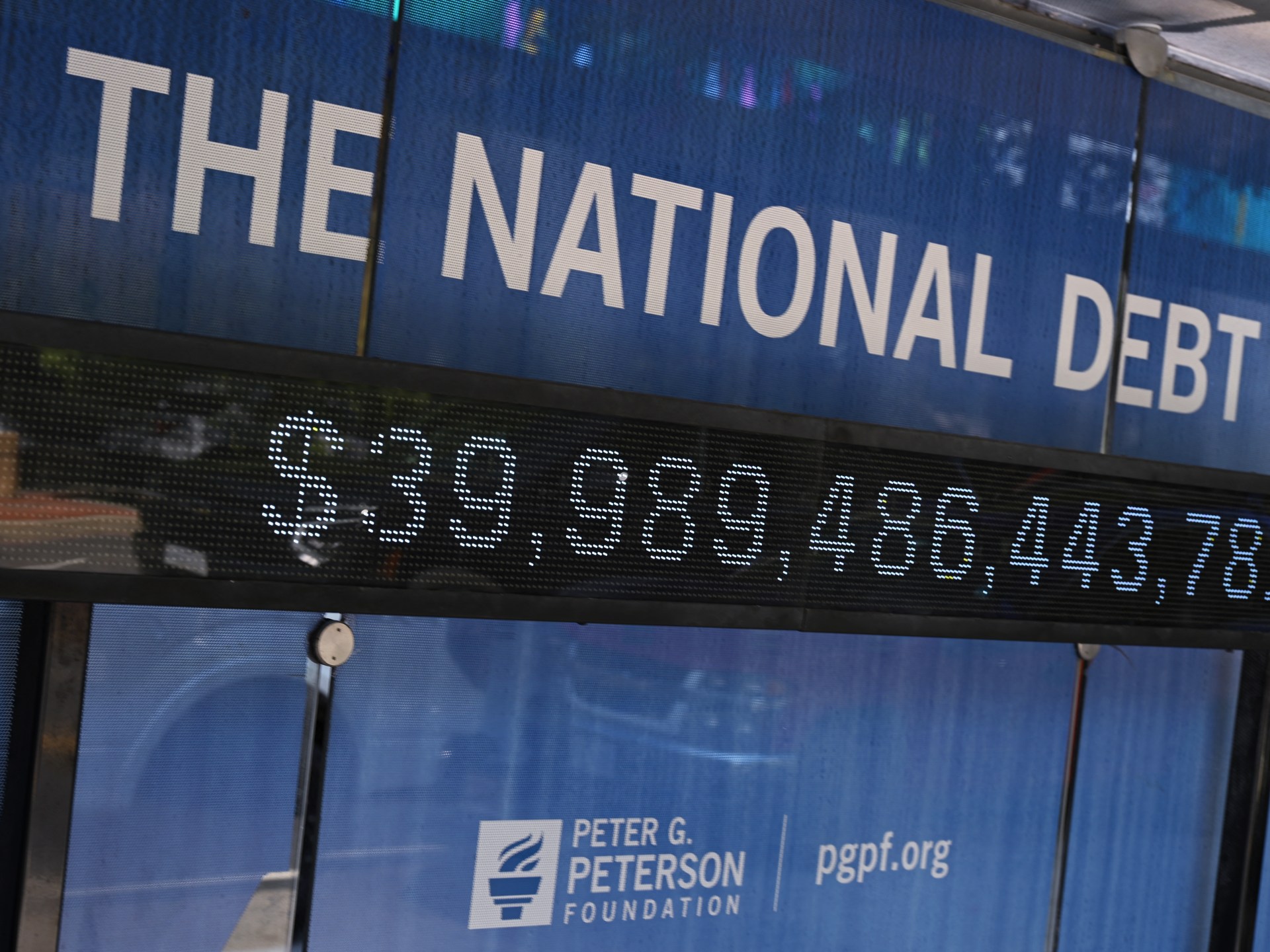
Kathmandu— For the first time in history, the US national debt has exceeded $40 trillion, raising concerns about a potential fiscal crisis as federal spending continues to outpace revenue. The debt, which stood at nearly $20 trillion when President Donald Trump took office in 2017, has doubled over the past decade, encompassing both the Trump and Biden administrations. A significant portion of this increase occurred during the COVID-19 pandemic, with substantial borrowing used for economic relief measures, but long-term trends in entitlement programs and rising interest rates are also contributing factors.
Debt Growth Under Two Administrations
Since January 2017, the US national debt has doubled, increasing by $19.95 trillion to surpass $40 trillion as of Wednesday. During Donald Trump’s two terms so far, the debt increased by $3.8 trillion, contributing to an overall growth of $11.6 trillion. Under President Joe Biden, the debt has risen by $8.4 trillion, fueled not only by pandemic recovery spending but also by investments in infrastructure and clean energy initiatives championed by his administration.
Drivers of Increasing Debt
Approximately one-third of the increase in national debt occurred during the two years following the declaration of the COVID-19 pandemic in March 2020, as both the Trump and Biden administrations authorized significant borrowing for relief efforts. However, broader trends are also at play; roughly 60 percent of the federal budget is dedicated to mandatory programs like Social Security, Medicare, Medicaid, and veterans’ care, which automatically increase with the cost of living. Additionally, interest payments on the national debt have surged, exceeding Pentagon funding in the 2025 fiscal year and becoming the second-largest line item in the federal budget behind Social Security.
Expert Warnings and Policy Choices
Margaret Spellings, CEO of the Bipartisan Policy Center, warned last week that “Our federal programmes spend much more than the government takes in,” adding that federal debt is already impacting living costs and hindering economic growth. The nonpartisan Committee for a Responsible Federal Budget estimates that policy decisions made by both Trump and Biden have contributed to a higher trajectory for the national debt than would have occurred under existing spending laws. Trump’s legislative package, the “One Big Beautiful Bill Act,” is projected to add another $4.7 trillion to the debt according to the Congressional Budget Office.
Efforts at Cost Reduction
Despite championing prolific spending throughout his two terms, Trump has also expressed a desire for cost-cutting measures. He tasked the Department of Government Efficiency (DOGE) with reducing the federal workforce and has focused on cutting discretionary programs – the smallest portion of the federal budget. However, addressing the long-term debt requires tackling mandatory spending and rising interest costs, which are driven by an aging population and increasing rates.
The US is facing growing financial pressures as it funds the retirement and healthcare needs of the baby boom generation while simultaneously experiencing shortfalls in payroll and income tax revenues. The escalating national debt continues to be a significant challenge for policymakers.
(With inputs from Al Jazeera)
Originally published on abcnews.com.np.





प्रतिक्रिया दिनुहोस्