

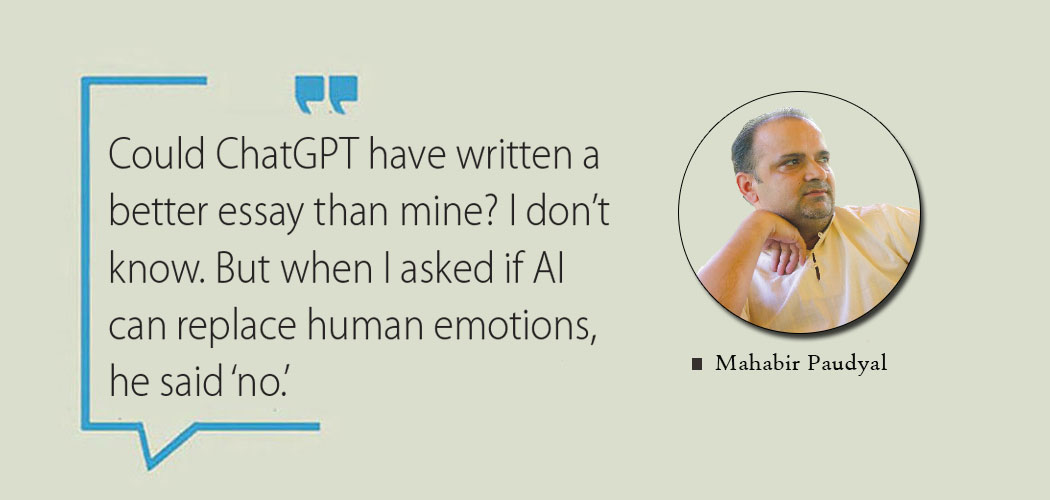
Kathmandu— A recent article by Bret Stephens questioning the use of artificial intelligence in writing resonated with one Nepali journalist, prompting reflection on how AI is impacting both classrooms and newsrooms. The author explores the idea that while AI can offer efficiency and assistance, overreliance on it may diminish critical thinking, reasoning skills, and the very essence of meaningful expression – a concern amplified by observations of its increasing use among students and within academic research. This piece examines the trade-offs between convenience and cognitive development in an age where AI tools are becoming increasingly prevalent.
AI's Influence on Education and Journalism
The author notes that their own students first demonstrated to them how artificial intelligence functions, revealing its use in assignments and presentations. They have since observed a potential decline in abilities such as reading comprehension, critical analysis, and thoughtful revision due to over-dependence on AI tools. While acknowledging the benefits of using AI for tasks like research and refining writing – exemplified by utilizing ChatGPT to improve an online essay – they express concern about its broader implications.
A Hobson's Choice for Content Creation
AI presents a 'Hobson’s choice,' offering effortless content generation with minimal effort. Writers can achieve desired results quickly, though some editing and fact-checking may still be required. However, this ease comes at the cost of deep thought, revision, and the organic process of crafting ideas – potentially leading writers to forgo the challenging but rewarding work of developing their own voice and perspective. The author contrasts this with the potential for AI to free up time for more meaningful pursuits like teaching or personal enrichment.
The Value of Words and the Writing Process
Drawing from Eastern philosophical traditions, the author emphasizes the inherent power and permanence of words, suggesting that writing is a sacred act of imbuing thoughts with meaning. They describe the often-arduous process of crafting an article – involving extensive brainstorming, rewriting, and refinement – highlighting how this struggle contributes to the final product’s quality and authenticity. The author shares their own experience composing this particular piece over several days, emphasizing the evolving nature of writing and the constant pursuit of improvement.
The Human Element in Writing
Acknowledging that writers have different approaches and timelines – citing examples like J.D. Salinger’s decade-long work on ‘The Catcher in the Rye’ versus Fyodor Dostoevsky’s rapid completion of ‘The Gambler’ – the author ultimately questions whether AI could truly replicate the emotional depth and nuance of human writing. When posing this question to ChatGPT, the AI itself responded that it cannot replace human emotions, a sentiment the author leaves as the concluding thought.
The author suggests that while AI's influence on writing is undeniable, its ultimate impact will depend on how thoughtfully and responsibly it is integrated into educational and professional settings.
(With inputs from RN)
Originally published on abcnews.com.np.






प्रतिक्रिया दिनुहोस्