

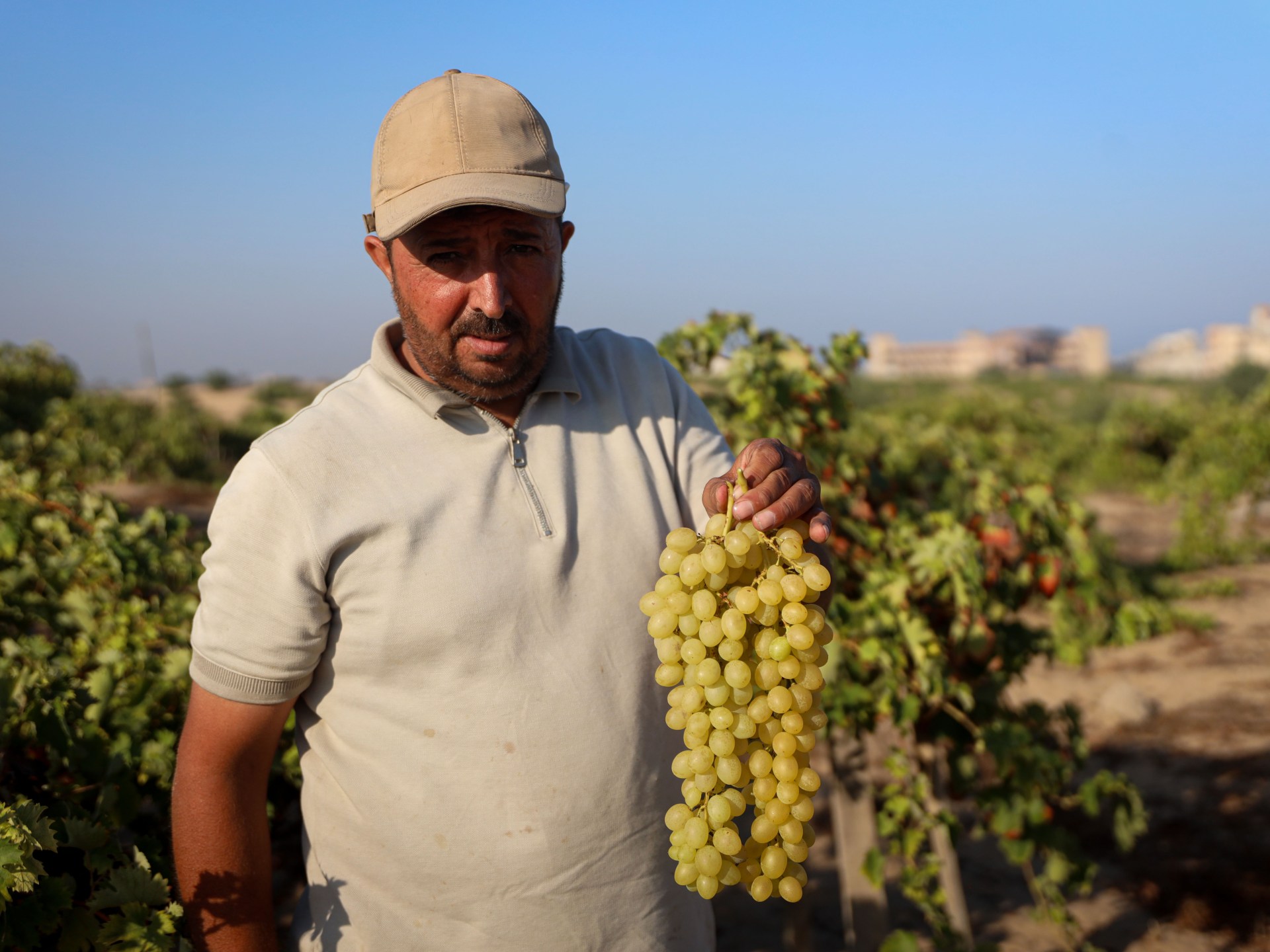
Kathmandu— Khaled Abu Madeen, a 50-year-old farmer from Sheikh Ijlin in southwestern Gaza City, has resumed his decades-long family tradition of grape cultivation after returning to his land following months of displacement due to the recent conflict. Despite witnessing extensive damage – with approximately 60 percent of his vines uprooted – and facing ongoing challenges like restricted access to agricultural supplies, Abu Madeen is rebuilding his vineyard, viewing it as a restoration of not just his livelihood but also a vital part of Gaza’s cultural heritage. He chose to remain in the region despite having family in Italy, unable to abandon the land inherited from generations past.
A Lifelong Connection to the Land
For Khaled Abu Madeen, farming is more than just a profession; it's a deeply rooted connection to his heritage. His family has cultivated grapes and figs in Sheikh Ijlin for generations, passing down knowledge and tradition through the years. After pursuing a career in project management, Khaled returned to his true calling, dedicating himself full-time to the land inherited from his father and grandfather. This year’s harvest represents more than just agricultural output; it signifies a return to a life he feared was lost.
Refusal to Flee and Subsequent Displacement
When conflict erupted in October 2023, Khaled initially refused to leave Gaza despite the escalating danger. His wife and children were eventually evacuated to Italy, but he remained with his elderly mother, determined to stay close to his vineyards. However, as Israeli strikes intensified, he received a direct threat and was forced to flee with his mother to Deir el-Balah in central Gaza. Despite being displaced, Khaled repeatedly attempted to return to check on his land, even sustaining injuries when Israeli forces opened fire on him and his workers during one such attempt.
Rebuilding Amidst Devastation
The October ceasefire allowed Palestinians to begin returning to their lands, revealing the full extent of the destruction. Khaled discovered that approximately 60 percent of his vines had been uprooted, with decades-old trees destroyed and the landscape almost unrecognizable. Undeterred, he mobilized bulldozers and workers to clear debris and restore the fields. The restoration is a costly undertaking – estimated at $40,000 – complicated by ongoing Israeli restrictions on agricultural supplies like pesticides. Despite these challenges, new shoots began emerging in spring, signaling a hopeful revival.
A Symbol of Resilience and Cultural Identity
This year’s harvest, while only 40 percent of pre-war levels, is considered a significant triumph for Khaled. The grapes from Sheikh Ijlin are renowned locally for their sweetness and distinctive taste, representing an important part of the area's agricultural identity. The scarcity caused by the war has driven prices up to $6.70-$10 per kilogram, compared to roughly $1.35-$1.70 before the conflict. For Khaled, however, the value extends beyond economics; it’s a symbol of resilience and a reconnection with his family's legacy.
A Deeply Personal Bond
Khaled describes his relationship with the land as essential to his being, comparing himself to a fish in the sea. “Just as a fish cannot live outside the sea, I am the same,” he says. He finds solace and meaning in tending to the surviving vines, honoring the generations of family who have cultivated the soil before him. The sight of growing grapes represents not just a harvest but the return of something precious that he feared had been lost forever.
Despite the significant challenges remaining, Khaled Abu Madeen continues his work restoring his vineyard, hoping to rebuild both his livelihood and a vital piece of Gaza’s agricultural heritage.
(With inputs from Al Jazeera)
Originally published on abcnews.com.np.
प्रतिक्रिया दिनुहोस्