


Kathmandu— A fast-moving mudslide struck Gyirong Port on the China-Nepal border in southwest China’s Xizang Autonomous Region on August 26th, triggered by a high-altitude glacier collapse originating on the Nepali side of the border; the disaster has resulted in sixteen confirmed fatalities and left 546 people missing as of Saturday evening. Chinese authorities immediately launched an all-out rescue effort, mobilizing over two thousand personnel and deploying resources to restore access to the affected area while also offering assistance to Nepal, which also sustained casualties and missing persons. The port remains largely inaccessible due to damaged roads, hindering search operations.
Scale of the Disaster
As of Saturday evening, sixteen people have been confirmed dead, with 546 remaining unaccounted for following the mudslide at Gyirong Port. Authorities have identified 261 foreign nationals from 23 countries among those missing. The disaster’s impact extends beyond Chinese citizens, highlighting the international dimension of the rescue operation.
Rescue and Road Restoration
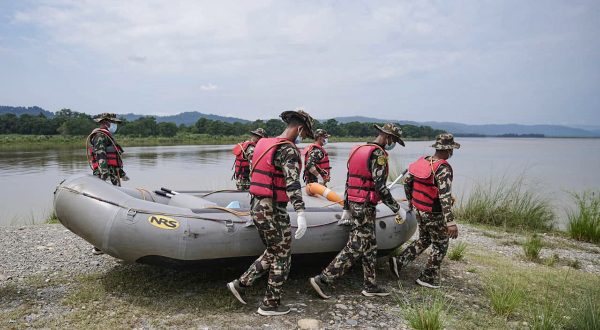
A total of 2,141 Chinese rescuers are currently involved in the mission to locate survivors and provide aid. Crews have been working to repair a key road leading to Gyirong Port, having restored 2.6 kilometers of roadway with another 1.7 kilometers remaining as of Saturday afternoon. Excavators continue to clear debris to facilitate access for emergency vehicles.
International Cooperation
Chinese Foreign Minister Wang Yi spoke with his Nepali counterpart, Shisir Khanal, on Saturday, expressing China’s concern over the disaster and offering support for Nepal's relief efforts. At the request of the Nepali government, China dispatched five tunnel experts to assist in rescue operations at a hydropower plant tunnel in Nepal. The Chinese Ministry of Emergency Management is coordinating with Nepalese authorities.
Data and Technological Support
China has deployed multiple technological resources to aid in the response. Three portable automatic weather stations have been set up to provide targeted weather support for rescue efforts, drone flights, and monitoring a newly formed barrier lake. The National Cryosphere Desert Data Center has provided 85 GB of data, while the National Earth Observation Data Center is supplying over 20 GB of remote sensing data for damage assessment and secondary disaster monitoring.
Authorities have restricted all civilian travel toward Gyirong Township, allowing only authorized emergency vehicles to pass. Rescue operations are ongoing as teams continue to search for missing persons and assess the full extent of the damage.
(With inputs from Xinhua)
Originally published on abcnews.com.np.




प्रतिक्रिया दिनुहोस्