

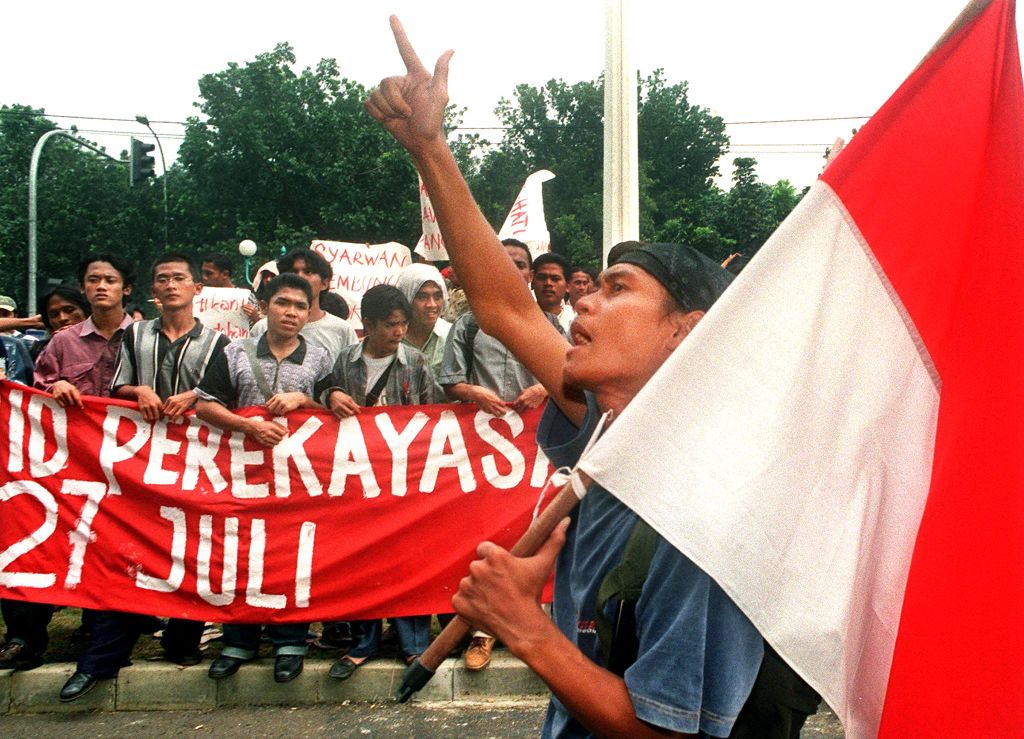
Kathmandu— On July 27 this year, a bronze statue was unveiled at the headquarters of the Indonesian Democratic Party of Struggle (PDI-P) in central Jakarta. The sculpture commemorates the Kudatuli riots, one of the final acts of political violence carried out by Suharto’s New Order dictatorship thirty years ago. Designed by sculptor Dolorosa Sinaga, the monument marks a rare public acknowledgment of state violence in Indonesia and underscores the country's ongoing struggle with historical amnesia.
Political Landscaping
The unveiling ceremony was attended by prominent figures including Megawati Soekarnoputri, chair of PDI-P, who pressed the button to unveil the statue. The event featured singing of both national and party anthems, with attendees also honoring Marhaen, a symbol of Sukarno’s radical populism. Bonnie Triyana, a historian and member of parliament, compared Indonesia's July 27, 1996, riots to France’s Bastille Day, highlighting the event as a step toward revolution.
Selective Memory
Jakarta is filled with monuments glorifying right-wing generals and soldiers from Suharto’s regime. The New Order used these statues to legitimize its rule and erase the millions of victims it had tortured, raped, and killed. In contrast, the Kudatuli statue stands as a rare public memorial that explicitly condemns state violence. It is the only large monument in central Jakarta that directly indicts the New Order regime.
Military-Managed Democracy
Under Suharto’s rule, elections were tightly controlled rituals of managed consent. Only two opposition parties were allowed to exist alongside Golkar, the official regime party. The military played a dual role in administering political life and suppressing dissent. In 1996, Megawati Soekarnoputri was elected chair of PDI but faced a bureaucratic coup by Suharto’s regime, leading to violent clashes at Jalan Diponegoro on July 27.
Monument Against Amnesia
The statue designed by Dolorosa Sinaga is a stark contrast to the triumphant monuments of the New Order. It depicts a woman screaming and embracing five figures, symbolizing both Megawati’s protection of her followers and the political work of memory itself. The monument stands at Jalan Diponegoro, where the violence occurred, marking an important site of repression.
Uncomfortable Questions
While PDI-P deserves credit for refusing to let Kudatuli vanish from public memory, the monument also raises uncomfortable questions about why Indonesia has not fully addressed the crimes of the New Order. Perpetrators have not been held accountable, and families continue to demand justice. The statue marks an achievement but also highlights a political failure.
The Kudatuli monument breaks the near monopoly that generals and state officials have had over Indonesia’s monumental history, marking victims of power in the nation's public landscape. However, it must not become a substitute for justice.
(With inputs from Jacobin)
Originally published on abcnews.com.np.






प्रतिक्रिया दिनुहोस्