

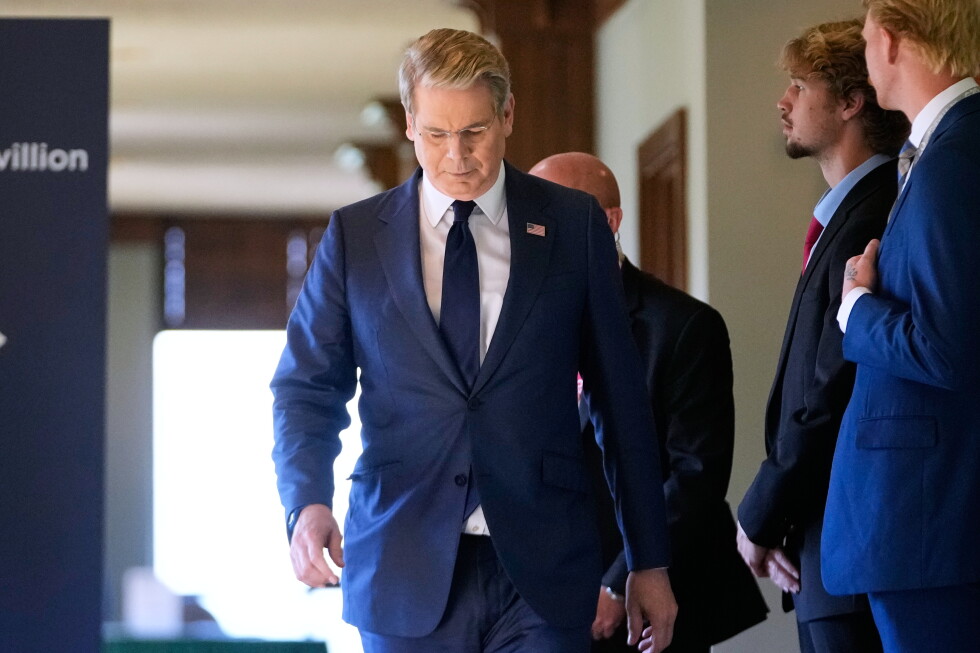
Kathmandu— Treasury Secretary Scott Bessent announced Tuesday at a two-day meeting in Asheville, N.C., that 19 out of 20 finance ministers from the Group of Twenty (G20) had agreed on addressing streams of “cheap exports” as unsustainable. However, China dissented from this consensus. The discussions also touched upon artificial intelligence policy and trade relations with Iran.
Trade Imbalances Discussion
Bessent emphasized that non-market-based economies pushing out a continuous stream of cheap exports is unsustainable for global economic balance. He noted that China, which holds the world’s largest current account surplus, was the sole dissenter among G20 members. Bessent warned other nations about the impact of U.S. tariffs on Chinese goods flooding their markets and urged them to protect domestic jobs and manufacturing.
AI Policy Discussion
Bessent highlighted that President Donald Trump and China’s President Xi Jinping would discuss artificial intelligence policy during their upcoming meeting, emphasizing the need for more guardrails to prevent non-state actors from building their own AI models. Bessent also criticized AI companies for failing to explain themselves adequately to the American public.
Iran Relations
The G20 discussions included some common ground on Iran, with both China and the U.S. agreeing that Iran cannot have a nuclear weapon and that oil and other goods should flow freely through the Strait of Hormuz. Bessent noted this agreement despite broader tensions.
Russian Inclusion Controversy
The presence of Russian Finance Minister Anton Siluanov at the G20 meeting caused discomfort among attendees, with some European ministers expressing reservations about Russia’s inclusion. Despite this, Bessent defended the decision to engage with Russia, arguing that dialogue is necessary for resolving conflicts.
(With inputs from AP)
Originally published on abcnews.com.np.




प्रतिक्रिया दिनुहोस्