

Kathmandu— Nepal is exploring the possibility of enfranchising its immigrant population living abroad, including those seeking employment or pursuing higher education. The RSP government has expressed a strong commitment to grant these overseas citizens the right to vote in the upcoming subnational-level polls scheduled for early next year. Unlike some political parties such as NC, UML, and NCP, which have been hesitant on this issue, RSP aims to connect Nepali immigrants with their home country through democratic participation.
Challenges in Enfranchising Immigrants
Previous attempts by the interim government led by Sushila Karki to enfranchise overseas Nepalis were hindered by legal, technological, and logistical constraints. The RSP government faces a significant challenge as it seeks to retain its popularity among voters who may now be more focused on candidates' integrity and competence rather than populist rhetoric.
Local Elections in Nepal
The upcoming local elections will test the popularity of the RSP, which won the last parliamentary election with a strong wave of populism. Local elections are particularly important as they determine how communities are treated and governed at the grassroots level. Functions such as education, health, and rural infrastructure fall under the purview of local governments in Nepal's federal system.
International Context
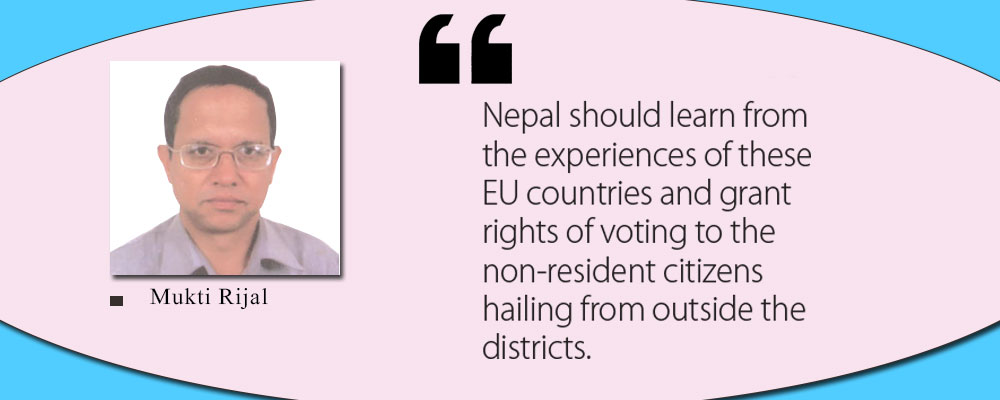
The author draws parallels with Germany’s upcoming sub-national polls in Saxony-Anhalt, where the far-right Alternative for Germany (AfD) is expected to win a landslide victory. In contrast to Germany, some EU countries like Sweden and Denmark allow non-EU nationals to vote after a certain period of residence. Nepal could learn from these experiences by granting voting rights to its non-resident citizens living outside their home districts.
(With inputs from RN)
Originally published on abcnews.com.np.



प्रतिक्रिया दिनुहोस्