

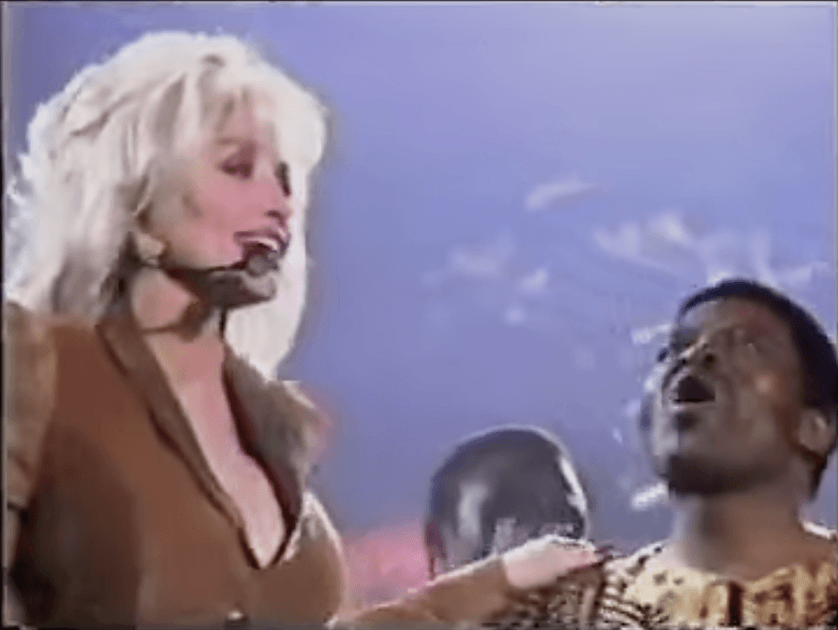
Kathmandu— Dolly Parton, the late country music legend whose career spanned decades and transcended political divides, is being remembered not just for her music but for her unique ability to unite people across the ideological spectrum, a quality she called 'Dollitics,' as political polarization intensifies in the United States and Switzerland faces a constitutional referendum on its historic neutrality.
Dollitics: A Political Neutrality
Dolly Parton's approach to politics, which she humorously termed 'Dollitics,' defied the sharp divisions of modern American politics. She once quipped, 'My daddy was a Republican, my mama was a Democrat, and I’m a hypocrite!' and emphasized the importance of staying out of partisan politics to maintain her career, stating, 'I learned a long time ago, keep your damn mouth shut if you want to stay in show business.'
Her nephew Bryan Seaver, who announced her death on social media, described her political stance as a form of neutrality that appealed to both sides of the aisle. This was evident in the bipartisan tributes following her death, with Democratic Socialist New York City Mayor Zohran Mamdani calling her an 'irreplaceable champion of the working class,' while Republican Governor Greg Abbott of Texas praised her as a 'treasure.' Even former President Donald Trump, who ordered U.S. flags to fly at half-staff in her honor, called her 'one of the greatest Country singers.'
Swiss Neutrality as a Parallel
The concept of neutrality, both in Parton's 'Dollitics' and in Switzerland's constitutional history, offers a compelling parallel. Switzerland, a small nation surrounded by major European powers, has long maintained a policy of neutrality, which it is now considering enshrining in its constitution through a referendum on September 27.
Swiss neutrality, however, is not passive; it is described by former Swiss Foreign Minister Micheline Calmy-Rey as 'active neutrality,' where Switzerland mediates between conflicting nations, such as representing Georgia in Moscow after the 2008 Russia-Georgia war. Similarly, Parton's neutrality was pragmatic, aimed at appealing to a broad audience without alienating any segment of her fanbase.
This active neutrality contrasts with the modern American political landscape, where identity politics often forces individuals into rigid ideological boxes, leaving little room for nuanced positions on shared human values.
The Challenge of Modern Unity
Today, both the Democratic and Republican parties face internal tensions that threaten their ability to unite voters. The Democratic Party is divided between Democratic Socialists and traditional members, while Republicans grapple with the influence of MAGA supporters and more moderate factions.
Parton's legacy highlights a stark contrast with contemporary politics, where political identity often overshadows the ability to engage in meaningful dialogue. She supported progressive causes like LGBTQ rights and Black Lives Matter, yet she did not make partisan political identity her brand. As sociologist Tressie McMillan Cottom noted, Parton's story resonated because it reflected a shared American identity, not a partisan one.
The question remains: Can a modern politician embody the same unifying spirit without being perceived as neutral or apolitical? The answer may lie in recognizing the legitimacy of opposing views while maintaining one's own position, a principle encapsulated in the diplomatic phrase 'We agree to disagree.'
As the United States grapples with deepening political divides, Parton's example of 'Dollitics' offers a model for bridging gaps without sacrificing core values, a lesson that resonates as much in Swiss constitutional debates as it does in American politics.
(With inputs from CounterPunch)
More from the source

Originally published on abcnews.com.np.





प्रतिक्रिया दिनुहोस्