

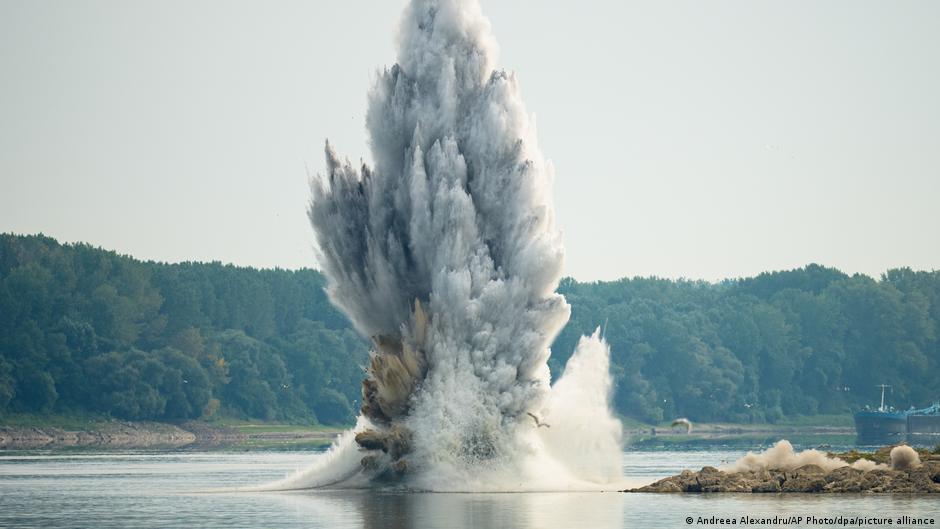
Kathmandu— The dry conditions along the Danube River have forced Romania and Hungary to take drastic measures to maintain power generation. In Romania, the navy detonated rocks in the riverbed to increase water flow to the Cernavoda nuclear plant, which supplies about one-fifth of the country's electricity. Meanwhile, Hungary narrowly avoided shutting down its sole nuclear facility, Paks, by reducing its operational capacity significantly.
Romania's Military Intervention
In Romania, Defense Minister Radu Miruta announced that the military had successfully detonated a rocky outcrop in the Danube River to improve water flow for cooling purposes at the Cernavoda nuclear power plant. The operation was conducted approximately 50 kilometers upstream from the plant and involved sinking debris strategically to raise the water level. If this measure fails, the plant may have to shut down entirely by Thursday.
Caretaker Prime Minister Ilie Bolojan also announced that car manufacturers Dacia and Ford had agreed to suspend production until August 19th in response to the energy crisis.
Hungary's Power Struggle
In Hungary, Prime Minister Peter Magyar reported that industrial users were asked to reduce consumption and households were encouraged to make voluntary savings. Electric-powered freight trains were halted on Monday to ease pressure on the power grid. The Paks nuclear plant, which typically generates almost half of Hungary's electricity production, was operating at less than 10% capacity due to low water levels in the Danube River.
Magyar thanked citizens for their cooperation and stated that forecasts had become slightly more optimistic for the coming days.
Serbian Hydroelectric Challenges
In Serbia, Prime Minister Djuro Macut convened an emergency meeting to address energy problems caused by low water levels in the Danube River. The Iron Gate hydroelectric plant was operating at only around one-fifth capacity on Monday. Macut appealed to residents to minimize electricity consumption from high-demand appliances such as air conditioners.
Continued hot and dry weather is forecast for the coming week, with no immediate signs of relief.
(With inputs from DW)
Originally published on abcnews.com.np.





प्रतिक्रिया दिनुहोस्