

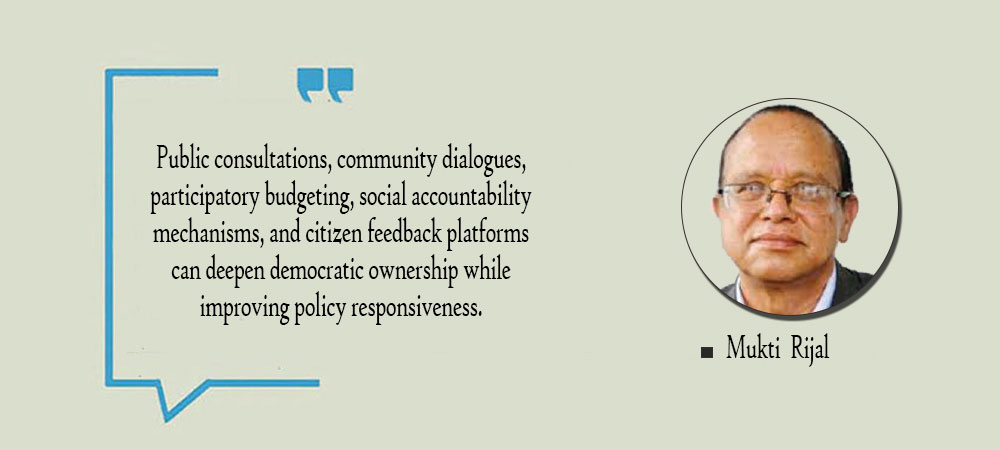
Kathmandu— The constitution of Nepal, which was authored through participatory dialogic processes involving civil society and academic institutions, emphasizes the importance of continuous dialogue for effective intergovernmental relations. This approach is crucial as Nepal enters its second decade of implementing federalism, with mechanisms such as the Inter-Province Council and National Coordination Council designed to facilitate communication and collaboration among federal, provincial, and local governments.
Constitutional Foundations for Dialogue
The Constitution of Nepal, 2015, was drafted through extensive dialogic processes that included input from various stakeholders. This participatory approach ensured that the document reflects a commitment to dialogue as a fundamental principle of governance. The constitution outlines several provisions for intergovernmental mechanisms, such as the Inter-Province Council and National Coordination Council, which are designed to foster continuous communication and collaboration among different levels of government.
Intergovernmental Dialogue Mechanisms
The Inter-Province Council, chaired by the prime minister and comprising chief ministers and federal ministers, serves as a political forum for resolving disputes between the federal and provincial governments. It provides opportunities for discussing policy coordination, legislative harmonization, administrative cooperation, and implementation challenges. Similarly, the National Coordination Council offers a broader platform where representatives of federal, provincial, and local governments can discuss matters affecting multiple levels of government.
Challenges in Implementing Dialogue
While institutional mechanisms are in place to facilitate dialogue, many constitutional forums have functioned largely as ceremonial bodies. Decisions have often remained inadequately implemented, while disputes over concurrent powers, administrative control, fiscal transfers, and legislation continue to surface. This highlights the need for sustained dialogue to become a continuous governance culture rather than an occasional obligation.
International Lessons
International experiences offer valuable lessons in fostering cooperative federalism. Germany's federal system emphasizes extensive consultations before major policy decisions affecting states, ensuring continuous negotiation rather than unilateral decision-making. Canada has developed strong traditions of inter-ministerial meetings and intergovernmental conferences that facilitate negotiation on fiscal arrangements, healthcare, climate policy, and constitutional matters.
(With inputs from Rising Nepal)
Originally published on abcnews.com.np.





प्रतिक्रिया दिनुहोस्