

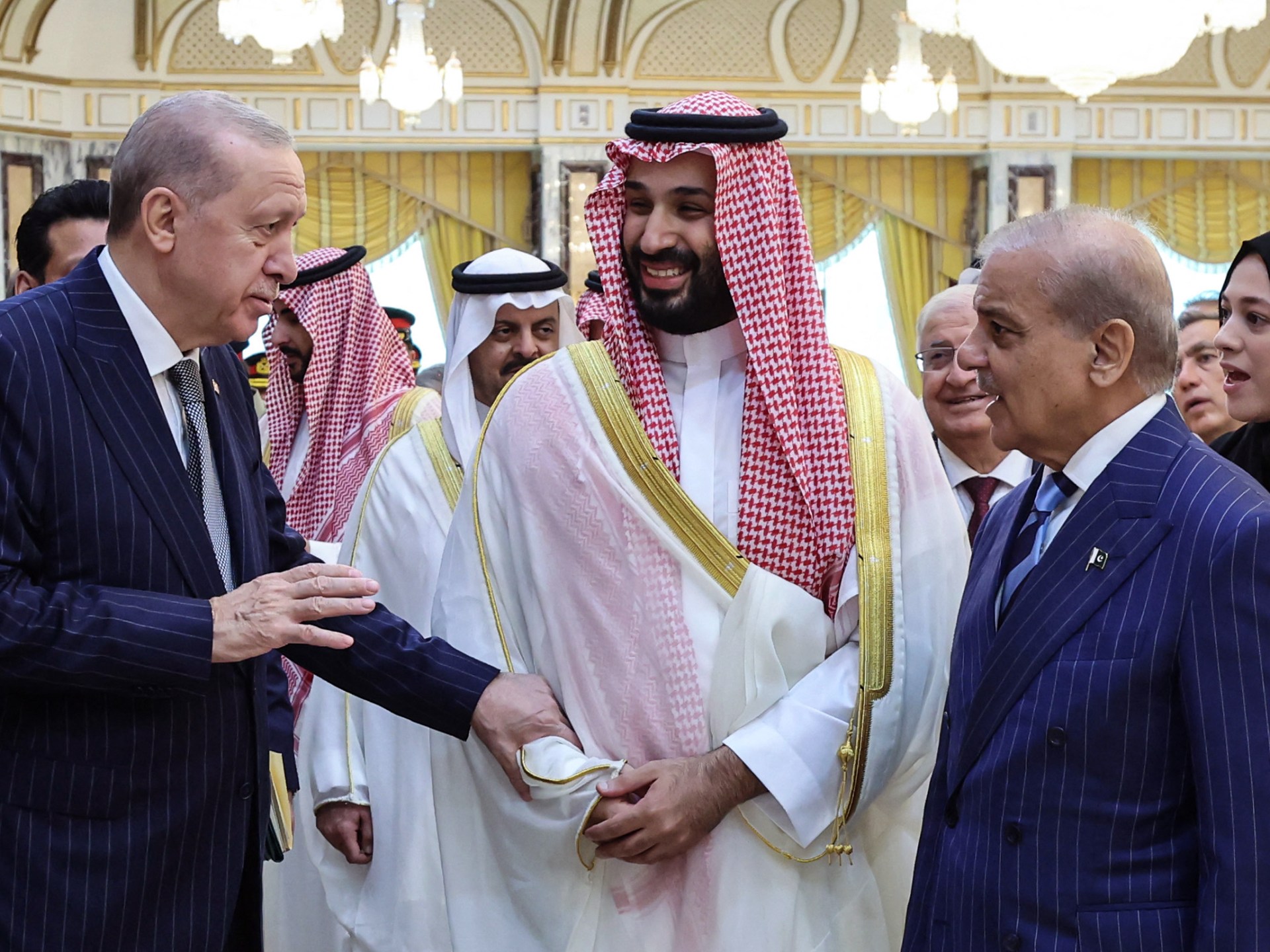
Kathmandu— Saudi Arabia, Turkiye, and Pakistan signed the Mecca Joint Defence Pact on Friday, establishing a military alliance that stipulates an armed attack against any one of the three states shall be regarded as an attack against them all. The agreement, signed in Mecca, comes amid significant regional turmoil and has prompted analysts to suggest it may serve as a strategic response to the US-Israeli conflict with Iran and a lack of trust in American security guarantees.
A New Regional Security Nexus
The newly formed alliance brings together Turkiye, a major regional power; nuclear-powered Pakistan; and Saudi Arabia, a nation Israel has long sought to normalize relations with. The pact's core provision—that an attack on one member is an attack on all—marks a significant shift in Middle Eastern and South Asian security architecture.
Analysts suggest the pact may be driven by a desire for greater strategic depth. Andreas Krieg, a senior lecturer at the School of Security Studies at King’s College London, noted that for Riyadh, the current war has reinforced the conclusion that while American military power is indispensable, a relationship with Washington does not guarantee immunity from attack or ensure that Washington will act according to Saudi priorities.
Tensions with Israel and Turkiye
The pact introduces new complexities for Israel, which views Turkiye as a significant strategic rival. Tensions between the two nations have escalated following sharp rhetoric from Turkish officials. Turkish Foreign Minister Hakan Fidan recently described Israel as a "burden that humanity can no longer bear," a comment Israeli Foreign Minister Gideon Saar characterized as "textbook incitement to genocide."
President Recep Tayyip Erdogan has also identified Israeli military actions in Syria and Lebanon as direct threats to Turkish security. In response to such regional movements, Prime Minister Benjamin Netanyahu has previously referred to Erdogan as an "anti-Semitic dictator."
Political Implications for Israeli Elections
The timing of the pact coincides with upcoming Israeli general elections in October, where the security implications of the new alliance are expected to become a central campaign issue. Political rivals may use the pact to challenge Netanyahu's leadership; former Prime Minister Naftali Bennett previously warned of Ankara forming a "hostile Sunni axis with nuclear Pakistan."
Critics may frame the inclusion of Saudi Arabia in this pact as a diplomatic failure for Netanyahu, while the Prime Minister may attempt to downplay the alliance by highlighting his personal relationship with Indian Prime Minister Narendra Modi as part of his broader "hexagon of alliances."
The Israeli leadership is expected to review the full implications of the Mecca Joint Defence Pact as the country enters the Sabbath.
(With inputs from Al Jazeera)
Originally published on abcnews.com.np.




प्रतिक्रिया दिनुहोस्