

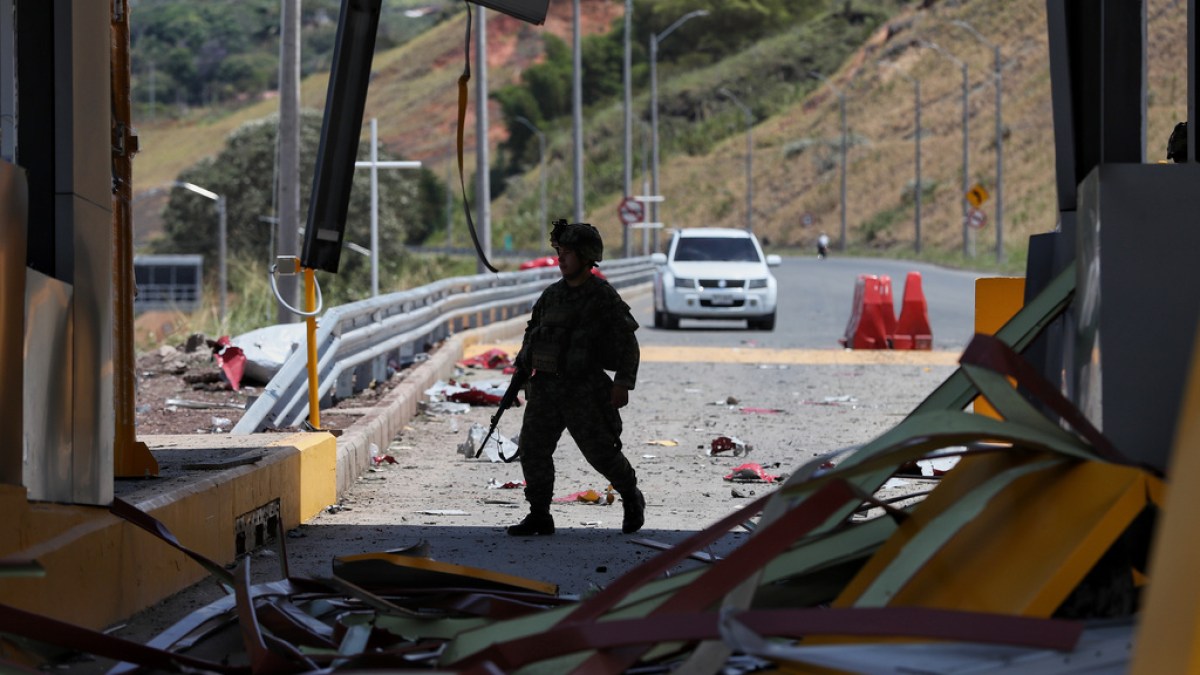
Kathmandu— A car bomb attack targeted a toll plaza on the Pan-American Highway in the southwestern department of Cauca on Saturday, marking a violent start to the presidency of Abelardo de la Espriella. The explosion, which reportedly injured two security guards, was allegedly carried out by splinter groups from the Revolutionary Armed Forces of Colombia (FARC). The attack comes just one day after the far-right lawyer was sworn into office, promising a decisive crackdown on the armed groups and criminal networks that have long destabilized the nation.
Security Threat and Immediate Response
The explosion occurred at a toll plaza in the coastal department of Cauca, a region in western Colombia. According to witnesses, the perpetrator abandoned a vehicle at the scene before escaping on a motorcycle.
Minister of Transportation Elsa Noguera responded to the attack by stating that Colombia will not kneel before violence or allow the destruction of infrastructure that connects the country's regions. Noguera emphasized that the administration is committed to restoring order and security, echoing President de la Espriella's inaugural pledge to defeat narco-terrorism.
A Shift Toward Militarized Policy
President de la Espriella, a political newcomer who narrowly defeated leftist Senator Ivan Cepeda in a June run-off election, has campaigned on a platform of restoring order through force. He has explicitly signaled an end to the "Total Peace" approach utilized by his predecessor, Gustavo Petro, which focused on dialogue with armed groups.
During his inaugural speech, de la Espriella declared that the option of dialogue is "exhausted" and has pledged to return the country to a more militarized approach. His platform includes aggressive tactics such as bombing boats and planes suspected of transporting illicit drugs, a strategy aligned with recent US efforts to combat narcotics trafficking in the Caribbean and Pacific.
Geopolitical Context and Human Rights Concerns
The new administration's hardline stance has received support from United States President Donald Trump, whose administration has promised $1 billion in security aid to bolster efforts against crime and narcotics. This support comes as the US seeks to expand military involvement across Latin America to combat trafficking.
However, the shift toward increased military action has drawn criticism from rights groups. These organizations have expressed concern that the aggressive tactics promised by de la Espriella could lead to potential human rights abuses by government forces during his four-year term.
The new administration now faces the immediate challenge of addressing deeply entrenched criminal networks and armed groups during de la Espriella's single term in office.
(With inputs from Al Jazeera)
Originally published on abcnews.com.np.



प्रतिक्रिया दिनुहोस्