

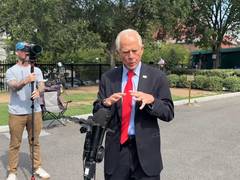
Kathmandu— US Senior Counsellor for Trade and Manufacturing Peter Navarro indicated that President Donald Trump and Prime Minister Narendra Modi are expected to address a potential tariff issue stemming from India’s increased imports of Russian oil following the start of the Ukraine-Russia conflict. Navarro stated the two leaders have a “very good working relationship” and will resolve the matter directly, after the US Senate recently passed legislation authorizing tariffs of up to 100% on goods from countries importing Russian energy. The bill aims to pressure Russia by limiting its revenue streams and funding for military operations in Ukraine.
Senate Bill Authorizes Potential Tariffs
On August 7, the US Senate passed the Lindsey O Graham Sanctioning Russia and Iran Act of 2026 with an overwhelming 86-11 vote. The legislation grants the President discretionary authority to impose tariffs up to 100% on imports from nations that continue to purchase Russian crude oil or natural gas, arguing such trade sustains Moscow’s economy and funds its military operations. Beyond targeting energy buyers, the bill also outlines new sanctions against Russian officials and entities linked to the war effort, as well as older tankers used to circumvent existing restrictions.
India's Increased Reliance on Russian Oil
Prior to Russia’s invasion of Ukraine, India was not significantly involved in trading oil with Russia. However, following the conflict, India increased its procurement of discounted Russian crude in 2022 to meet national energy requirements amid global market instability. Navarro noted he previously wrote an op-ed on this topic and received significant online backlash from Indian commentators. He explained that while India’s involvement initially aided Russia's war efforts, the issue has since been resolved.
US Approach to Resolution
Navarro emphasized that the matter will be handled directly between President Trump and Prime Minister Modi, stating it is not appropriate for outside parties to intervene. He explained this approach reflects how problems are solved within the United States, suggesting a preference for direct diplomatic engagement rather than public pressure or intervention.
The legislation now awaits potential action by President Trump, who has the authority to implement the tariffs as outlined in the bill.
(With inputs from ANI)
Originally published on abcnews.com.np.

प्रतिक्रिया दिनुहोस्