

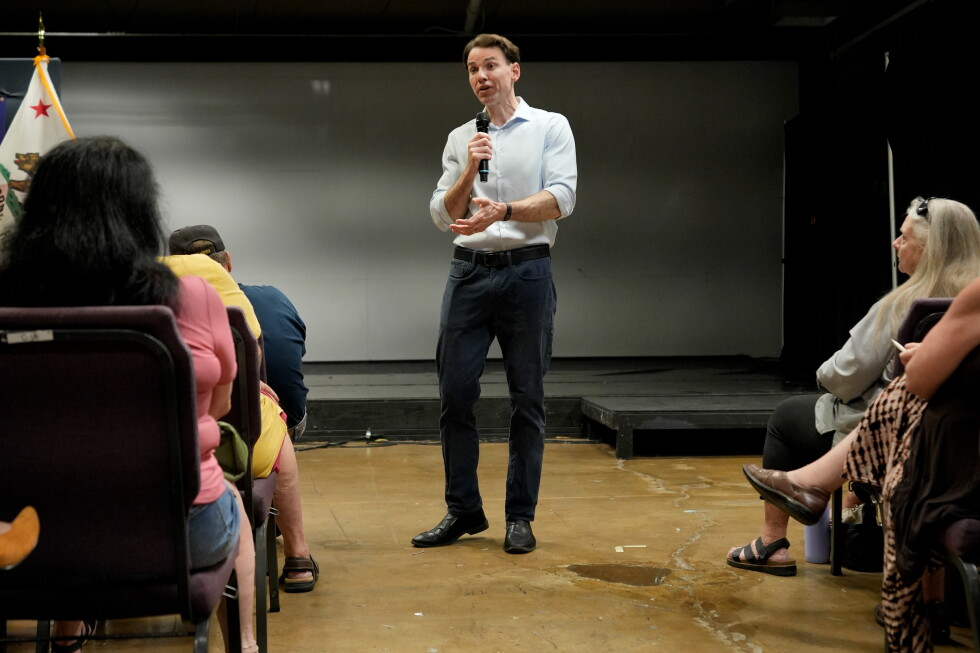
Kathmandu— Following a pattern of partisan mapmaking across the country, California Democrats significantly altered their congressional district boundaries, leading conservative Representative Kevin Kiley to leave the Republican Party and run as an independent. The move came as retaliation for similar actions taken by Republicans in states like Texas, where districts were redrawn to favor GOP candidates. Voters in Northern California are now grappling with a reshaped political landscape, while Democrats see an opportunity to gain representation in historically conservative areas.
A Tit-for-Tat Redistricting War
The current situation is the result of a growing trend of partisan redistricting, where states redraw congressional maps to benefit their dominant party. Former President Donald Trump urged Republican-controlled states last year to redraw their maps before this year’s midterm elections in an effort to secure more winnable seats for Republicans. This was facilitated by a Supreme Court decision that weakened the Voting Rights Act, allowing for greater flexibility in redrawing district lines across the South. Democrats have now responded in kind, with California leading the charge.
California's Unique Approach
While Democratic-leaning states often face stricter rules against partisan line-drawing, California found a way around these limitations by securing voter approval to redraw its congressional map. This allowed them to create five new Democratic-leaning seats, directly impacting Republican Representative Kevin Kiley’s district. The redrawn lines effectively grafted portions of Kiley's former constituency onto an overwhelmingly Democratic seat in wine country, leaving many conservative voters like Anne Smull feeling disenfranchised.
Kiley's Response and Political Future
Faced with a district heavily tilted against him, Kiley opted to run as an independent. He criticized partisan gerrymandering and even attempted to force a vote on a bill banning mid-decade redistricting, though unsuccessfully. While Democrats accuse Kiley of merely adopting the label of ‘independent’ for political expediency—pointing to his continued alignment with Republican priorities and support from GOP organizations—Kiley maintains that he could have easily remained within the party by moving to a more conservative district. He intends to seek changes to House rules to ensure independent members retain committee seats.
Local Reactions and Democratic Gains
The redistricting has sparked varied reactions among voters. Some, like John Coburn, are simply frustrated with the partisan gamesmanship, while others, such as Kathleen Crawford, chair of the Placer County Democratic Party, view it as a positive step towards gaining much-needed representation. The redrawn map divides Placer County—a traditionally Republican area—among three districts, creating an opportunity for Democrats to compete in what was once considered unwinnable territory. Voters like Ed Church, while not fans of Kiley previously, now find themselves in a reliably Democratic district and will focus on supporting candidates who oppose Trump.
Concerns Over Representation
Despite the potential gains for Democrats, some voters express concern about being left out of the political process. Wesley Johnson, a conservative independent, feels that Northern California is not fairly represented due to the dominance of urban areas like San Francisco and Sacramento. He acknowledges the reciprocal nature of redistricting but laments that it ultimately silences the voices of ‘the little people’.
The redrawn maps will be put to the test in November's election, where Kiley will compete as an independent against former state Senator Richard Pan. The outcome could set a precedent for future redistricting battles and further exacerbate partisan divisions.
(With inputs from AP)
Originally published on abcnews.com.np.




प्रतिक्रिया दिनुहोस्