

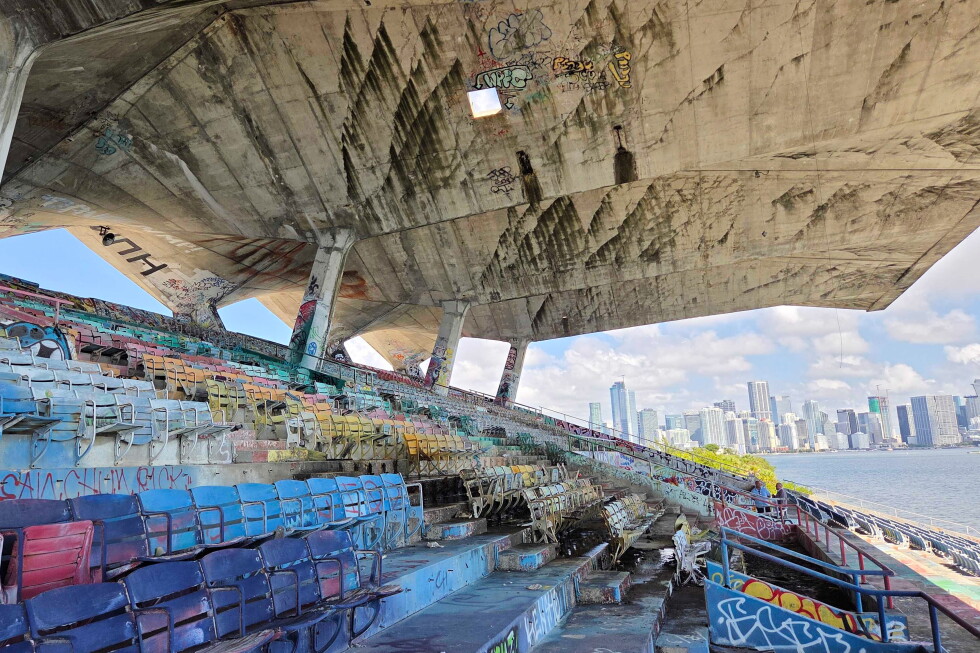
Kathmandu— The Miami Marine Stadium, opened in 1963 as the nation’s only powerboat racing venue and a symbol of South Florida, is at a crossroads. Voters in Miami will decide Tuesday whether to approve a partnership between the city and a private company to restore the stadium, which has fallen into disrepair since Hurricane Andrew damaged it in 1992. The unique structure on Virginia Key, designed by Cuban refugee Hilario Candela, once hosted concerts by Gloria Estefan and Jimmy Buffett, as well as events like Easter sunrise services and political rallies, but has been fenced off and covered in graffiti for decades.
A Legacy of Design and Entertainment
Designed by Hilario Candela, who fled the Cuban Revolution, the Miami Marine Stadium quickly became a landmark. It was added to the U.S. National Register of Historic Places in 2018, with then-Secretary of State Ken Detzner calling it “one of the state of Florida’s most unique architectural and historic resources.” The stadium hosted a diverse range of events, from powerboat races—for which it was uniquely designed—to concerts by music legends like Elvis Presley, who filmed scenes for his movie “Clambake” there in 1967. More recently, Jimmy Buffett frequently performed at the venue on a floating stage, famously jumping into the water after one concert in 1985.
Decades of Decay and Restoration Efforts
Following severe damage from Hurricane Andrew in 1992, the stadium closed its doors and began to deteriorate. Despite being listed on the National Register of Historic Places, it remained fenced off and vandalized for years. In 2008, Donald Worth co-founded Restore Miami Marine Stadium, launching a mission to save the structure after city officials initially considered demolition. The late Jimmy Buffett also actively advocated for its restoration, writing to Miami officials in 2022 urging them to preserve the “little cathedral of musical fun.”
Proposed Partnership and Future Vision
The current proposal involves a partnership between the City of Miami and Breakwater Hospitality Group. The plan would see the private company manage the stadium, developing its parking area into a flex park with recreational facilities and event space. The city would retain ownership and collect revenue from events to fund repairs and upgrades, covering costs without taxpayer funding according to Commissioner Damian Pardo. Emi Guerra, co-founder of Breakwater Hospitality Group, envisions the restored stadium as an entertainment destination comparable to Red Rocks Amphitheatre in Denver.
Concerns Over Traffic and Environmental Impact
While many support restoring the historic landmark, some residents have expressed concerns about potential negative impacts. Ernesto Cuesta, head of the Brickell Homeowners Association, worries that increased noise and traffic from large events could disrupt nearby communities and wildlife. He suggests a park with more green spaces might be a preferable alternative. Despite these concerns, project architect Richard Heisenbottle assures that multiple studies show the stadium remains structurally sound and renovations will incorporate modern amenities while honoring its original design.
If approved by voters, the partnership would allow for the restoration of the Miami Marine Stadium and the development of surrounding areas into a public recreational space. The total cost of the project has not yet been determined.
(With inputs from AP)
Originally published on abcnews.com.np.



प्रतिक्रिया दिनुहोस्