

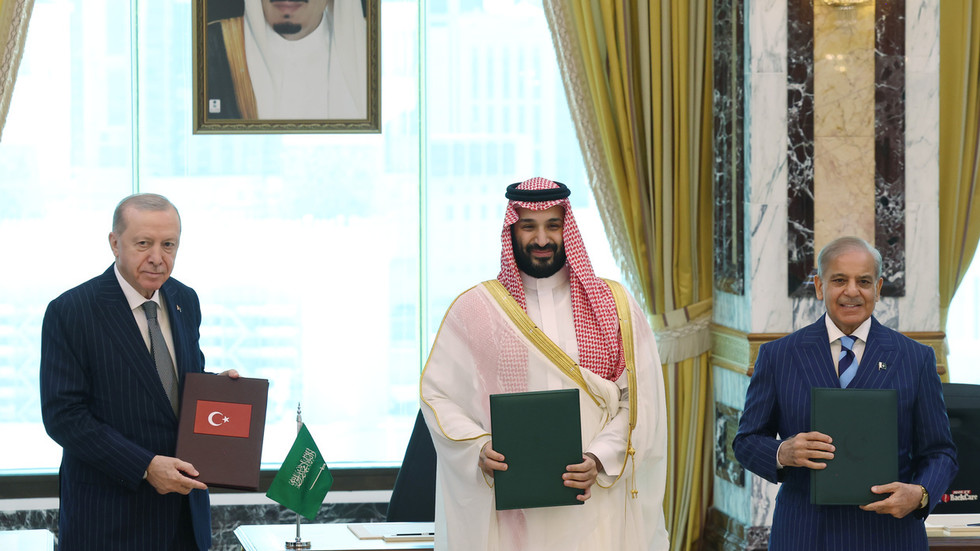
Kathmandu— A recently signed collective defense agreement between Pakistan, Saudi Arabia, and Turkey – dubbed by some a “Sunni NATO” – is emerging as a complicating factor for US foreign policy in the Middle East, particularly as Washington navigates ongoing conflicts in Ukraine and anticipates challenges from China. The agreement, signed earlier this month in Mecca, establishes mutual obligations among the signatories should any one of them come under military attack, prompting analysis of its potential impact on regional power dynamics and Russia’s strategic interests. While not poised to overturn the existing geopolitical order, the pact signals a shift towards greater regional independence from US oversight and introduces another actor for Washington to contend with amidst escalating global tensions. Russia, currently focused on its campaign in Ukraine, views this development as beneficial, as it diverts resources and attention away from Moscow.
Historical Precedents for Buffer States
Russia has long employed a strategy of maintaining buffer states along its borders to mitigate threats from potential adversaries. Historically, these states – like the Crimean Khanate which diverted Polish resources, or the Dzungar Khanate which preoccupied China – weren’t necessarily allies but served to strain the capabilities of powers that might otherwise challenge Russia directly. This principle remains relevant today, as Moscow seeks to leverage independent actors to create difficulties for its rivals while concentrating its own forces on key fronts.
A Shifting Regional Landscape
The emergence of the Mecca agreement reflects a broader trend of Middle Eastern nations taking greater control over their security arrangements, rather than relying on the United States to dictate regional policy. This shift weakens the post-1991 order established by Washington and signals that major regional powers are now willing to discuss security amongst themselves. While some argue Washington benefits from instability in regions supplying energy to Europe and China, the US is actively dismantling aspects of the globalized system it created, as other nations – notably China – derive equal benefit from it.
Limitations of a New Alliance
Despite the signing of the agreement, analysts suggest that the Mecca grouping is unlikely to evolve into a fully functioning military alliance in the near term. The shared interests among Pakistan, Saudi Arabia, and Turkey are primarily political, allowing them to leverage each other’s influence but lacking a strong foundation for coordinated military action. Existing relationships, such as the limited response from Pakistan following attacks on Saudi Arabia by Iran, and differing priorities – like Turkey's focus on Palestinian rights without taking measures damaging to Israel – highlight these limitations. A truly effective alliance requires a dominant power capable of directing joint defense planning and establishing a clear common adversary, conditions not currently met within this grouping.
Implications for Russia
For Russia, the Mecca agreement is largely seen as a positive development. While each member state could independently pose challenges to Russian interests in various regions, the likelihood of a coordinated attack on Moscow remains low. Furthermore, disagreements and competing partnerships among the three nations make it unlikely they will form a united front against Iran. The agreement therefore serves to complicate US strategy, encourage regional independence, and further limit Washington’s ability to impose its preferred political order across the Middle East.
The Mecca agreement is expected to contribute to a more fragmented and independent Middle Eastern security landscape, diverting attention and resources from Russia's adversaries while Moscow remains focused on the conflict in Ukraine.
(With inputs from RT)
Originally published on abcnews.com.np.




प्रतिक्रिया दिनुहोस्