

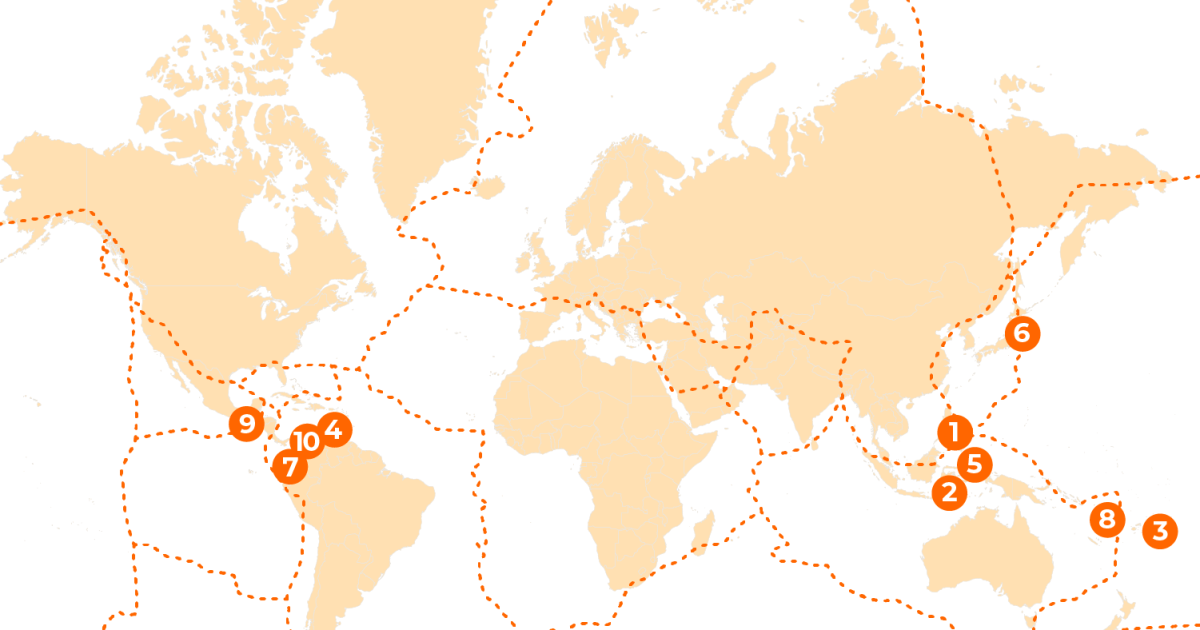
Kathmandu— Following a series of significant earthquakes in Indonesia, Colombia, Mexico, and Venezuela over the past month, questions have arisen about whether the world is experiencing an increase in seismic events. An analysis of ten years of global earthquake data by Al Jazeera reveals that while 2026 has seen slightly more magnitude 6 or greater earthquakes than recent averages, current activity remains within historically normal parameters. The frequency and intensity of these events are determined not just by magnitude, but also by factors like depth, proximity to populated areas, and building quality.
Earthquake Frequency Over Time
According to the United States Geological Survey (USGS), approximately 20,000 earthquakes are recorded globally each year, averaging around 55 per day. However, most of these tremors are too weak for people to feel. Large-scale damage typically occurs when earthquakes reach magnitude 6 or above. From 2016 to 2025, the world averaged 133 such quakes annually, ranging from a low of 99 in 2024 to a high of 157 in 2021. As of mid-August 2026, 91 earthquakes of magnitude 6 or above have been recorded worldwide, including 11 exceeding magnitude 7 – numbers that are slightly ahead of the past decade’s pace but still within expected fluctuations.
Deadliness Depends on Location
The severity of an earthquake's impact is not solely determined by its magnitude. Depth, proximity to cities, and the structural integrity of local buildings play crucial roles in determining the extent of damage and loss of life. The most devastating earthquakes over the past decade were not necessarily the largest; they were those that struck beneath densely populated areas. For example, Venezuela’s 7.2 and 7.5 quakes in June resulted in more than 6,300 fatalities, while a magnitude 7.8 quake off Mindanao in the Philippines killed over 100 people.
How and Where Earthquakes Occur
Earthquakes occur when the Earth’s crust shakes due to movement of tectonic plates – roughly 100km thick pieces that make up the planet's outer shell. These plates sit on hot, slowly flowing mantle rock and are constantly moving, building stress along fractures called faults until the rock gives way. The majority of global seismic activity—around 90 percent—is concentrated in the Pacific Ring of Fire, a belt stretching from the western Americas through Russia, Southeast Asia, and New Zealand. However, earthquakes can also occur outside this zone, such as along the Alpide belt spanning Java to Turkiye and the Mediterranean.
Measuring Earthquake Strength
Earthquake size is measured using the moment magnitude scale, which assesses the energy released at the earthquake’s source. This logarithmic scale means that each whole-number increase in magnitude represents approximately 10 times more ground shaking and roughly 32 times more energy released. A magnitude 4 quake causes light shaking, while a magnitude 5 produces 10 times more shaking and can cause moderate damage. Magnitude 6 quakes are considered strong, and magnitude 7 or higher are classified as major, with the potential for significant devastation. The largest earthquake ever recorded was a magnitude 9.5 in Valdivia, Chile, in 1960.
Predicting Future Events
Scientists have not yet developed the ability to predict when a major earthquake will strike, as the tectonic stress that builds along fault lines over decades or centuries cannot be tied to a predictable cycle. Instead, seismologists calculate the probability of a large quake occurring in a given area over years, which informs life-saving building codes and early warning systems that can alert people once an earthquake has begun. Aftershocks can continue for months or even years following a major seismic event.
While recent earthquakes have understandably raised concerns, current data suggests that the Earth is not currently experiencing an unusual surge in seismic activity. Ongoing research focuses on improving long-term risk assessment and early warning systems to mitigate the impact of future events.
(With inputs from Al Jazeera)
Originally published on abcnews.com.np.





प्रतिक्रिया दिनुहोस्