

Kathmandu— Nepal's government has formed a Supply Chain Improvement Suggestion Taskforce to address longstanding issues within the country’s agricultural sector, specifically the complex and often exploitative system through which vegetables reach consumers. Despite agriculture remaining a mainstay of Nepal’s economy, many farmers struggle to earn fair returns on their investments due to multiple layers of middlemen who drive up prices for consumers while suppressing payments to growers. The taskforce is currently conducting field studies with the goal of reducing these intermediary layers from as many as five to just two or three, and will submit policy recommendations within a month.
Inefficient Supply Chain Drives Up Costs
Agricultural products in Nepal often pass through numerous middlemen before reaching consumers, creating a system where farmers receive low prices while intermediaries profit significantly. The consumer price for vegetables can be seven times higher than the farm-gate price, highlighting the inefficiencies within the supply chain. Local traders exploit areas with poor transport infrastructure to purchase produce cheaply from farmers, who then sell it on to wholesalers at hubs like Kalimati in Kathmandu. These wholesalers dictate market prices, and commercial agents further manipulate pricing through auctions and cartel-like structures before retailers add their own markups.
Past Efforts To Reform The System
This is not the first time the Nepali government has attempted to address these issues. In 2018, a 58-point Transformation Roadmap aimed to improve agriculture and eliminate middlemen by allocating market stalls to cooperative farmers and establishing auction centers. A committee was also formed that year after vegetable prices soared, recommending mandatory purchase bills for transparency and reduced middleman involvement. However, those recommendations were never implemented. A report from the Department of Commerce, Supply and Consumer Protection found goods pass through seven layers of intermediaries, but a draft law to regulate this under the Consumer Protection Act, 2018, also stalled.
New Taskforce Focuses On Streamlining And Technology
The newly formed taskforce intends to eliminate unnecessary middlemen, develop market-driven cropping systems, improve storage and packing solutions, and establish real-time market information systems. They are also exploring technological integration and delivery startups to connect farmers directly with consumers, aiming for a more equitable distribution of profits. The government plans to partner with local bodies and cooperatives to build collection hubs and enforce localized agricultural pooling in cities like Kathmandu, creating a direct-to-consumer delivery mechanism.
Infrastructure And Prioritization Of Local Produce
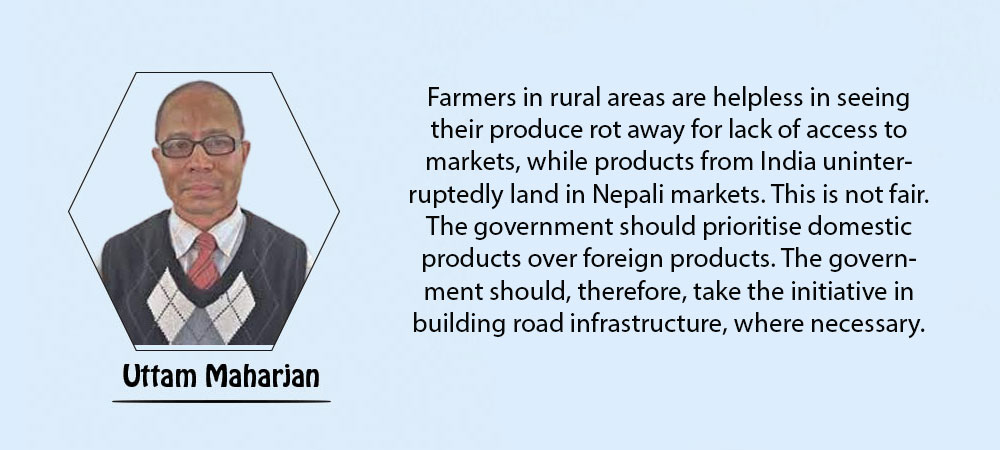
Poor road infrastructure is also hindering the efficient transport of produce from rural farms to markets. Farmers often see their crops rot due to lack of access, while imported vegetables from India flow freely into Nepali markets. The government acknowledges this imbalance and plans to prioritize domestic products by investing in necessary road improvements. Regular market monitoring, beyond just festive occasions, is also considered crucial for regulating prices and preventing exploitation.
The taskforce is expected to submit its report with policy recommendations and implementation strategies within one month, offering a potential pathway towards a more equitable and efficient vegetable supply chain in Nepal.
(With inputs from RN)
Originally published on abcnews.com.np.





प्रतिक्रिया दिनुहोस्