

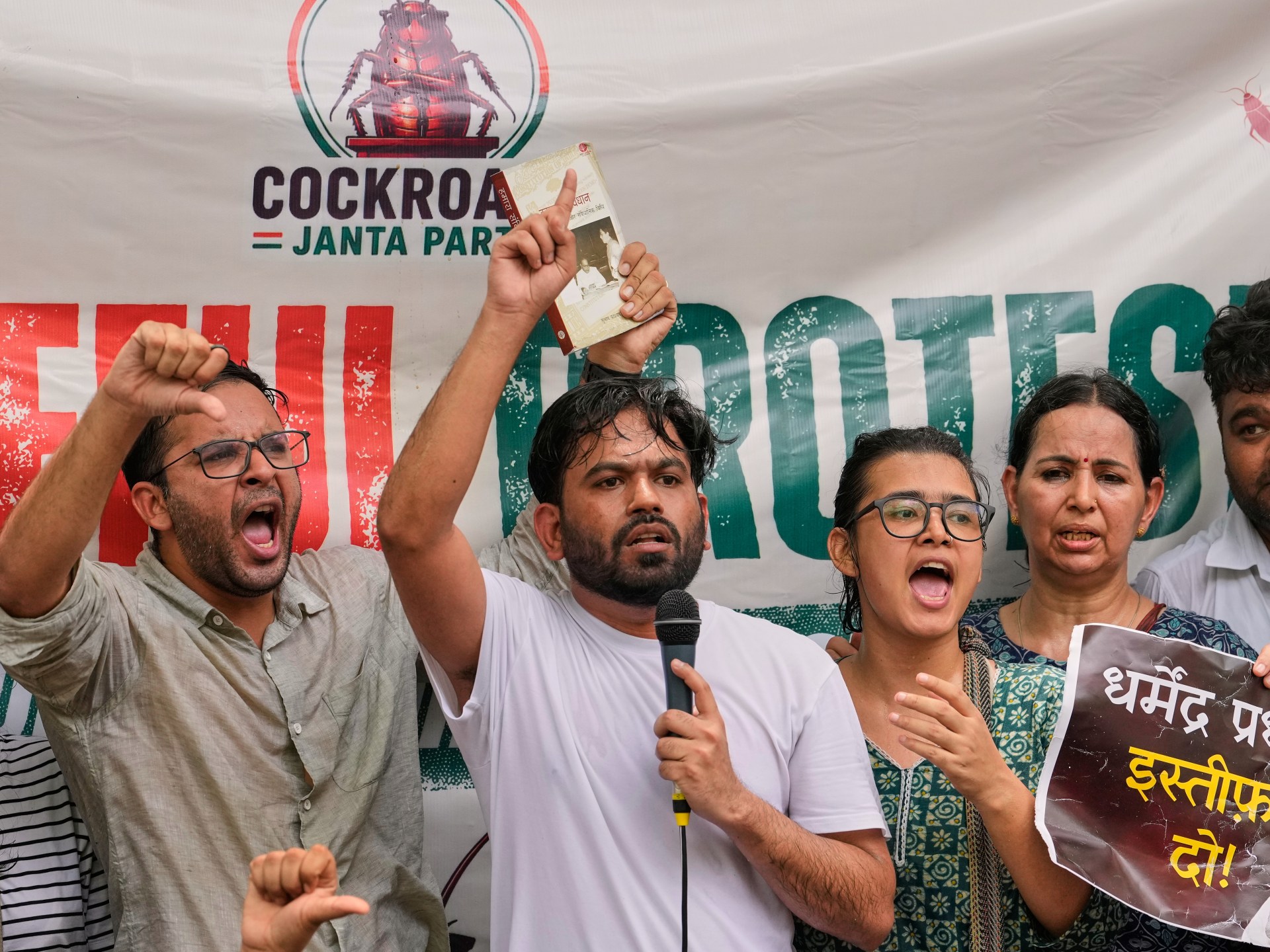
Kathmandu— The Cockroach Janata Party (CJP), an Indian pressure group, has turned its attention to the state of public schools across the country after successfully campaigning for the resignation of Education Minister Dharmendra Pradhan in July. The CJP is mobilizing supporters to audit school conditions, focusing on basic necessities like drinking water, functional toilets, and campus safety; however, this new initiative has already met with resistance, culminating in a deadly attack on a party worker’s family in West Bengal.
Escalating Conflict in West Bengal
Abdul Hafeez, a CJP supporter, visited his former primary school in Bankura district, West Bengal, as part of the group's audit campaign. Shortly after, he and his father, Mohammad Mafik, were allegedly assaulted by local workers believed to be affiliated with the ruling Bharatiya Janata Party (BJP). Tragically, Mafik died from his injuries two days later. Suvendu Adhikari, the BJP’s chief minister in West Bengal, claimed the attackers had no party connection and promised action, but Hafeez maintains that the attack will not deter the CJP's efforts to demand better education.
Nationwide School Audits Underway
The CJP is implementing a four-point checklist for its “Fix the Schools” campaign: access to drinking water and functional toilets, reliable electricity and usable classrooms, secure boundary walls and campus safety, and consistent provision of midday meals with adequate teacher attendance. Supporters are visiting schools across India, documenting conditions and demanding improvements. In Rajasthan, CJP co-convenor Ashutosh Ranka led a sit-in with students to demand additional resources, reportedly achieving some success.
Government Pushback and Restrictions
The Rajasthan government, also led by the BJP, responded to the CJP’s campaign by imposing restrictions on outsiders entering schools and prohibiting photography or videography, citing student privacy concerns. This move came after Ranka announced plans for volunteers to conduct school visits across the state. Education policy expert Samina Bano notes that India's public education system is plagued by systemic issues, including unqualified teachers and inadequate infrastructure, requiring a “disruptive change”.
Leveraging Social Media for Mobilization
Political analyst Asim Ali highlights the CJP’s effective use of social media to mobilize support and minimize organizational costs. The group has successfully tapped into momentum from recent Gen Z protests, with videos of students demanding better facilities circulating widely online. However, Ali cautions that relying heavily on volunteers without traditional political experience leaves them vulnerable to violence, as demonstrated by the attack on the Hafeez family.
Continued Activism Despite Obstacles
Despite facing cancellations and refusals of venues for meetings in West Bengal’s capital Kolkata, the CJP remains defiant. Ranka stated that such obstacles only strengthen their resolve to continue auditing schools and pressuring the government for improvements. He asserts that the BJP's attempts to suppress their efforts will ultimately backfire, leading to further growth in support.
The CJP continues to organize school visits and advocate for systemic reforms despite ongoing opposition and safety concerns, aiming to bring issues within India’s public education system into mainstream political discourse.
(With inputs from Al Jazeera)
Originally published on abcnews.com.np.



प्रतिक्रिया दिनुहोस्