

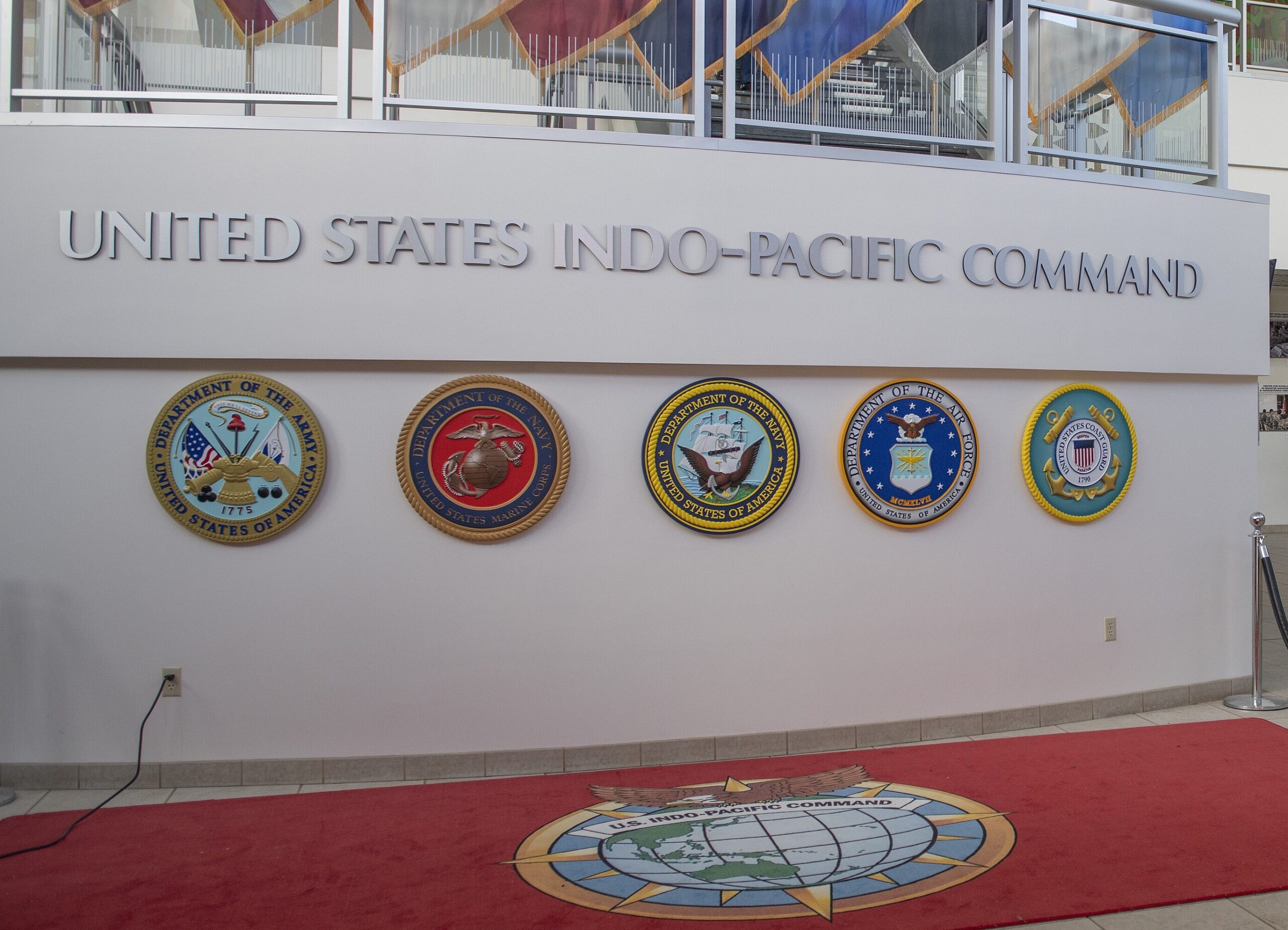
Kathmandu— The U.S. Indo-Pacific Command has quietly reverted to its former name, U.S. Pacific Command (PACOM), a move analysts say signals a significant recalibration of American strategy in the region and an acknowledgement that the concept of a unified “Indo-Pacific” was strategically overextended. The rebranding, officially described as a gesture towards historical continuity, comes after years of efforts to position India as a key counterweight to China’s influence, but reflects New Delhi's commitment to strategic autonomy and its prioritization of regional ambitions. While not indicating a broader retreat from competition with China, the change highlights Washington’s focus on the Pacific maritime theater centered around Taiwan and the South China Sea, suggesting that India is no longer seen as the sole anchor of U.S. strategy in the area.
The Rise and Fall of the ‘Indo-Pacific’ Framework
The “Indo-Pacific” concept gained prominence under the Trump administration in 2018, aiming to create a two-ocean strategic theater leveraging India's power to balance China’s expansion. This involved decades of building intelligence-sharing agreements and foundational defense pacts with New Delhi, culminating in the renaming of PACOM as Indo-Pacific Command. However, this rebranding was always predicated on India’s willingness to actively participate in a potential conflict across both oceans – a commitment that ultimately did not materialize.
India's Transactional Approach
Despite benefiting from the “Indo-Pacific” framework through increased defense transfers and strategic standing, India maintained its own independent foreign policy. New Delhi prioritized its regional ambitions and strategic autonomy, securing high-tech weaponry from Washington while simultaneously strengthening ties with Moscow through arms purchases and trade agreements. This allowed India to balance partnerships with both the U.S. and China, extracting benefits without committing to a potential conflict in the Western Pacific.
A ‘Pacific-First’ Strategy
The Pentagon's decision to revert to “Pacific Command” signifies an acceptance of these limitations and a prioritization of the Western Pacific as the primary theater for competition with China. This shift emphasizes the importance of securing basing access and military interoperability with allies like Japan, Australia, the Philippines, South Korea, Singapore, and Indonesia, rather than relying on broad strategic labels or expecting significant force contributions from India. The timing of this change coincides with trade friction between the U.S. and India, as well as recent incidents involving Indian seafarers, suggesting a calculated strategic retreat.
Symbolism and Strategic Signals
While some argue that the name change is merely bureaucratic nostalgia with no operational impact, analysts suggest it sends an unmistakable signal about American defense priorities. James Stavridis of Bloomberg contends the move will damage goodwill in New Delhi for little practical gain, while others see it as confirmation of a shrinking role for India in U.S. strategic planning. Regardless of intent, the removal of “Indo” communicates a contraction of American focus back to the Western Pacific and suggests that India is no longer considered indispensable.
Potential Regional Implications
The shift away from an “Indo-Pacific” framework could have broader implications for regional dynamics. By reducing its emphasis on India as a central pillar of its strategy, the U.S. may alleviate some pressure on South Asia’s fault lines and lessen concerns about unchecked military build-up in the Indian Ocean. The move ultimately acknowledges that geography and realpolitik often outweigh even the most ambitious strategic concepts.
The quiet retirement of “Indo” from Pacific Command serves as a reminder that strategic labels must align with geopolitical realities, and that partnerships have inherent limits.
(With inputs from CounterPunch)
Originally published on abcnews.com.np.






प्रतिक्रिया दिनुहोस्