

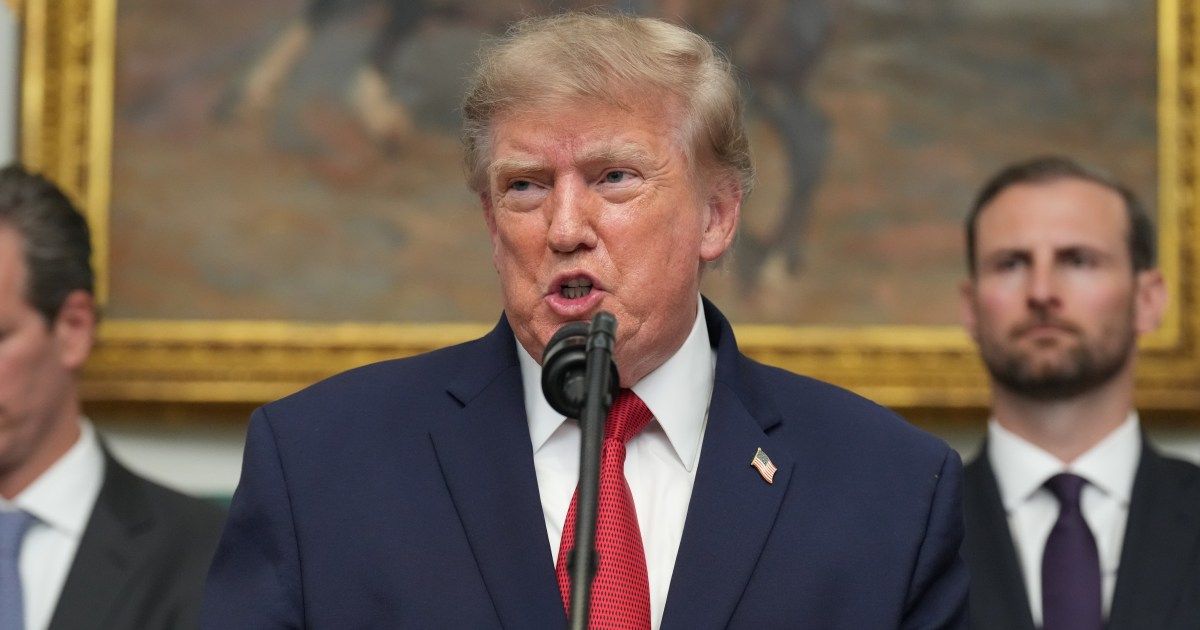
Kathmandu— Former United States President Donald Trump announced a renewed and “most crushing economic operation” against Iran on Wednesday, escalating tensions as negotiations to de-escalate the five-month conflict between the two nations remain at an impasse. Trump asserted that Iran had failed to pursue a deal and would now face unprecedented economic warfare and isolation, threatening significant sanctions against any entity facilitating financial support or trade with Tehran. This move builds upon his administration’s existing pressure campaign – Operation Economic Fury – which has already targeted Iran's oil, shipping, and financial sectors in an effort to cripple its revenue streams.
Escalating Threats and Sanctions
Trump detailed the potential consequences on Truth Social, warning that any country allowing its institutions to provide a “lifeline” to Iran would face “TREMENDOUS Economic Consequences.” He specifically named oil smuggling, swap lines, cash transfers, exchange houses, ship registries, and front companies as targets for disruption. Trump framed this action as an “ECONOMIC D-DAY,” calling on allies to join the United States in isolating what he described as the “Iran threat.”
The US has been implementing a pressure campaign against Iran since April under Operation Economic Fury, aiming to isolate Tehran and restrict its financial resources. Existing sanctions already target key sectors like oil, shipping, and finance, with a naval blockade imposed on Iranian ports and accusations leveled against companies aiding Iran’s oil sales.
Iranian Response and Dismissal
Iranian officials have not yet issued an official response to Trump's announcement, but state media outlets downplayed the move as nothing new. The IRIB state broadcaster characterized it as a continuation of failed military aggression, while Tasnim news agency asserted that the US has been attempting to sever economic ties with Iran for years. However, they claimed Iran has developed skills in circumventing these restrictions.
The Fars news agency dismissed Trump’s claims as “delusional,” stating that the US had repeatedly predicted Iran's collapse without achieving results.
Analysts Question Efficacy and Target China
Al Jazeera’s Mike Hanna reported from Washington, DC, suggesting Trump’s move signals “a degree of frustration” over the ongoing deadlock. He questioned what new economic pressures could be exerted, noting a lack of specific details regarding planned measures. Hanna also suggested that the announcement may be aimed at bolstering domestic support for a strong stance against Iran.
Analysts identified China as a key target for secondary sanctions, specifically targeting financial institutions serving independent refineries still purchasing Iranian oil. Nader Habibi, a Middle East economics professor at Brandeis University, noted the challenge posed by Chinese government warnings to its entities regarding US sanctions and the potential impact on ongoing trade negotiations. Brett Erickson, managing principal at Obsidian Risk Advisor, emphasized that targeting Chinese banks would be a significant escalation with potentially far-reaching international consequences.
Challenges to Full Enforcement
Beyond China, analysts highlighted difficulties in fully enforcing restrictions on Iran’s overland trade with Turkiye, Iraq and Central Asia. Habibi stated that full enforcement along these borders requires the cooperation of those respective governments.
Erickson pointed out that the fact existing measures haven't been implemented suggests a calculated risk assessment by the Trump administration, adding that targeting Chinese banks would be “truly crossing the Rubicon.”
The effectiveness of Trump’s latest economic offensive remains to be seen, particularly given the complexities of enforcing sanctions and potential reactions from key trading partners like China.
(With inputs from Al Jazeera)
Originally published on abcnews.com.np.



प्रतिक्रिया दिनुहोस्