

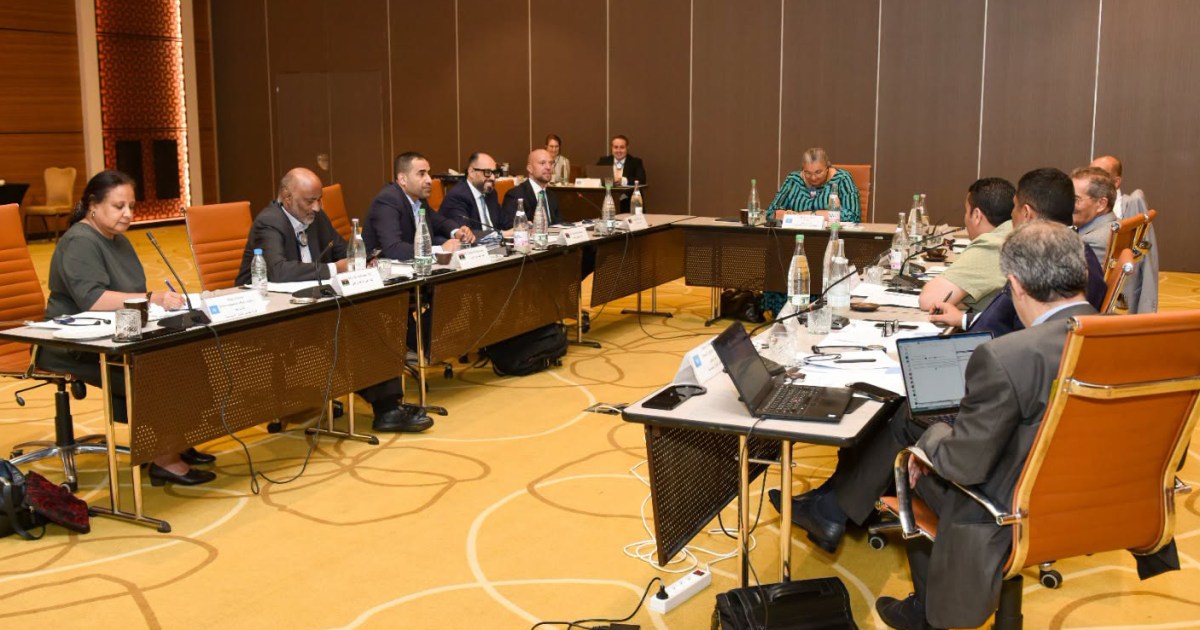
Kathmandu— Negotiators from Libya’s opposing political factions have agreed to a preliminary election pact intended to resolve years of division within the country, though its implementation faces substantial challenges. The agreement, reached by a joint committee representing eastern and western Libyan authorities, focuses on establishing electoral laws and restructuring the national elections commission. While hailed as an important step by UN officials, the deal is met with skepticism from key legislative bodies who question its legitimacy and lack of transparency.
Fractured Governance Hinders Progress
Since 2014, Libya has been split between rival administrations controlling the east and west, frustrating numerous United Nations-led efforts to achieve a unified government. The current negotiations involved a ‘4+4 committee’ comprised of representatives from the House of Representatives in eastern Libya and the High Council of State aligned with the Government of National Unity in Tripoli. This initial draft agreement was signed in Tunis on August 20, but securing broader acceptance within Libya remains a significant obstacle.
Concerns Over Authority and Consensus
Legal expert Al-Mahdi Kashbour has pointed out a disconnect between the signing parties’ authority and that of the institutions responsible for implementation. Political analyst Elias Al-Barouni emphasized that the pact lacks concrete plans for holding elections, adding that even if legal issues are resolved, determining an interim governing body will be difficult. This transitional authority would control state resources while navigating a sensitive security landscape.
Skepticism From Key Stakeholders
Several key Libyan legislative bodies and politicians have expressed reservations about the negotiations. Nuh al-Malati, a member of the High Council of State, stated that the council had not received an official copy of the agreement and that the changes do not enjoy full consensus within the body. He also asserted that the committee members linked to the Government of National Unity do not represent the council’s official position. Similarly, Mohamed al-Menfi, leader of the Tripoli-based presidential council, criticized the lack of clarity surrounding the talks' foundation.
Lack of Transparency Fuels Distrust
Members of the eastern authority have also voiced concerns. Khalifa al-Daghari, a member of the House of Representatives, stated that lawmakers in his group were not involved in selecting negotiating team members and only learned about the discussions through media reports. He added that the House of Representatives cannot determine its position on the agreement until it has officially reviewed the text and outcomes, citing “secrecy over its proceedings.”
UN Optimism Tempered by Criticism
Despite the criticism, United Nations spokesman Mohammad al-Asadi described the pact as an “important step” and a conclusion to negotiations on all discussed points. He also stated that the document will be made publicly available after the final signing, addressing concerns about transparency.
The agreement represents a fragile first step towards resolving Libya’s political impasse, but its success hinges on overcoming deep-seated mistrust and securing broad support from key stakeholders across the country.
(With inputs from Al Jazeera)
Originally published on abcnews.com.np.



प्रतिक्रिया दिनुहोस्