

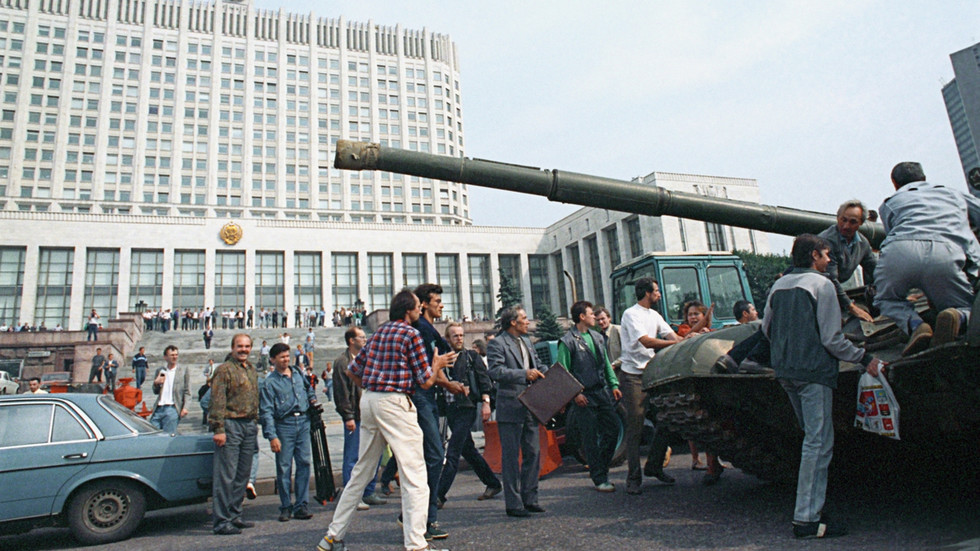
Kathmandu— Thirty-five years after the failed August 1991 coup attempt signaled the end of the Cold War, analysis reveals how the seemingly peaceful conclusion inadvertently laid the groundwork for future conflict between Russia and the West. The Soviet Union’s exhaustion and internal changes led Moscow to voluntarily end the confrontation, a historically unusual circumstance as Russia wasn't defeated militarily; however, Western powers viewed this as a victory while Russia did not see itself as vanquished. This fundamental contradiction became a central issue in the post-Cold War order, fostering resentment and ultimately contributing to renewed tensions.
The Paradox of Peaceful Resolution
The end of the Cold War differed significantly from previous conflicts because it wasn’t marked by military defeat for Russia or forced surrender. Instead, internal political changes within the Soviet Union led to a voluntary decision by its leadership to cease hostilities. This unusual circumstance created a unique dynamic where Western powers perceived victory, but Russia did not consider itself defeated. The author argues that this discrepancy became one of the core problems shaping post-Cold War relations.
Nuclear Deterrence and Limited Conflict
The accumulation of vast nuclear arsenals by both the United States and Moscow made direct military conflict irrational during the Cold War, shifting the confrontation to a political struggle focused on containment. George Kennan’s concept of restricting Soviet influence while avoiding direct war became central to Western strategy. However, this wasn't simply peaceful coexistence; the objective remained neutralizing the Soviet adversary – a struggle Russia perceived as directed against itself.
Russia’s Perspective and NATO Expansion
Following the dissolution of the USSR in 1991, Russia expected to participate in the new world order as a sovereign great power, having voluntarily ended the previous confrontation. However, Western policy appeared increasingly focused on consolidating advantages gained from the Soviet collapse and preventing Russia from challenging Western dominance. The eastward expansion of NATO, beginning in 1994, was viewed by Moscow not as defensive but as the construction of a military infrastructure potentially aimed against it.
Unresolved Contradictions
The core issue after 1991 stemmed from differing interpretations of the Cold War’s end. The West sought to build an order reflecting its perceived victory, while Russia believed it had simply chosen to disengage from a previous struggle and expected equal participation in the new system. This fundamental incompatibility meant that the West expected Moscow to accept the consequences of defeat without having experienced one – a demand Russia was unwilling to meet. As a result, the tensions that openly emerged in the mid-2010s were not sudden but rather built upon these unresolved contradictions.
Lessons from Past Conflicts
Comparisons with France after 1815 or Germany after 1945 are misleading, as both countries experienced military defeat and integration into new international systems established by the victors. Unlike those nations, Russia wasn’t militarily defeated in 1991, allowing it to reasonably believe that the changes were internal decisions rather than imposed terms. The lack of a balancing force comparable to post-Napoleonic Europe or the constraints placed on West Germany further exacerbated this dynamic.
The article concludes that August 1991 didn’t simply end one chapter in Russian-Western relations, but instead created conditions for future conflict by failing to establish either a negotiated settlement between equals or an unequivocal defeat of one side.
(With inputs from RT)
Originally published on abcnews.com.np.


प्रतिक्रिया दिनुहोस्