

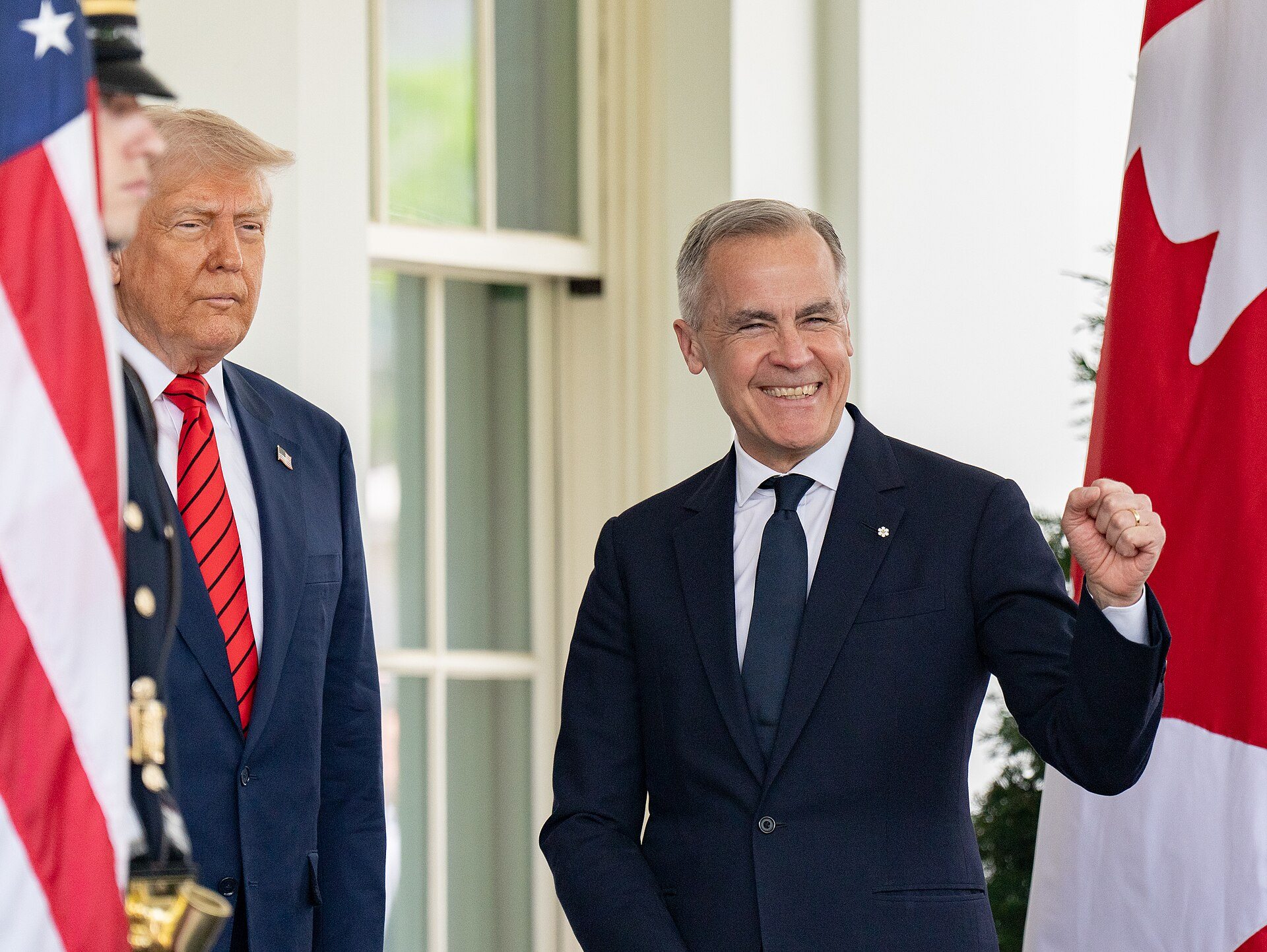
Kathmandu— Trade relations between the United States and Canada are deteriorating as the US has imposed 50% tariffs on $20 billion of Canadian goods, prompting Canada to respond with equivalent “dollar-for-dollar” tariffs on American products. This escalating dispute disrupts a deeply interconnected economic relationship – the US is Canada’s top trade partner, and vice versa for 26 states – while reflecting a broader trend of diminishing governmental oversight over four decades, now accelerated by instant communication technologies.
Economic Interdependence at Risk
The United States and Canada share one of the most significant trading relationships in the world. Canada is the number-one trade partner for 26 US states and a top-three partner for another 19, highlighting the extensive economic ties between the two nations. The imposition of tariffs has already begun to impact key sectors; tourist travel to the United States is down over 25% since April 2, 2025, and American liquor is no longer sold in a majority of Canadian provinces.
Political Rhetoric Fuels Conflict
The current tensions are exacerbated by increasingly hostile rhetoric. Many Americans view the relationship through the lens of their president’s dismissive attitude toward Canada, referring to it as “the 51st state” and its prime minister as a “governor.” While intended as humor for domestic audiences, these comments are perceived as offensive in Canada and contribute to strained relations. When questioned about the US president's claim that “Canada needs the US; the US doesn’t need Canada,” former Canadian Minister of International Trade Mary Ng simply stated, “Well, that’s not true.”
Underlying Economic Motivations
The trade dispute appears to stem from a variety of underlying economic motivations. Analysts suggest potential goals include disrupting Ontario's auto industry to benefit Michigan manufacturers, securing greater market share for American dairy farmers, and preventing Canadian regulations that could impact US tech companies – such as a proposed 5% streaming levy. These actions are occurring amidst rising costs of living, job losses, and uncertainty over further economic retaliation.
A Broader Trend of Deregulation
The current conflict is presented within the context of a decades-long trend toward dismantling government oversight and increasing corporate power. Canadian economist John Kenneth Galbraith, in his book *The Affluent Society*, warned about the dangers of unchecked corporate control, stating that “Inequality resulting from monopoly might be the warning of fatal flaws in the system itself.” This deregulation is seen as benefiting billionaires – whose collective wealth has surged from $1 trillion to $18 trillion since 1987 – at the expense of broader societal well-being. The author draws a parallel between this trend and former US president Ronald Reagan’s skepticism toward government intervention, famously stating, “The nine most terrifying words in the English language are: I’m from the Government, and I’m here to help.”
Global Implications and Technological Influence
Beyond bilateral trade, the dispute is framed as part of a larger shift in the global order. Canada finds itself on the frontlines of what some see as an attempted American oligarchic takeover, while the US seeks to counter the growing economic influence of China. The role of technology companies is also highlighted, with comparisons drawn between historical propaganda efforts and the modern power wielded by firms like Google, Facebook, X, and TikTok. Spanish historian Julián Casanova noted that “Goebbels needed to occupy countries to introduce propaganda. Elon Musk needs three minutes.”
The ongoing trade dispute between the US and Canada remains unresolved, with potential for further escalation or a return to negotiations depending on future actions by both governments.
(With inputs from CounterPunch)
More from the source

Originally published on abcnews.com.np.





प्रतिक्रिया दिनुहोस्