

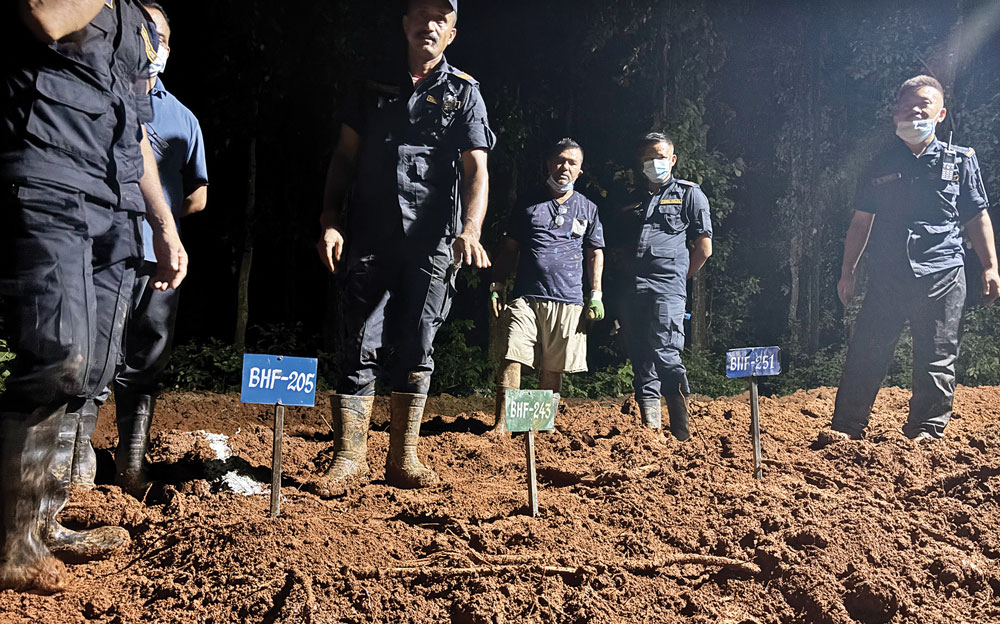
Kathmandu— In the aftermath of the devastating flash flood in Nepal's Rasuwa district, forensic experts are defending the decision to temporarily bury unidentified bodies. The move aims to manage the risk of rapid decomposition and potential health hazards as hundreds of family members continue searching for their loved ones at TU Teaching Hospital in Kathmandu.
Identification Challenges
The identification process has proven challenging due to the condition of many bodies brought from the flood-affected areas. According to Om Bahadur Rana, DIG of Nepal Police, most bodies are difficult to identify based on facial features alone. Instead, initial identification relies on tattoos or other distinctive marks. In some cases, only body parts have been recovered, complicating the process further.
Dr. Harihar Awasthi, a forensic expert, explained that disaster victim identification (DVI) is carried out in two stages: initial identification based on visible features and scientific methods such as fingerprinting, dental records, or DNA testing if necessary.
Temporary Burial Rationale
The Nepal government has initiated the burial of unidentified bodies to prevent rapid decomposition and health risks. Dr. Gopal Chaudhary, a senior forensic expert at TU Teaching Hospital, clarified that burying bodies is not considered the final funeral ritual but rather a temporary preservation method until identification can be confirmed.
Dr. Awasthi emphasized that this method ensures the bodies remain safe for up to 12 years and can be exhumed if relatives come forward with matching documents or DNA evidence.
Current Situation at TU Teaching Hospital
The hospital's holding centre is facing space constraints as more bodies are brought in from the flood-affected areas. So far, 60 bodies have been transported to the hospital, of which eight have been identified and 28 are undergoing post-mortem examinations.
Family members continue to wait at the hospital premises, hoping to identify their loved ones among the hundreds of photographs displayed on a wall near the holding centre.
(With inputs from RN)
Originally published on abcnews.com.np.

प्रतिक्रिया दिनुहोस्